IN BRIEF
Duo Wheels, a brand founded in Christchurch, New Zealand, turns an ordinary road bike into an electric-assist bike simply by changing its wheels. The system pairs deep-section carbon wheels, a 250 W motor in the rear hub and a 250 Wh battery in a bottle cage. According to road.cc, the hub itself measures the rider’s effort, which does away with a cadence sensor at the cranks; there is nothing to fit to the bars, as switching modes is done through a button on the battery. The same test reports a weight penalty of just under 3 kg and two battery bars out of five remaining after 60 km and 800 m of climbing. The British outlet specifies that the unit tested was pre-production and that its price had not been set.
| Motor | 250 W, in the rear wheel hub |
| Battery | 250 Wh, bottle format, on the seat tube |
| Wheels | Deep-section carbon pair, front and rear |
| Sensor | Torque measured in the hub, no cadence sensor |
| Weight penalty (measured in testing) | Just under 3 kg |
| Fitting (in testing) | Under half an hour, Allen keys |
| Origin | Christchurch, New Zealand |
| Price | Not set at this stage (pre-production) |
The electric conversion kit carries a reputation as a bolted-on accessory: Duo Wheels writes on its site that « most conversion kits are heavy, complicated, and look like an afterthought ». Three New Zealanders are proposing another approach: fitting the assistance inside a pair of wheels.
The Duo Wheels system fits inside a pair of wheels
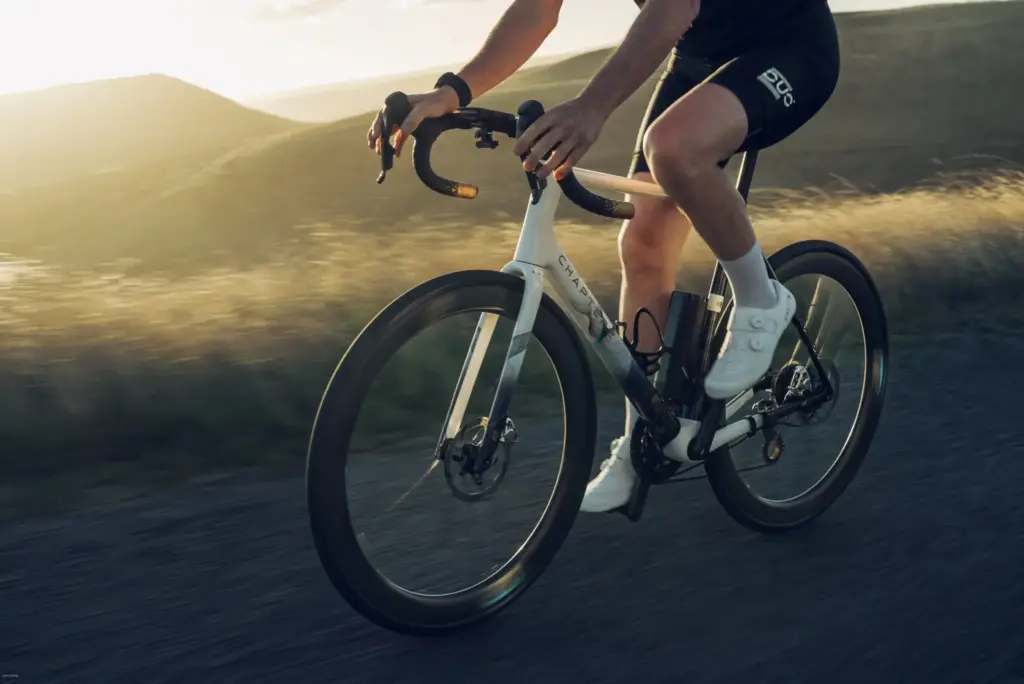
road.cc describes what the kit contains: « so you get both a front wheel and a rear wheel with matching deep section carbon rims. There’s a 250W rear hub motor in the rear wheel […] and you get a 250Wh bottle battery that just slots into a specific bottle cage on your seat tube. » The system is not aimed at road use alone: the brand’s site states that « DUO is compatible with most modern disc brake road and gravel bikes using 12x142mm rear spacing and 12x100mm front spacing ».
The absence of a sensor at the cranks and of anything to fit to the bars is the central argument, and the British outlet spells it out: « The hub senses torque from your pedalling so there’s no need for a cadence sensor on the cranks, and there’s nothing to fit to the bars. » Fitting took the road.cc tester under thirty minutes, and he warns that the brakes and the rear transmission will probably need adjusting. The same outlet reserves its criticism for switching modes, through a button on the battery: « one of the least good bits of the system as it stands », it writes, calling for « a simple Bluetooth remote on the bars ».
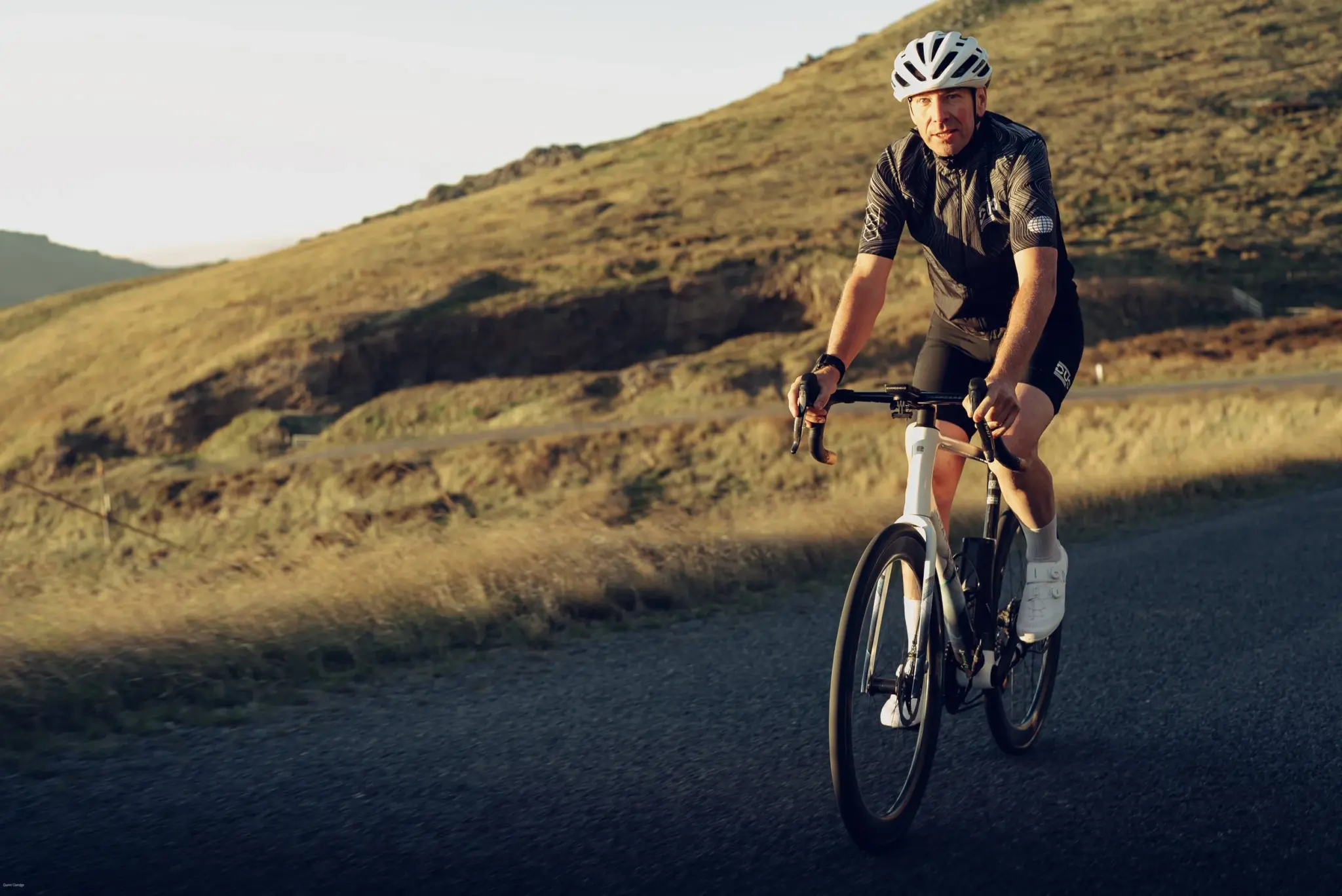
Under 3 kg more, and 60 km without draining the battery
The figures that follow come from a test, not from the manufacturer. The road.cc tester weighed his bike before and after: « after the conversion it was about 11.8kg, so the system, for me, was just under 3kg overall, swapping out some decently light Superteam wheels. »
On range, the same test reports: « I had two bars of the five left after a 60km loop with 800m of climbing, more than I expected, and overall I was pretty impressed with the range. » On pace: « For a standard 60km loop, my average speed was about 2km/h an hour faster and my average power, measured at the cranks, was a bit lower. » About 2 km/h faster on average, for slightly fewer watts at the cranks.
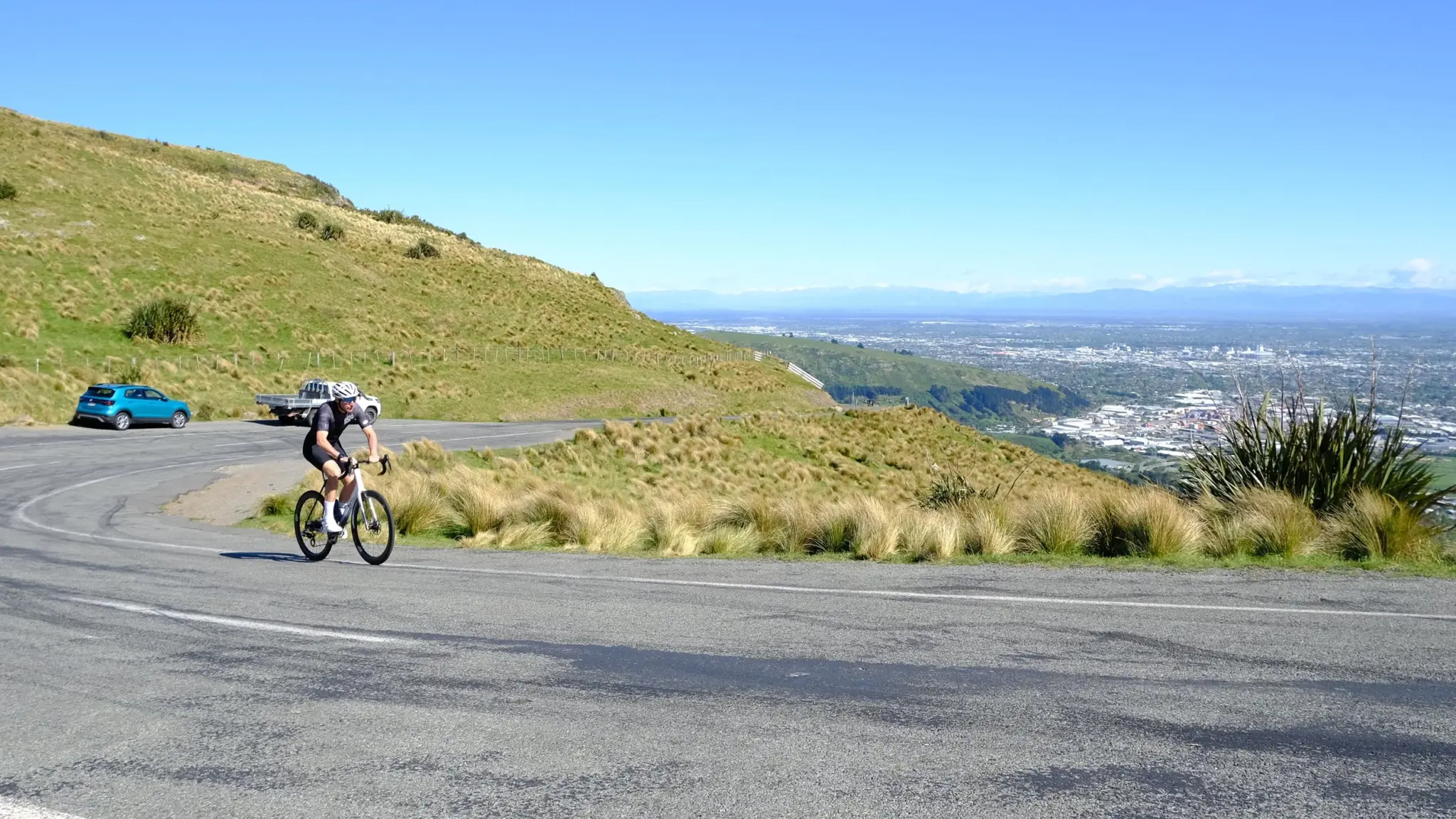
A Christchurch brand, and a product still in pre-production
On its site, the team introduces itself: « We’re James, Brad, and Dave from Christchurch, New Zealand. » The same page adds that the three founders run an e-bike company: « Through our company Wattwheels we’ve also spent the last ten years designing and selling e-bikes ». Design, testing and fine-tuning all took place there.
The hardware tested was not final, and road.cc says so bluntly — « there are a fair few things that aren’t finalised, one of which is how much it’ll cost. » The price has not been set, and several elements remain to be locked down. The only public marker: in June 2026, the New Zealand daily The Press reported an unsettled price expectation — « The Duo wheelset kit – including the two wheels, battery, smart charger, and carry bag – is expected to retail for about €2000 (NZ$3900) internationally ». A kit costing as much as a complete electric bike would lose most of its argument.