IN BRIEF
The World Naked Bike Ride (WNBR) returns this summer in more than 70 cities across 20 countries. Toronto and London open the season on 14 June, Chicago and Amsterdam follow on 11 July, and Vancouver is aiming for the start of the month. Born in 2001 in Zaragoza as a protest against oil dependency, the ride blends cyclist safety, self-acceptance and environmentalism. Its principle — “bare as you dare” — turns the naked body into a metaphor for how exposed a cyclist is in traffic.
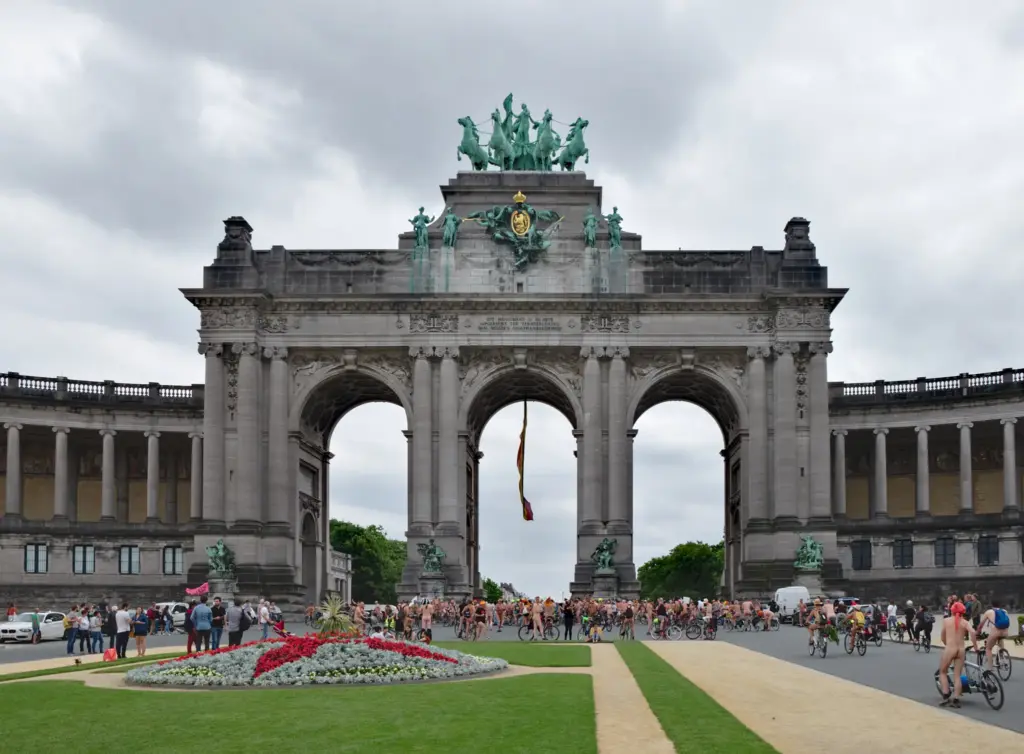
Every summer the same scene plays out in dozens of city centres: cyclists ride down the avenues, bodies bare or covered in paint, under the gaze of passers-by. The World Naked Bike Ride — the WNBR to regulars — sets off again in 2026 in more than 70 cities and 20 countries. Toronto and London launch the season on 14 June, Chicago and Amsterdam follow on 11 July, and Vancouver is aiming for the start of the month. The watchword fits in four words: Bare as you dare — uncovered as much as you dare to be.
From Zaragoza to the rest of the world
It all began in 2001 in Zaragoza, Spain. Activists there staged a first version of the ride to denounce oil dependency and the space given to the car in the city. The idea spread fast. By 2004, London, San Francisco and Vancouver were staging their own editions, on a large scale. Twenty years on, the WNBR is an annual fixture in Europe, North America, Australia and Latin America.
Each city adds its own colour, but the message is the same everywhere: protect cyclists, question car dominance and rethink the way we get around — and the way we see the body. In many places the mood owes more to a carnival than to a protest march.
The naked body as a metaphor for vulnerability
This is the idea that underpins the whole event. A cyclist rides exposed, with no bodywork or cabin, among vehicles far heavier than they are. By taking off their clothes, participants make that exposure visible: the naked body makes literal the fragility felt every day on roads designed first and foremost for cars.
Nudity is not an end in itself. You can ride fully naked, half dressed, or simply in shorts and body paint. For most participants it is less about exhibition than about taking a stand, coupled with a message of self-acceptance in a culture saturated with beauty standards. Organisers claim a judgement-free atmosphere, open to all ages and all body shapes. Many newcomers come away, they say, with an unexpected sense of freedom.
Protest, carnival and happening
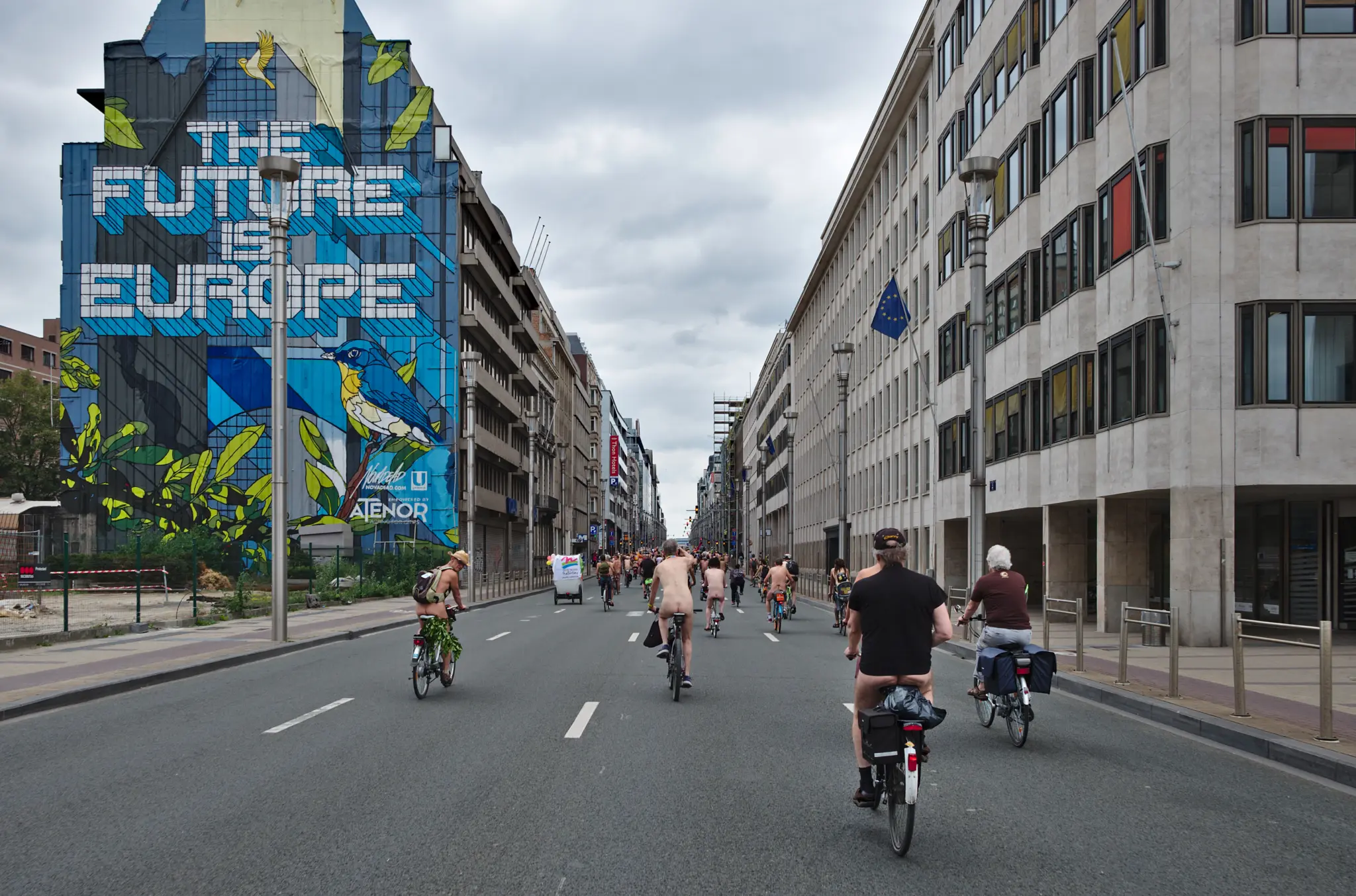
On the ground, the atmosphere owes as much to a party as to an activist march. Body paint, costumes, music, decorated bikes: the WNBR has its own visual culture. Art bikes, those bicycles transformed with flowers, flags, lights and installations, are its signature — rolling sculptures as much as placards. The paint itself often serves as a canvas for slogans: cycle lanes, climate action, oil-free transport, body acceptance. Add a few portable speakers and entire blocks turn into a mobile party.
In Vancouver, the ritual is well established. Participants gather at Sunset Beach, near the corner of Beach Avenue and Bute Street, for a collective body-painting session before setting off through the city centre in the afternoon. The day ends with a picnic organised by NIFTY, a local association that defends the right to nudity and helps steward the event.
A protest against car culture, oil spills and pipelines. But also a celebration of creativity, individuality and the human-powered machine.
The organisers of the World Naked Bike Ride in Vancouver
Permits, weather and consent
Getting hundreds of undressed people rolling through public space is no simple matter. Nudity laws vary widely from one country and one city to the next: organisers have to work with local authorities and the police to secure permissions and clarify the rules. Some cities welcome the ride readily, others restrict it or try to ban it.
The weather matters too: rain, cold or a heatwave can quickly change the experience. Hence the basic advice — drink water, put on sun cream, bring a towel. And this very down-to-earth tip from the organisers: if you borrow a bike-share bike, remember to clean the saddle afterwards. As for respect, photography is regulated: onlookers are asked to seek participants’ consent before any close-up. Guaranteeing a safe and consensual setting has become a stated priority for WNBR collectives.
Reactions range from applause to embarrassed silence — and that is rather the point. By breaking with the norm, the WNBR forces a conversation about the street, urban planning and the room left to the car. Behind the provocation, the argument is almost sober: the street is a public space, made for people as much as for engines. The same one defended, rather more fully clothed, by cycle lane campaigners.