IN BRIEF
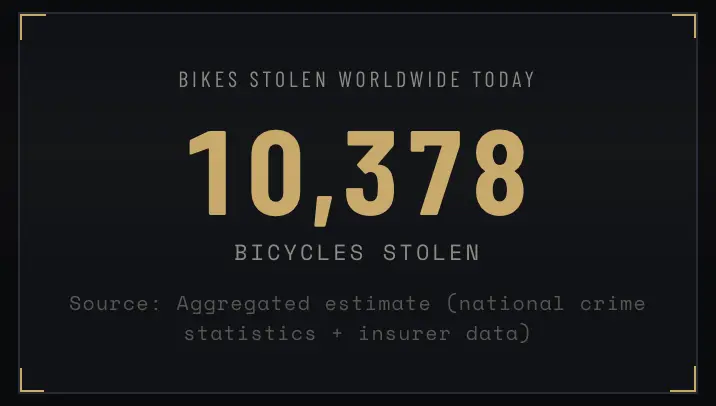
Litelok, the British lock specialist, has launched an interactive world map of bike thefts. The free tool flags at-risk areas in real time. Drawing on a variety of sources, the map covers thefts of bikes, scooters and motorbikes. The aim is to cut theft and encourage better locking practices.
An innovative move against bike theft
British company Litelok, known for its high-security locks, is innovating with an interactive world map dedicated to bike theft. A repeat offender when it comes to innovation, Litelok hopes to strengthen prevention around a thorny issue for cyclists: bike theft, which holds back the take-up of cycling as an everyday means of transport.
Theft Intelligence, as the interactive map is called, lets cyclists and other two-wheeler users check at-risk areas around the world in real time. Free to access online, the tool currently covers six countries, including France.
A collaborative effort on a global scale
The map draws on a variety of data to offer a complete overview. The aggregated statistics come from official public sources, reports from Litelok customers, and contributions from the cycling community. This database makes visible not only the scale of the problem, but also its local and international nuances.
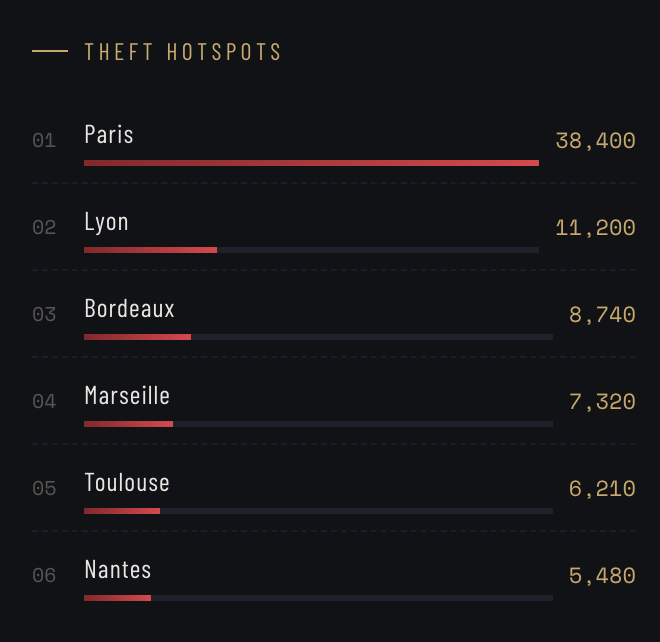
In France, for example, the data includes figures from the Ministry of the Interior. Paris, Lyon and Bordeaux are among the worst-hit cities, with thefts peaking in July. The bike recovery rate remains notably low, at just 3%.
Encouraging better locking and prevention
Neil Barron, Litelok’s founder, stresses that the tool should not be seen as a guarantee that there is no risk, but as a way of encouraging collective vigilance. The aim is to prompt cyclists to choose safer parking spots and adopt effective locking practices.
This interactive map is part of a broader effort to tackle bike theft, a persistent problem, particularly in dense urban areas. The tool should help reduce theft-related anxiety and encourage more confident use of the bike, while raising awareness within the cycling community through the sharing of information and best practice.
Outlook and future implications
Beyond its immediate usefulness, this Litelok initiative could inspire other players in the market to adopt similar measures to protect two-wheeler users. With a growing number of bikes stolen every year, as is the case in the United Kingdom with around 40,000 thefts annually, tools like Theft Intelligence help improve the situation.
As cycling establishes itself as a sustainable mobility solution, cutting the risk of theft through smart, accessible tools could reinforce that trend, much to the delight of keen cyclists.