IN BRIEF
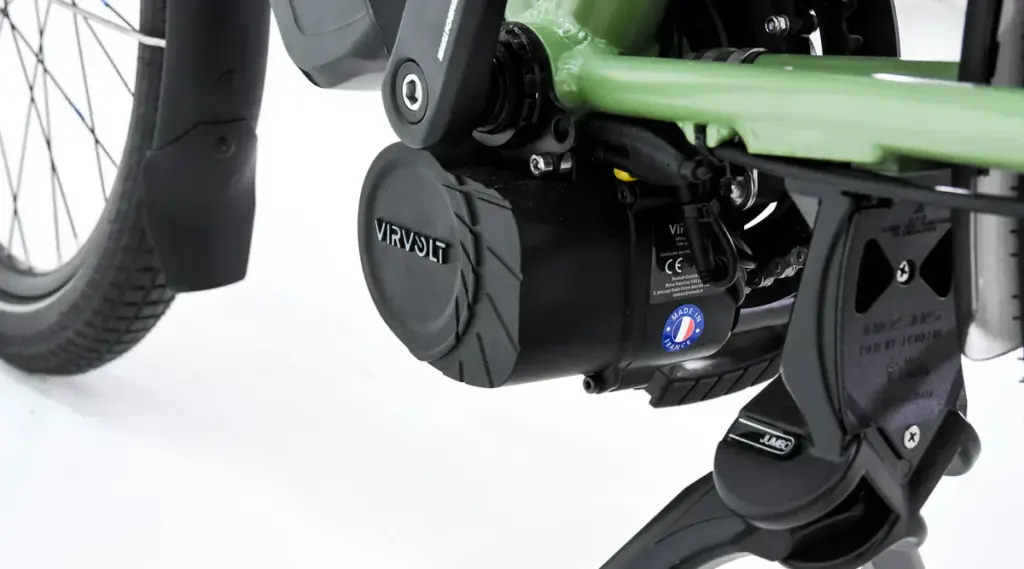
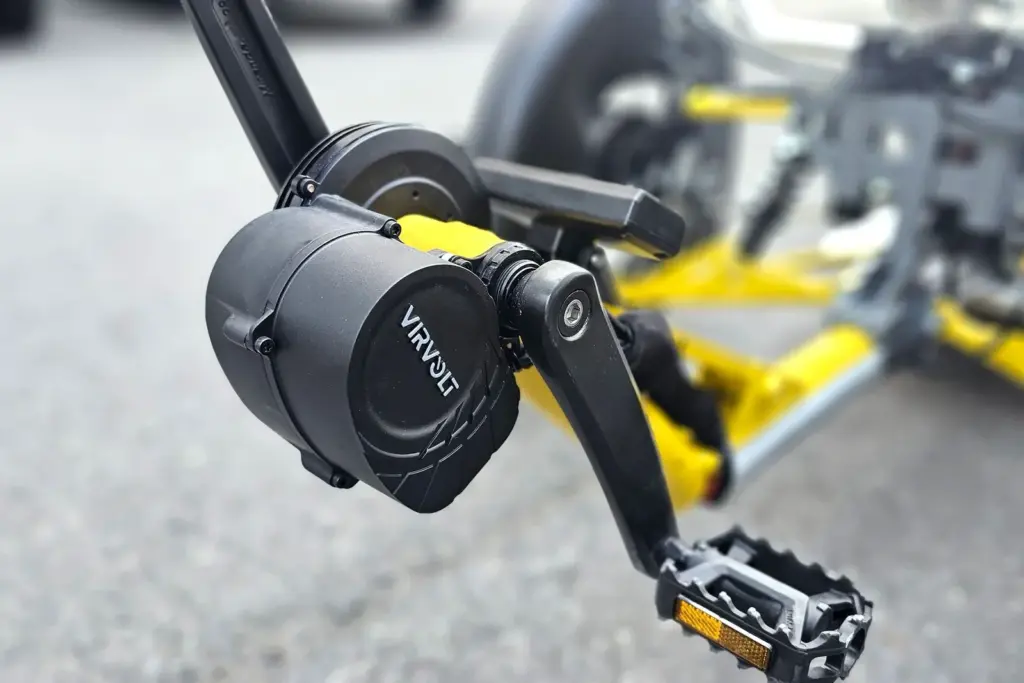
Virvolt, a French maker of electric bike motors, has unveiled the Genera 900: a generator that replaces the conventional crankset. The principle, known as “bike-by-wire”, removes any mechanical link between the pedals and the wheel — no more chain, cassette or derailleur. The pedals drive a generator that produces electricity to power the motor or motors. Priced at €500 to €600 depending on the version and assembled in Villeurbanne, it is aimed first at bike and véli manufacturers, not at consumers.
| Product | Genera 900 — generator / electronic crankset |
| Weight | About 3 kg |
| Electrical output | About 70 W (according to Virvolt) |
| Versions | Classic (linear assistance) and Haptic |
| Battery | 48 V (36 V is not compatible) |
| Price | €500 to €600 depending on the version |
| Assembly | Usine à Vélos plant, Villeurbanne (Rhône), France |
| Availability | Manufacturers, then dealers — no direct sales to consumers |
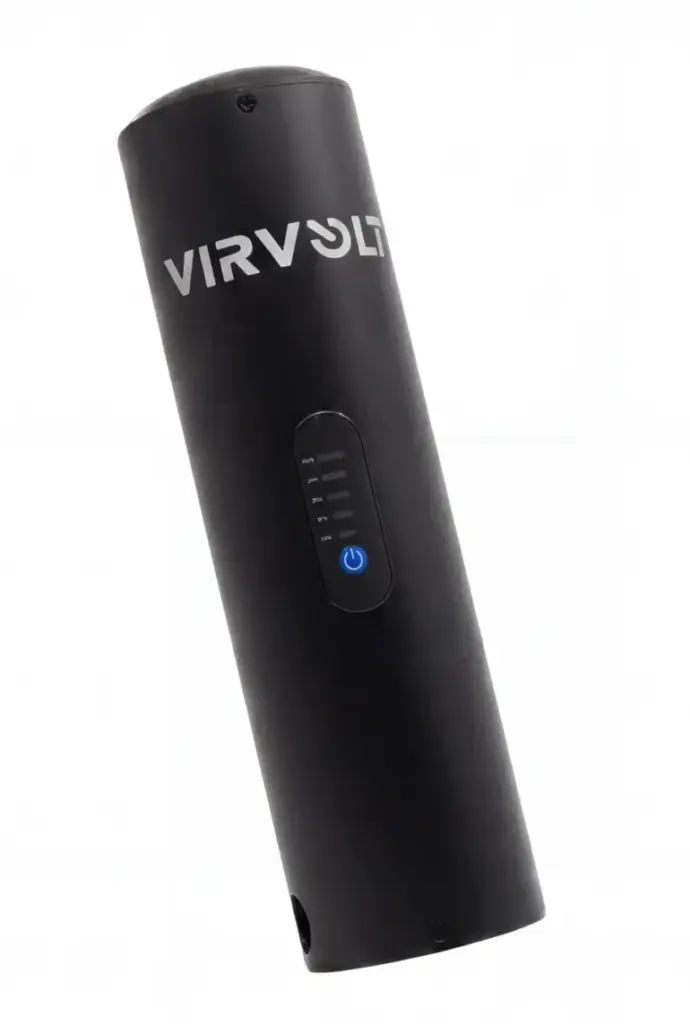
On the Genera 900, the pedal stroke no longer turns the wheel. It drives a generator — an electronic crankset — that converts effort into electricity. That energy flows to the battery, which in turn powers the motor or motors responsible for propulsion. Between the rider’s legs and the wheel, there is no mechanical link left: no chain, no cassette, no derailleur.
The pedals no longer touch the wheel
The process borrows its name from aviation and the car industry: “bike-by-wire”. The idea is not new. France’s Cixi already offers a comparable system, the PERS, built on the same disconnection between pedals and wheel. What Virvolt claims is industrialisation: the Paris-based firm, which reports 10,000 motors sold, assembles the Genera 900 in France and designed it from the outset for volume production and professional use.
The system did not come out of nowhere. It builds on the Gene-Pi crankset, in development since 2018 and credited with 50,000 kilometres of testing — including editions of the Sun Trip, the long-distance rally for solar-assisted bikes. Enough to hone the software expertise that makes the device interesting.
Two modes, one of which mimics mechanics
The Genera comes in two versions. The classic version delivers linear assistance, tailored to cycle logistics and vélis — those light intermediate electric vehicles, halfway between a cargo bike and a microcar. The haptic version adds a controller that meters progressiveness according to pedalling torque: a more natural, sportier behaviour, designed for conventional electric bikes and speed bikes.
Control is set across three assistance levels, with a dial to adjust pedalling resistance. Braking recovers energy in the motors, as on an electric scooter. A reverse gear is even possible.
Fewer parts, the fleet argument
The sales pitch fits in a single sentence: fewer wear parts, therefore less maintenance and less downtime. The message targets fleet operators and véli manufacturers first, for whom the mechanical drivetrain remains a recurring cost item. The Genera 900 fits existing bottom bracket standards, which simplifies integration.
The trade-off is weight: the electronic crankset comes in at about 3 kilos, more than a conventional motor. And the generator delivers only about 70 watts, according to Virvolt — little compared with the needs of an electric bike, but in the same order of magnitude as conventional assistance. On compatibility, the system accepts motors available on the market and runs on 48 volts; 36 volts is ruled out, judged too exposed to overvoltage.
Assembled in Villeurbanne, for manufacturers first
The Genera 900 is being industrialised at the Usine à Vélos in Villeurbanne, in France’s Rhône department, alongside other players such as Vefaa and Addbike. Virvolt is continuing the relocation of its components begun in 2023: the motor core is still designed by Aikema, but the brand already sources French parts — from Effigear, among others — and plans to bring the rest back home by 2027.
The price ranges between €500 and €600 depending on the version, with packs including one or more motors. For now, Virvolt sells only to manufacturers: several already have projects under way, including Maillon Mobility and its three-wheeler. In a second phase, dealers will be able to fit it to electrify or convert a bike. Direct sales to consumers, however, are not planned.
The chainless bike market remains a niche. But by targeting fleets and vélis rather than the Sunday rider, Virvolt is placing its bet where traditional mechanics cost the most to maintain.