IN BRIEF
Three players in the Swiss bicycle trade — Bike Profi, SPG and dynaMot — are expanding the training aimed at people retraining as bike mechanics. The one-week introductory course, launched five years ago in response to the labour shortage, is being joined by two two-day advanced modules, “Rad & Reifen” and “Neuvelo”, intended for those who have taken the first course or already have the corresponding basic knowledge. The record put forward by the organisers serves as the argument: more than 130 people changing careers have been prepared for workshop work since the initiative began, and more than half of them went on to start working in a professional workshop. The dates for the 2026/2027 season have been set.
Bikes are selling, but who repairs them? For five years Switzerland has been answering that question with fast-track training for adults coming from other trades. The scheme has just been expanded.
One week to get into a workshop
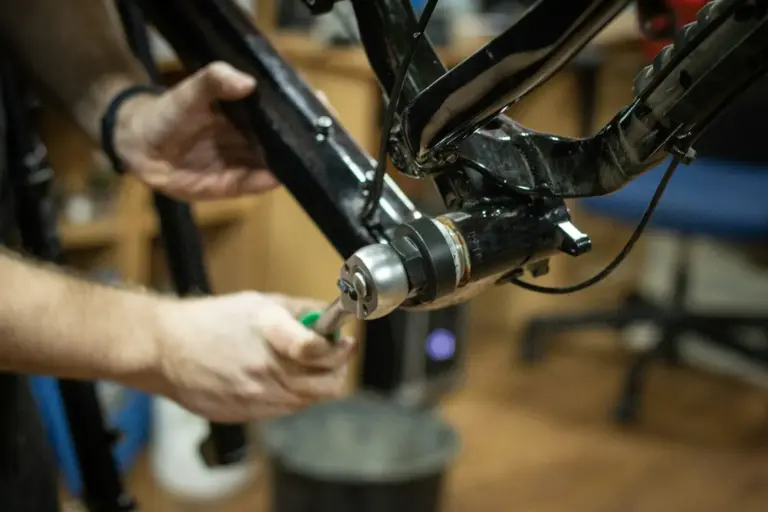
The foundation of the scheme remains the introductory course. According to Radmarkt, it lasts one week and covers “goods receipt, checking for defects and wear, repairs on bikes and electric bikes, as well as dealing with customers”. In other words, the day-to-day life of a workshop counter rather than a full mechanics qualification.
Its purpose is spelled out. Again according to Radmarkt, the course was launched “five years ago, in response to the shortage of skilled labour in Switzerland”, with a twofold aim: opening the professional workshop to motivated people changing careers, and helping specialist shops recruit and qualify staff. The official course page states that it “is aimed at companies wishing to introduce or further train, in their own workshops, employees without bike mechanic training”: registration goes through the employer.
Two advanced modules are being added
The new development announced on 28 August concerns what comes next in the pathway. Bike Profi, SPG and dynaMot are “placing two new advanced courses alongside their successful basic course for people changing careers”, Radmarkt writes. Named “Rad & Reifen” — wheel and tyre — and “Neuvelo”, they last two days each and are aimed, the organisers’ press release states, at people who have taken the introductory course as well as those with the corresponding basic knowledge. The organisers themselves give the reason for this extension: their introductory courses “have been meeting with great success for years and are regularly full”, they write, and that is why they are broadening the offer.
The move turns a stand-alone entry course into a tiered pathway: a way in, then specialisations. The dates for the 2026/2027 season have been set; according to Radmarkt, they are published on the Retail-academy website, which describes itself as “part of ANWR SWISS AG” and offers seminars and webinars “to local specialist retailers”. The connection is direct: again according to Radmarkt, ANWR SWISS is the umbrella organisation of Bike Profi, one of the three bodies behind the course.
More than 130 people prepared in five years
That leaves the question that decides whether such a scheme is of any use: how many of the people trained actually end up behind a workbench. The organisers put forward a figure, reported by Radmarkt: “More than 130 people changing careers have already been prepared for their work in a bike workshop since the initiative was launched.” And, again according to the organisers quoted by Radmarkt, more than half of them went on to start working in a professional workshop.
Set against five years and the scale of a whole country, the volume remains modest. Above all it says something about what the Swiss trade has ended up organising for itself: training a bike mechanic cannot simply be decreed, and here it is players in the bicycle trade who have taken charge of the start of the pathway.