IN BRIEF
Cycling Ireland president Ciarán Cannon describes an « absolute generational collapse » in the independent mobility of Irish children. On the radio station Newstalk, he puts forward an order of magnitude: forty years ago, one secondary school pupil in four cycled to school; today it is roughly one in thirty. The cause he points to is neither distance nor equipment, but parents’ fear of the journey itself. A survey carried out by Ireland Thinks for the insurer RedClick backs up that picture, according to road.cc: nearly eight children out of ten never cycle to school, while 70 % of parents would like them to.
| 40 years ago | One secondary school pupil in four cycled to school |
| Today | About one in thirty |
| Children who never cycle to school | Nearly 8 out of 10 |
| Children who cycle every day | 5 % |
| Parents who would like the school run by bike | 70 % |
| Distance Cycling Ireland considers manageable | 3 to 5 km, morning and evening |
| Schools in Ireland | About 4,000 (primary and post-primary) |
| Schools taking part in Safe Routes to School | Just over 500 |
« An absolute generational collapse »
It was on The Claire Byrne Show, on the Irish radio station Newstalk, that Ciarán Cannon used the phrase, as reported by road.cc: « an absolute generational collapse in children’s independent mobility » — independent mobility meaning children’s ability to get around on their own, of which cycling is only one means.
His order of magnitude is striking: « If you look about 40 years ago, we had one in four of our secondary school children cycling to school – that’s now about one in 30. » Neither a census nor a study is cited in support of that comparison: these are the official’s own terms, and the article reports them as such.
Neither the distance nor the bikes: the journey
What makes his remarks interesting is the explanation he rules out. For Ciarán Cannon, distance is not the obstacle: « A secondary school child should be easily able to cycle the three to five kilometres every morning and every evening. »
The sticking point lies elsewhere, and it is parental: « There’s no reason why they shouldn’t, other than the fact that their parents have serious safety concerns around that actual route to school. » In other words, it is not the children who give up, it is the adults who stop them — and for a reason no cycling promotion campaign can remove, since it has to do with the state of the road.
Cycling to school in the survey: the picture, and the barriers
Ciarán Cannon’s remarks follow the publication of a survey carried out by Ireland Thinks for the insurer RedClick. road.cc sums up the findings: « nearly eight out of 10 children never cycle to school, with only five per cent cycling daily, while 70 per cent of parents would like their kids to commute by bike ».
Parental buy-in, then, is not what is missing — it is the journey itself that Ciarán Cannon holds responsible.
On the causes, however, the survey does not quite match his account: asked what makes the journey impractical, parents point first to distance, according to road.cc — « distance to school as the leading reason (54 per cent), followed by heavy school bags (41 per cent) ». Among parents of secondary school pupils, again according to road.cc, it remains the leading reason (54 %), ahead of unsuitable uniforms (49 %).
Safe Routes to School: just over one school in eight taking part
Ireland has a dedicated scheme, the Safe Routes to School Programme, which road.cc describes as a programme « which helps identify and improve cycling routes to and from schools ». It works, but it covers only a fraction of the country.
Ciarán Cannon gives the ratio: « There are about 4,000 schools in Ireland right now between primary and post-primary and just over 500 schools are engaged in that programme. » That is just over one school in eight. « So, we urgently need to scale up that; we need to invest in it and it’s a really, really sound investment in our children’s health and well-being », he concludes.
Cycling Ireland also runs its own training programme, Cycle Right, « which trained 43,000 children last year, aiming to reach 50,000 annually », road.cc reports, immediately adding the caveat: « the programme will only work if parents feel confident enough to let their children ride among traffic ».
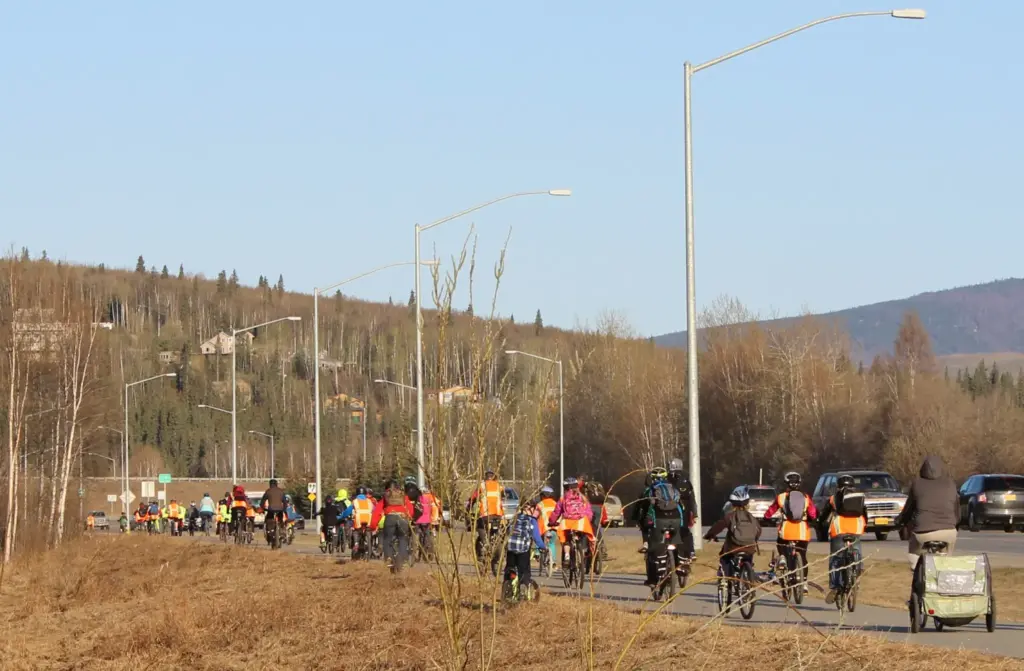
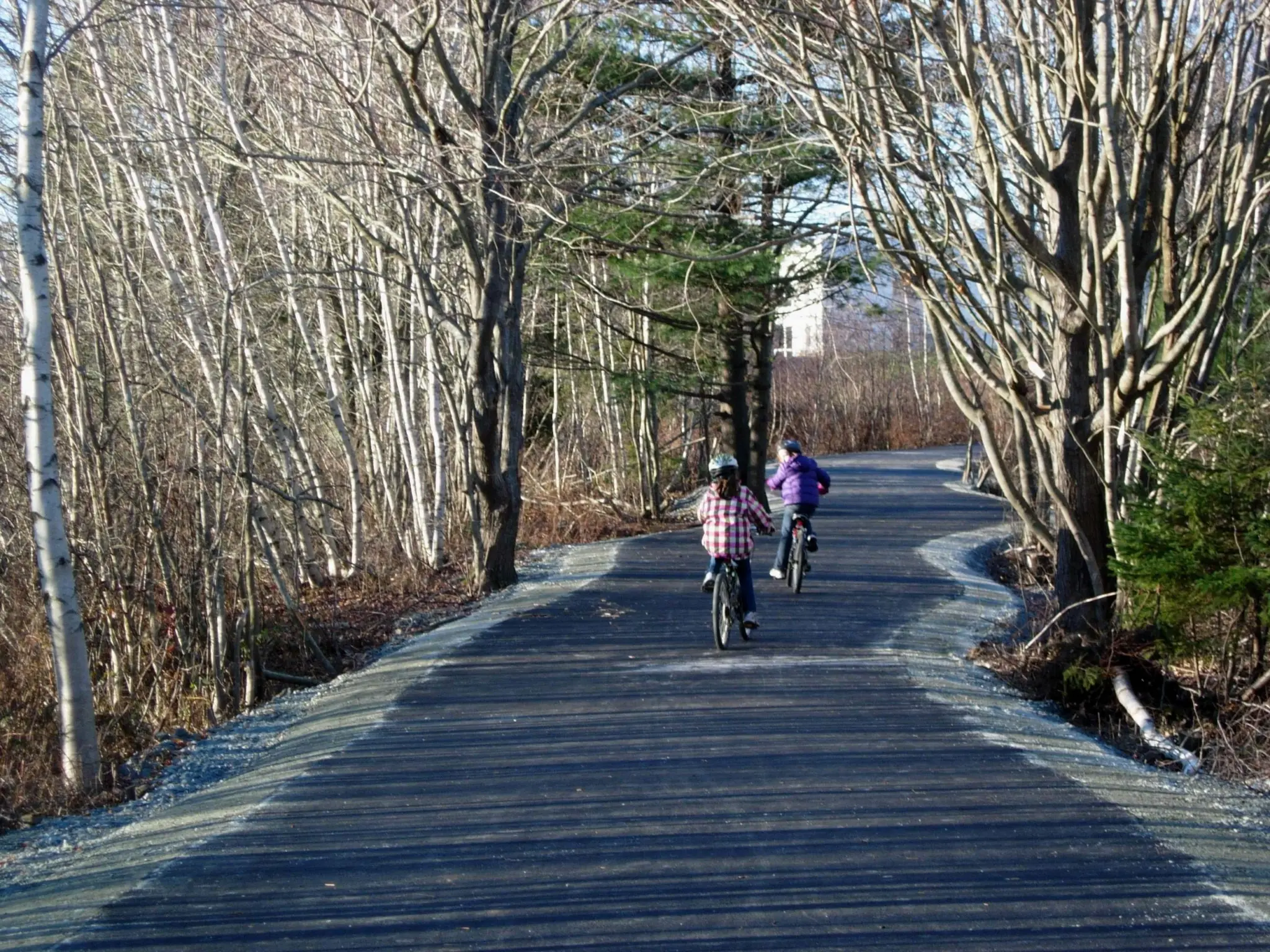
Lead photo: illustrative photo — Alaska DOT&PF, via Wikimedia Commons, under licence CC BY 2.0.