IN BRIEF
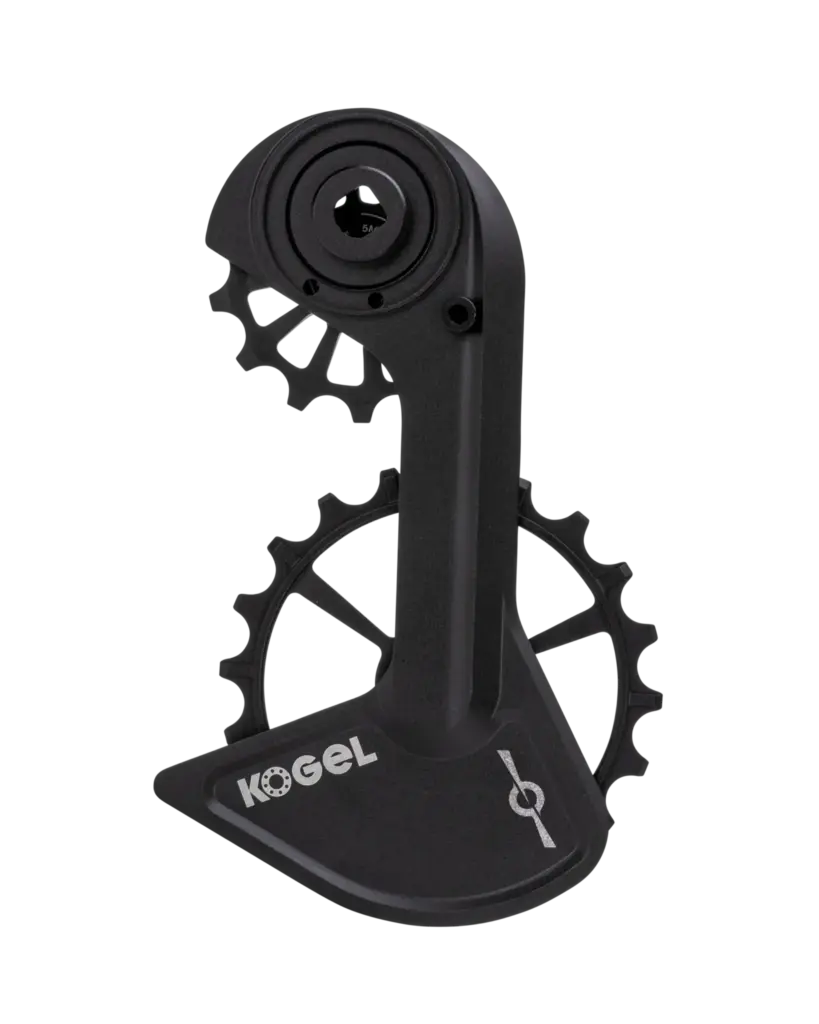
Kogel unveiled the Kolossos Pulsar on 6 August, describing it as its fastest oversized derailleur cage to date. What sets it apart is the bearing: both the balls and the races are ceramic, where most so-called ceramic bearings run ceramic balls in steel races. With no metal involved, the brand says there is nothing left to lubricate or to seal — the two main sources of friction in a conventional bicycle bearing, according to it — and claims thirty seconds of free spin on the lower pulley. The Pulsar sells for €658.95 in the Speed version and €877.95 in the Aero version, each for SRAM Red and Force AXS as well as Shimano Dura-Ace R9200 and Ultegra R8100. Kogel advises against off-road use.
| Price — Speed cage (SRAM or Shimano) | 658,95 € |
| Price — Aero cage (SRAM or Shimano) | 877,95 € |
| Price — custom Cerakote finish | €767.95 (Speed) · €987.95 (Aero) |
| Bearings | Full ceramic: ceramic balls and ceramic races |
| Lubrication | None, according to Kogel |
| Compatibility | SRAM Red and Force AXS; Shimano Dura-Ace R9200 and Ultegra R8100 |
| Colours | Anodised black · gloss white Launch Edition · custom Cerakote |
| Use | Road; off-road use advised against by the brand |
In high-end road cycling, the oversized derailleur cage occupies a place of its own. It replaces a part that works perfectly well with another one, bigger and more expensive, to claw back a fraction of a watt. Kogel, a Texan bearing specialist, has just taken it a step further with the Kolossos Pulsar, announced on 6 August under an unambiguous headline: according to Kogel, « our fastest derailleur upgrade yet ».
A derailleur cage with no steel and no grease
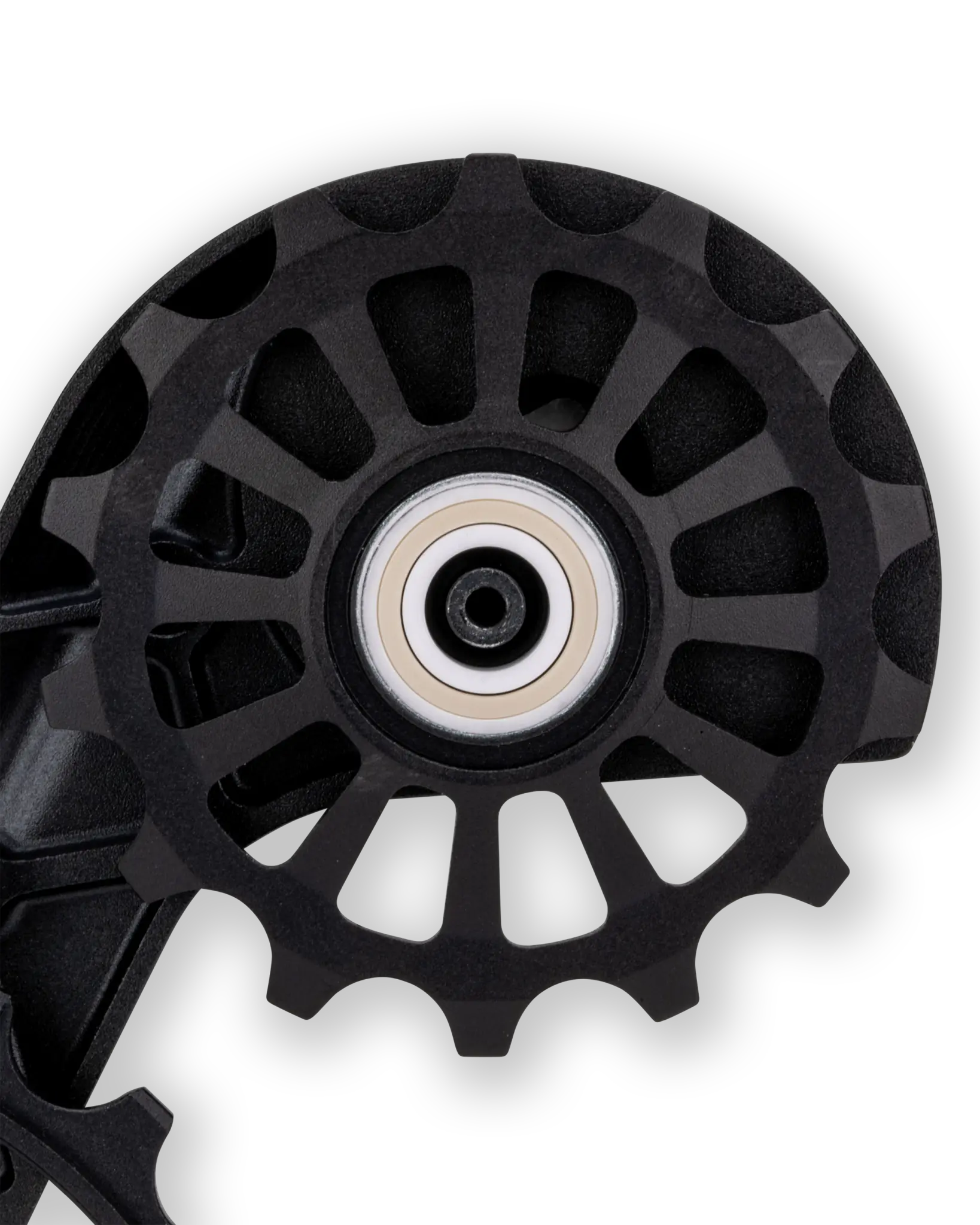
The word « ceramic » has been kicking around component catalogues for twenty years, and it almost always means the same thing: silicon nitride balls running in hardened steel races. Kogel is happy to point this out about its own hybrid bearings. The Pulsar, for its part, switches to races that are ceramic too. « The Pulsar runs on full ceramic bearings, ceramic balls spinning in ceramic races rather than in steel », the brand writes on its product pages.
The consequence is mechanical. With no metal in the bearing, Kogel explains, « there is nothing to corrode and nothing to lubricate ». And, still according to the brand, « in a conventional bicycle bearing, most of the drag comes from the lubricant and the seals ». Take both away and all that remains is pure mechanical friction. The result Kogel puts forward is a workshop-counter test rather than a laboratory figure: a flick of the lower pulley, bike sitting on a repair stand, and « thirty seconds of free spin becomes the norm ».
Kolossos Pulsar: stiffness rather than light weight
This is the most interesting part of the announcement, and it runs counter to the industry’s habit. Rather than draw up a lightened cage for the occasion, Kogel chose to carry over its existing structures unchanged. « We didn’t build it on a flimsy cage, an ultra-light experiment. We built it straight onto our proven, very stiff Speed Kolossos and Aero Kolossos platforms », the brand writes.
The argument put forward is mechanical: « structural stiffness is what keeps the chain aligned under load ». A cage that twists under effort throws the chain out of line, and the friction saved in the bearing is lost again in the drivetrain. The oversized pulleys, for their part, reduce how much the chain has to articulate. In other words, Kogel reckons that a flexible cage would cancel out the very benefit it has just gone looking for in the bearing.
That leaves one limitation the brand sets out itself, and which follows directly from this choice of a road racing part: « We advise against using the Pulsar off-road. » The Aero version, whose faired profile targets « time trial specialists and triathletes », drives the point home.
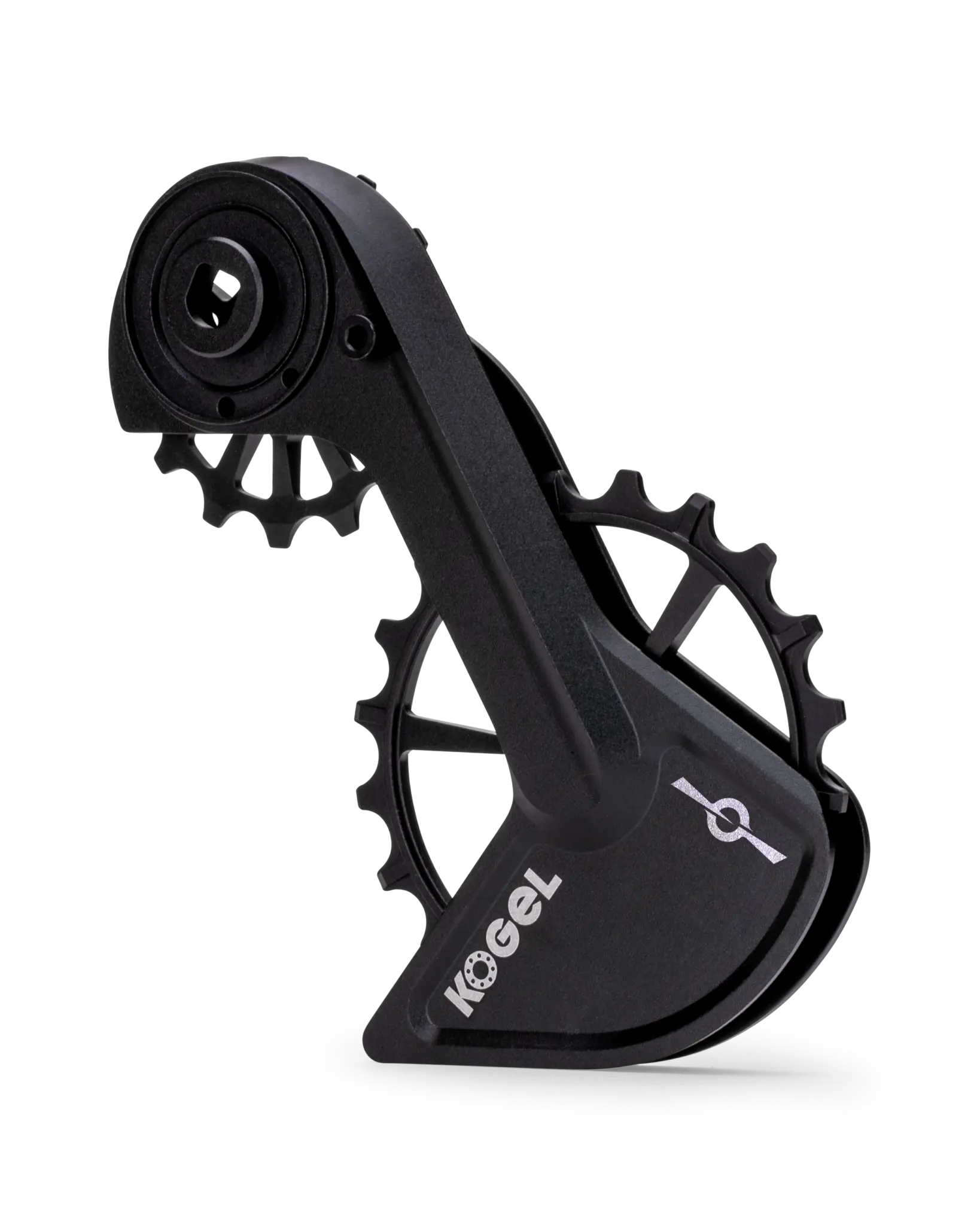
Three tiers of derailleur cage, and an entry ticket at €658.95
With this third tier, Kogel arranges its range into three steps that it describes as a « good, better, best » hierarchy. At the bottom, the Kolossos ST launched last year, on stainless steel bearings, for anyone who wants « 90% of the performance with none of the fuss ». In the middle, the standard Speed and Aero Kolossos. At the top, the Pulsar.
The prices follow suit. On the official shop viewed from France, the Speed cage is listed at €658.95, and the Aero cage at €877.95 — in both cases for SRAM Red and Force AXS as well as Shimano Dura-Ace R9200 and Ultegra R8100. A custom Cerakote finish takes the bill to €767.95 and €987.95 respectively. Three finishes are offered: anodised black, a gloss white Launch Edition, and the bespoke Cerakote.
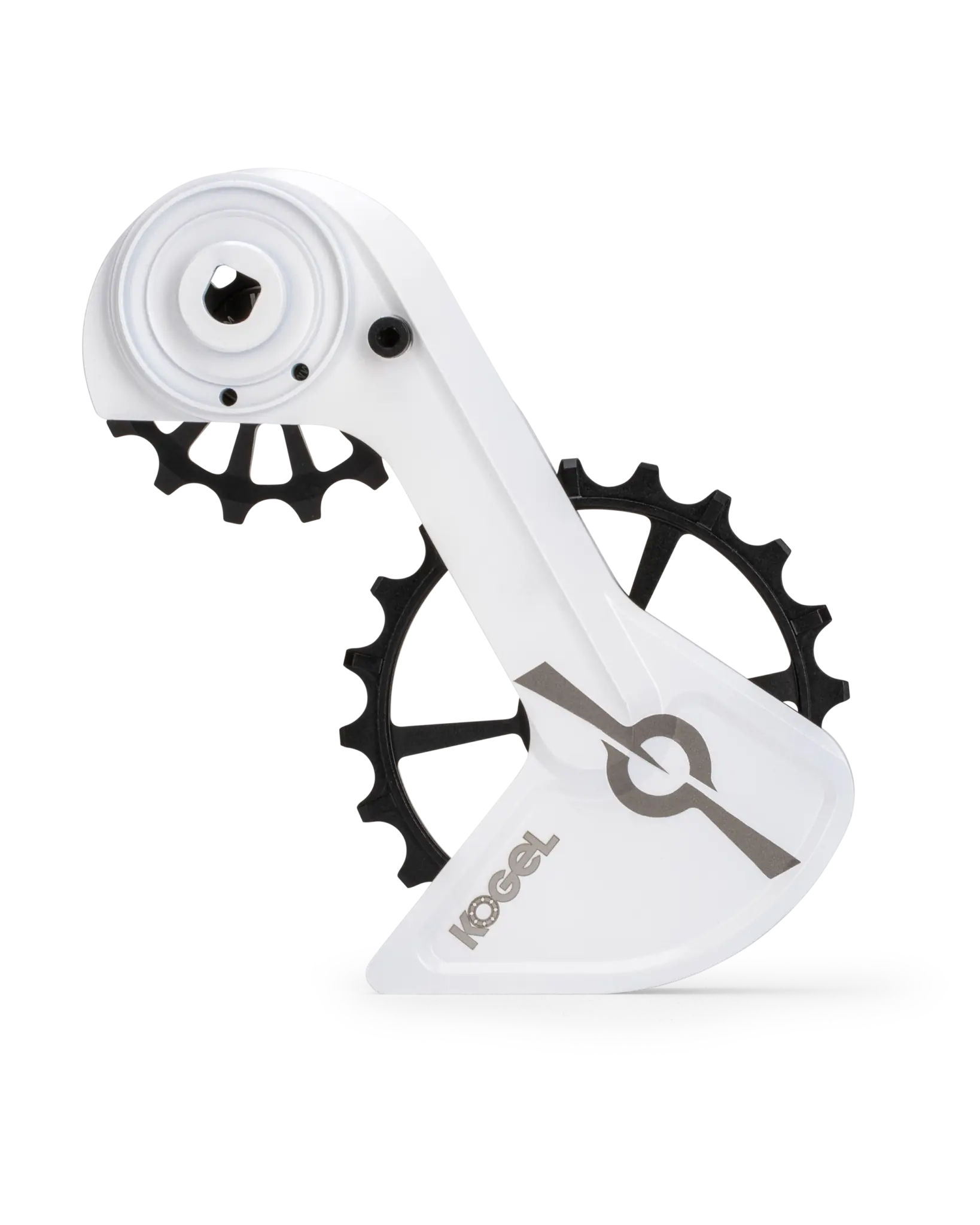
To spot a Pulsar on a bike, look at the lower chain guard: Kogel has engraved a dedicated icon there, on top of its usual marking. A detail that says a lot about the intended audience — the kind who can recognise a derailleur cage from three metres away.
On the actual gain, however, the brand stays cautious, and that is to its credit: its friction test returned a null reading, but it points out that the friction was too low to be picked up by its usual sensor, which it had to replace with a more precise model. The 6 August announcement therefore says nothing about a figure in watts.