IN BRIEF
Since a municipal decree dated 26 June 2026, helmets and reflective vests have been mandatory on electric bikes and electric scooters in Reims, on pain of a €35 fine. The problem: the text is badly drafted. Mayor Arnaud Robinet has since clarified that conventional electrically assisted bikes are not covered — only machines that run without pedalling, at up to 50 km/h — and that the decree is to be rewritten. The Reims cycling association Vél’Oxygène, for its part, considers the requirement ineffective and is calling for infrastructure instead.
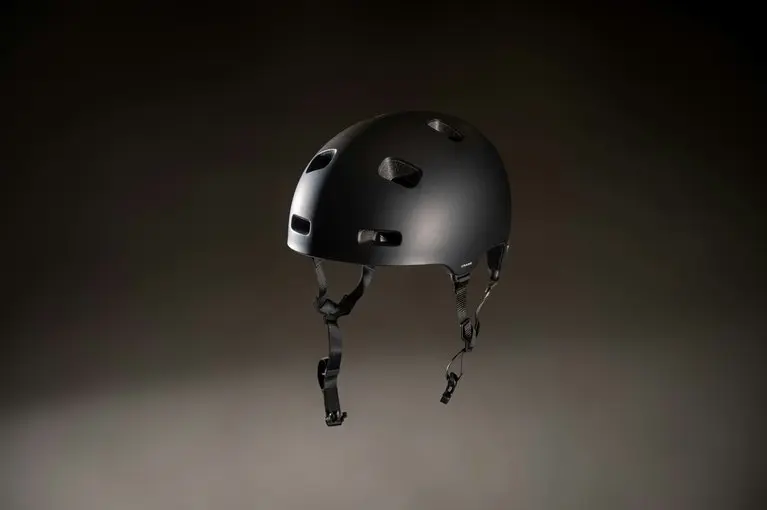
In Reims, helmets have become mandatory on electric bikes and electric scooters. The decision, taken by municipal decree at the end of June, had all the makings of a clear-cut measure. Except that, in seeking to impose mandatory helmets in Reims, the city hall produced a text so imprecise that the mayor had to correct its scope himself, immediately after the press revealed it.
Helmet and yellow vest, or a €35 fine
It all starts with a decree signed on Friday 26 June 2026 by the City of Reims, revealed by the press in mid-July. It requires anyone riding an electric bike or an electric scooter to wear a helmet and a retroreflective vest — the well-known “yellow vest” — by day as well as by night. The national and municipal police forces are tasked with enforcing the rule, which carries a €35 fine.
The measure goes considerably further than national law, which requires helmets only for children under 12, and vests only outside built-up areas when visibility is poor. Arnaud Robinet, the (Horizons) mayor of Reims, openly intends to tighten the rules in the name of road safety.

A mandatory helmet, but not for electric bikes
Except that the text has sown confusion. Asked about it after publication, Arnaud Robinet acknowledged a drafting error: helmets are not in fact mandatory on conventional electrically assisted bikes. “It’s electric assistance, you need to pedal,” the mayor explained. Off-the-shelf e-bikes are therefore spared, as are the urban area’s ZébullO shared electric bikes.
What the decree really targets are electrically propelled machines that move without pedalling, at up to around fifty kilometres per hour — fast scooters and similar two-wheelers. “The decree was perhaps badly drafted, it is going to be clarified,” the mayor conceded. A new version is to draw a clear distinction between the two families of machines.
For Vél’Oxygène, “this is not the effective solution”
The Reims cycling association Vél’Oxygène did not wait for the correction to voice its opposition. It does not dispute the value of the helmet, but the idea of making it compulsory. “We fully understand that the city wants to act on the number of accidents, which is a very good thing, but this is not the effective solution,” sums up Damien Malezet, who handles press relations for the association.
His argument: elsewhere, the requirement has mainly driven cycling down. “In Australia, they made the helmet compulsory, and it brought the number of cyclists down by 30 to 40%, without bringing down the number of accidents,” he says, arguing instead for incentives and the development of cycling infrastructure. He also cites the Netherlands, where people cycle a great deal, without helmets, for far fewer road deaths than in France. Working with the French cyclists’ federation (FUB), the association is not ruling out challenging the decree.
Pending its rewriting, the first version of the Reims decree will above all have served as a reminder of one thing: legislating on helmets, even at city level, is anything but simple.