IN BRIEF
Yamaha stopped selling its own e-bikes outside Japan at the end of 2025 to focus on three motors: the PW-X4 (mountain bike, 100 Nm, 750 W), the PW-S3 (city and trekking, 75 Nm) and the PW-Link 48V (new generation, modular). The brand bought Brose’s eBike division in 2025. Research from Delft University shows that e-bike motors see a peak in failures between 16,000 and 20,000 km, and that 43% of users would rather throw away the whole bike than repair it.
In 1993, Yamaha launched the world’s first production electric assist bicycle. Thirty years on, the brand is drawing a line under sales of its own bikes outside Japan — and refocusing its entire eBike business on building motors.
First off the line, and first to pivot
The story starts in 1989, when the Japanese company began experimenting with electric assistance on a bicycle. The result, in 1993: a city bike with swept-back handlebars, a bulky mid-drive motor and a lead-acid battery at the back. Not a seductive object, but a world first.
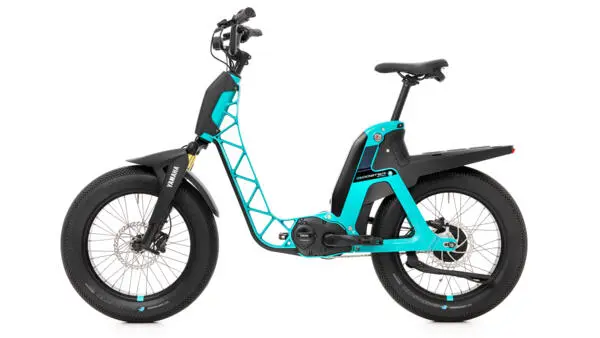
For several years, Yamaha sold its own models around the world. At the end of 2025, the brand decided to stop that business outside Japan. The same year, it bought the eBike division of Brose, the German motor maker, which will be folded into its European operation. The message is clear: Yamaha no longer wants to compete with its OEM customers using its own bikes.
“We launched our own electric bikes to test the market many years ago, but we decided to focus our efforts and not to bother our OEM customers with competing products.”
Fabia Marzola — Yamaha eBike
Three motors, not one more
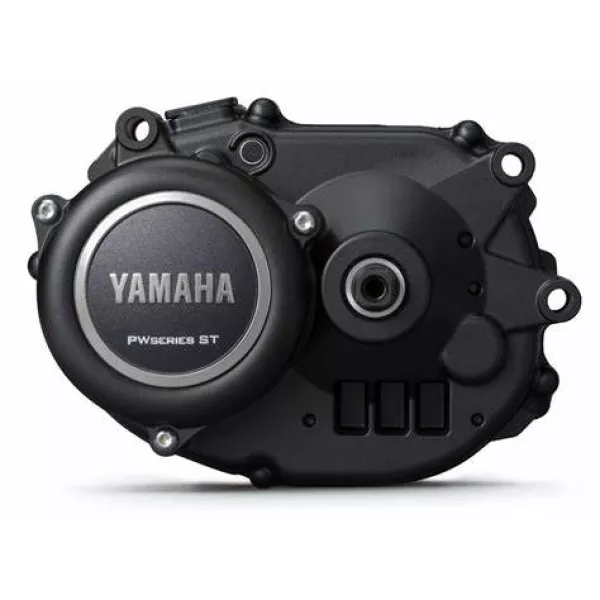
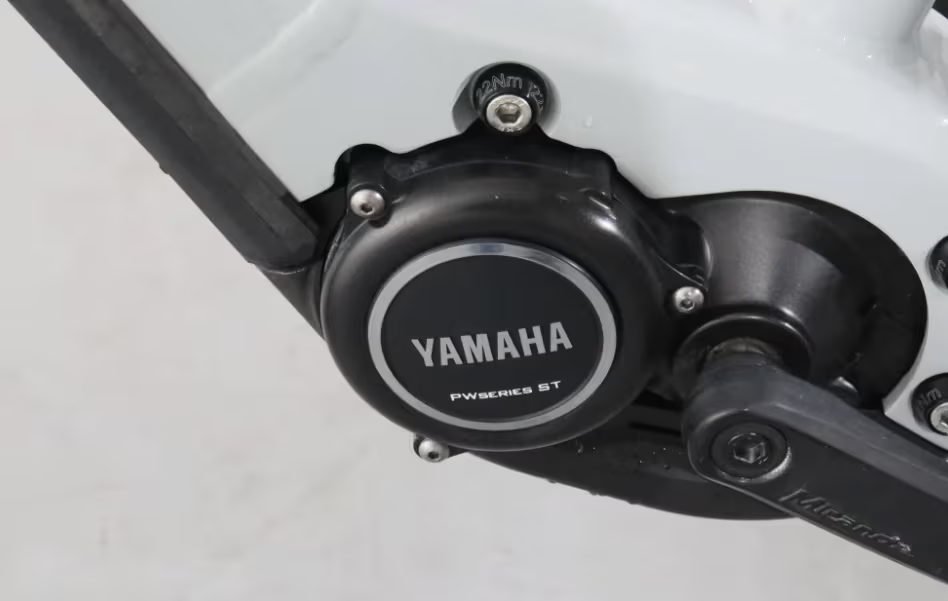
The current line-up comes down to three units. The PW-X4 targets mountain biking: 100 Nm of torque, 750 W at peak, 2.6 kg in a magnesium housing. The PW-S3 is aimed at city and trekking use, with 75 Nm — a good figure for that segment. Its motors are found in particular on Decathlon e-bikes and Hero Cycles InSync models.
The PW-Link 48V represents the new generation: modular, compatible with the 560 Wh or 840 Wh batteries in the same ecosystem, and fitted with a technology known as Zero Cadence that delivers effective assistance at very low speed. Production is split between France, Japan and Taiwan. The French plant, which until now has been building 36V S2 motors, is being converted to this new generation.
16,000 to 20,000 km: where motors get fragile
This is the awkward data point. Research from Delft University shows that e-bike motors see a peak in failures between 16,000 and 20,000 km — often for simple reasons, such as a bearing failure. At that stage, 43% of the users surveyed said they would throw away the whole bike rather than try to repair it.
A worrying figure for an industry that presents itself as sustainable. And a selling point for motor makers that invest in quality: Yamaha points to a claim rate well below the industry average.
Repairability, the next job
In 2025, Yamaha began rolling out an after-sales service network running direct to dealers, starting with France. Repairers cannot yet open the motors themselves. But the brand is working on offering reconditioned motors at a reasonable price, and is ultimately aiming for a model close to that of motorcycling — where parts are exchanged individually.
On the state of the market, Fabia Marzola notes that demand for motors levelled off in 2025, particularly in Germany, at around 5 million units a year. DJI’s arrival with its Avinox brand has created a lot of noise, but Yamaha is sticking to its mid-range positioning: “most of the volume is under €3,000”.