IN BRIEF
Canyon unveiled the Stingr Smart at Eurobike 2026, a helmet prototype fitted with a head-up display (HUD) built into a motorised visor. The system projects safety alerts — road surface, vehicles, the bunch — and performance data into the rider’s field of vision, backed up by vibrations and audio signals. Paired with the Canyon Predict concept bike, bristling with radar, cameras and sensors, it is aiming for “predictive” safety that anticipates hazards. So far, neither a price nor a release date has been announced.
| Product | Canyon Stingr Smart helmet (prototype) |
| Type | Head-up display (HUD) helmet |
| Display | Retractable motorised visor, projection into peripheral vision |
| Alerts | Visual, haptic (vibrations) and audio |
| Controls | Voice (microphone + speakers) and touch buttons |
| Data displayed | Speed, power, cadence, heart rate, elevation gain, navigation… |
| Connectivity | Smartphone, ANT+ / Bluetooth sensors, Canyon Predict bike |
| Unveiled at | Eurobike 2026 trade show |
| Price and availability | Not announced (prototype) |
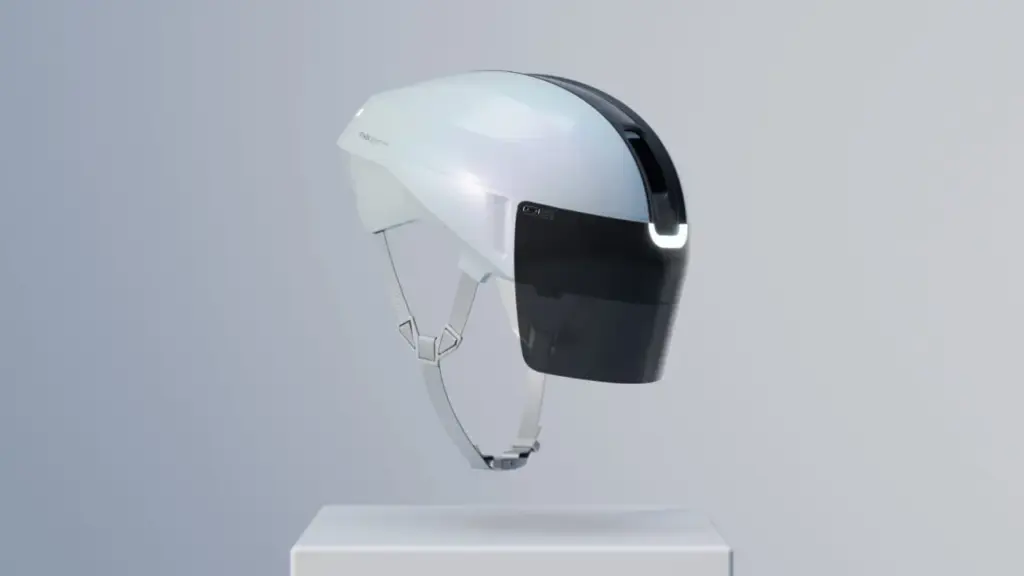
A sudden braking picked up three riders ahead, a car coming up from behind: the information appears in a corner of the field of vision, before it is even visible to the naked eye. That is the promise of the Stingr Smart, the connected helmet prototype Canyon unveiled at Eurobike 2026. The German manufacturer is not imagining yet another “smart” helmet, but an interface between the rider and the road, built around a head-up display (HUD) housed in a motorised visor.
“Showing the invisible”
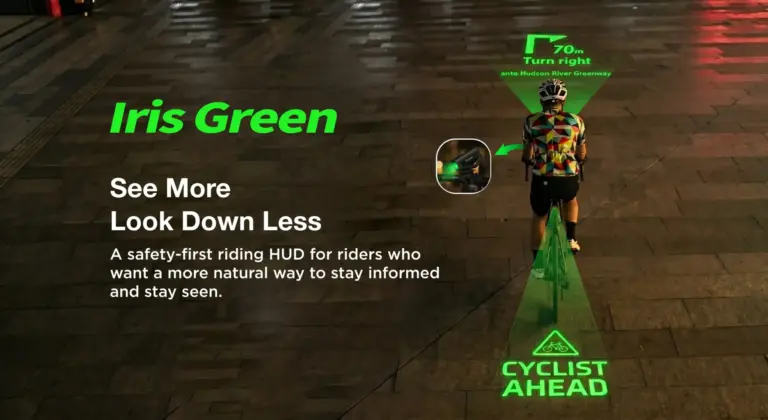
The idea is not to stack information permanently in front of the rider’s eyes, but to show each thing only when it matters. The helmet can flag the state of the road surface, the behaviour of other road users, the dynamics of a group or a riding recommendation — always in context.
To limit distraction, these indications are first projected into peripheral vision. If the hazard becomes more definite, the alert moves towards the centre of the field of vision and is accompanied by vibrations and audio signals. Canyon says it wants to reduce the rider’s mental workload while sharpening their perception of risk.
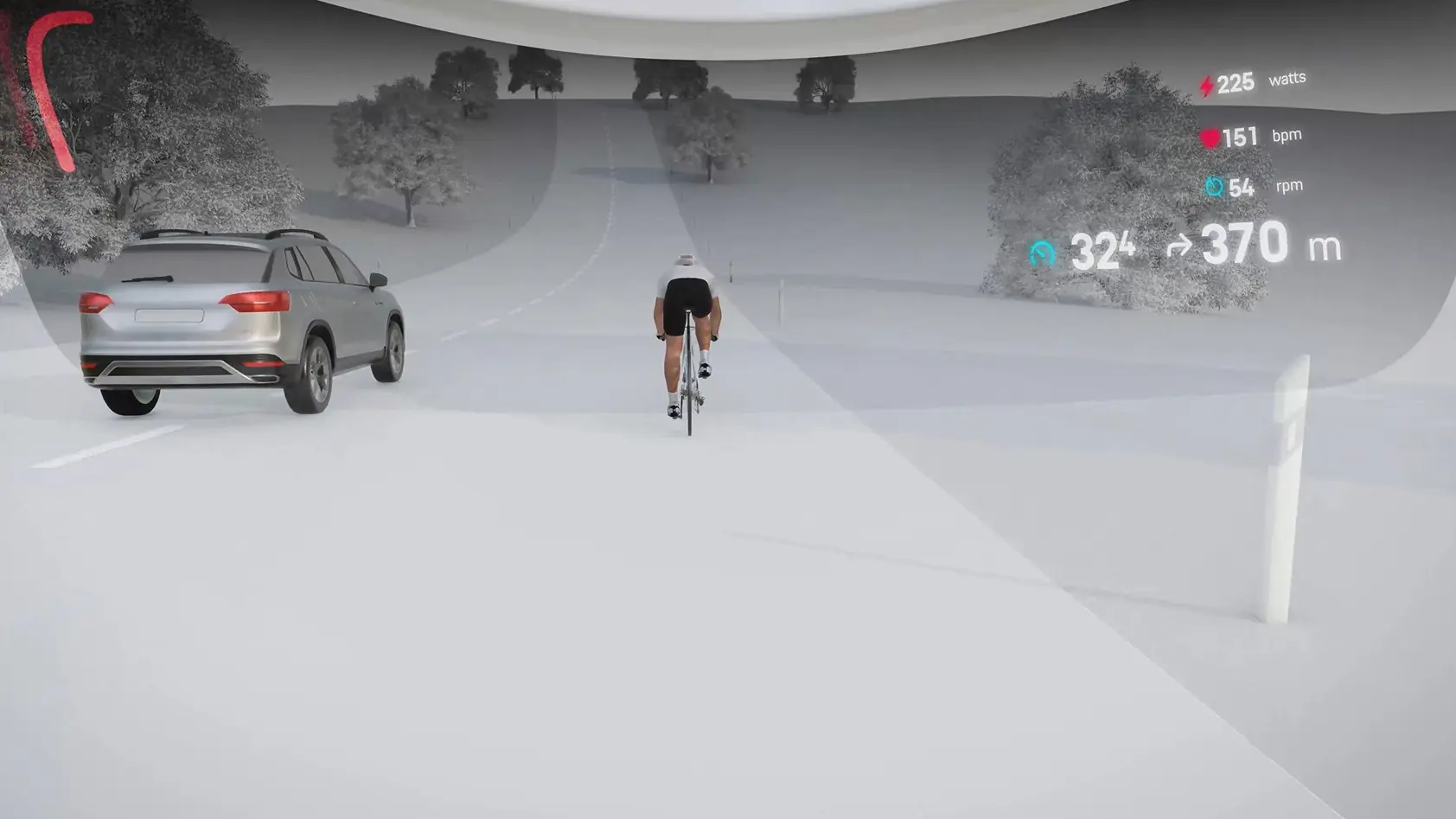
A motorised visor, controlled by voice
The display is built into a retractable visor. When it is no longer needed, the visor retracts inside the helmet; on every ride, a fixed wiper cleans its surface automatically.
For the controls, Canyon is betting on voice: a built-in microphone and speakers placed close to the ears make it possible to operate the helmet without letting go of the handlebars. Touch buttons on the shell are also used to navigate the menus.
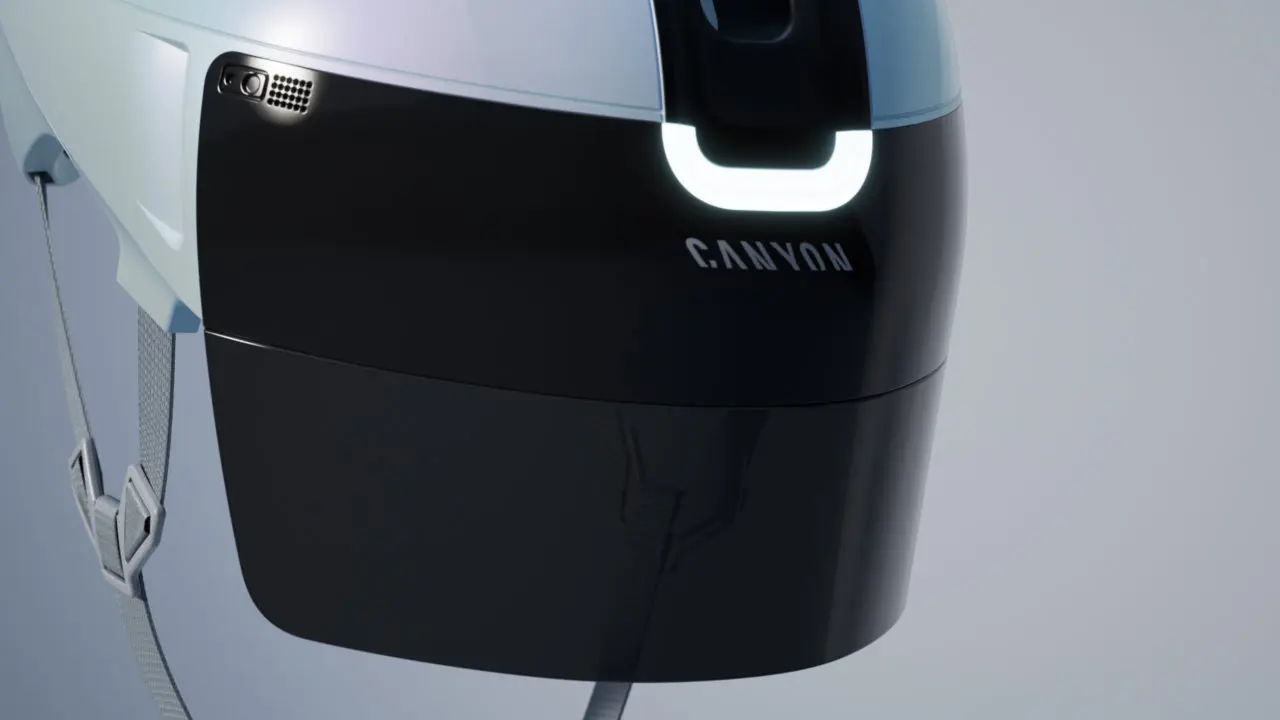
One link in a bike bristling with sensors
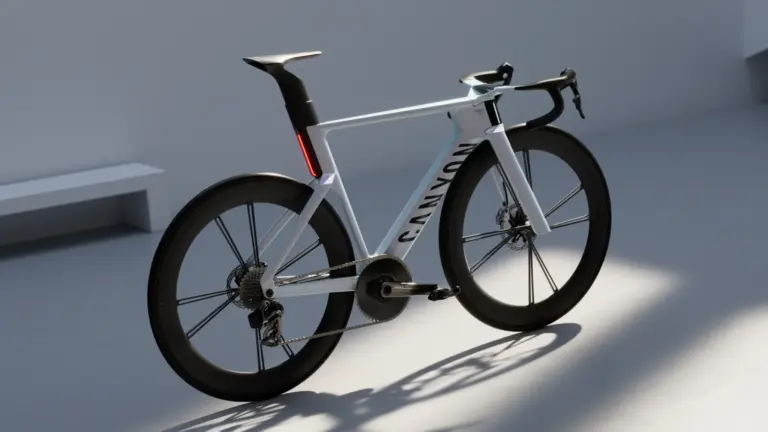
The helmet comes into its own when paired with another object unveiled at the same time: the Canyon Predict, a concept bike packed with on-board artificial intelligence, radar, cameras and sensors that monitor the surroundings through 360 degrees. The Stingr Smart then becomes the screen that relays this data to the rider.
Canyon has named these functions Prediction Assist, Distance Assist, Terrain Assist and Group Ride Assist. They warn of braking up ahead, an approaching vehicle, an obstacle on the road or unusual behaviour within a bunch — ideally before the rider notices them.
The use does not stop at safety. The HUD can display speed, distance, time, power, cadence, elevation gain or gradient, measure heart rate directly from the helmet and pull in data from ANT+ or Bluetooth sensors, such as battery range or the gear currently engaged. Without a Predict bike, the helmet still works: connected to a smartphone, it acts as a screen for navigation, communications or training.
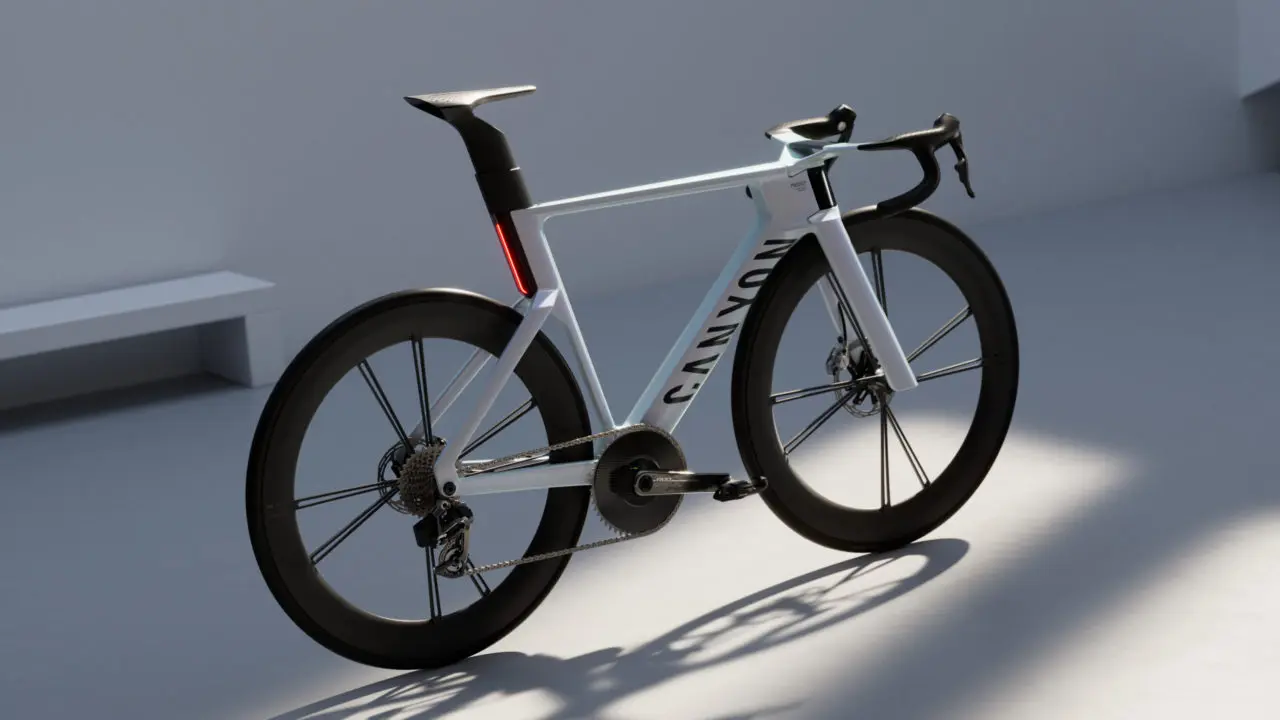
Still a prototype, and a bet yet to be proven
At this stage, the Stingr Smart is only a prototype: Canyon has announced neither a price nor a release date. What the brand is putting forward, for now, is a vision — moving the helmet on from passive protection, which absorbs impacts, to active safety equipment, which seeks to avoid them.
The bet is far from a safe one. Head-up display devices for cyclists, especially in the form of glasses, have so far struggled to win over testers: often judged too intrusive, too bulky for what they bring. For a helmet, the whole challenge will be to succeed where glasses have failed — making the information discreet enough to be forgotten, and useful enough to be looked at.