IN BRIEF
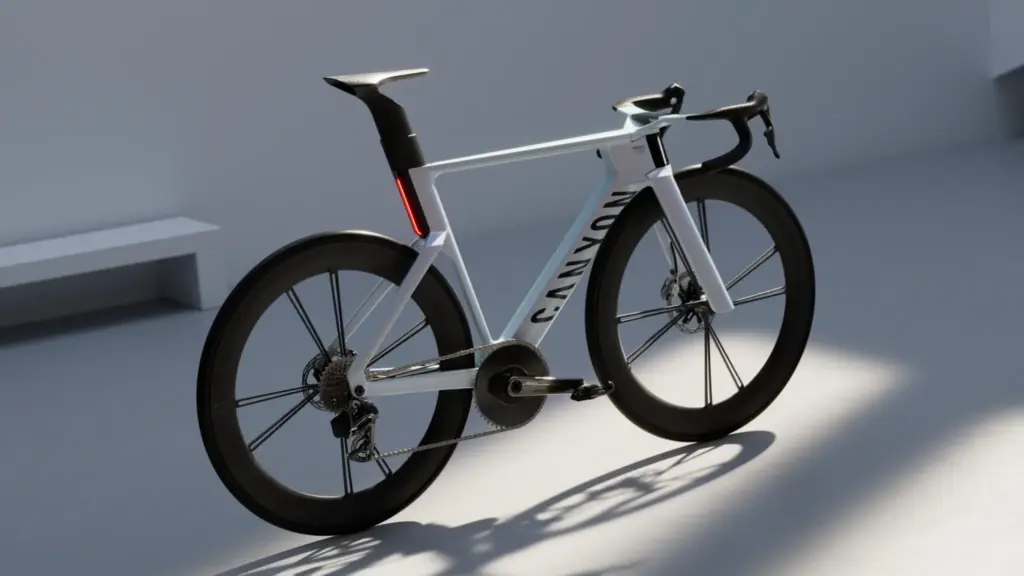
Canyon has unveiled Predict, a road bike prototype fitted with a 360° sensor network combining cameras, radars and sensors built into a DT Swiss hub. Onboard AI processes the data locally, with no cloud connection, to anticipate hazards in real time — the trajectories of other road users, road conditions, group dynamics. If it detects a risk, the bike can automatically drop the seatpost to lower the centre of gravity. Shown at Eurobike in Frankfurt (24-27 June, hall 11.0, stand B50), the Predict is a prototype with no release date or price announced.
With Predict, Canyon is sketching out an answer to one of the paradoxes of contemporary cycling: while cars are statistically safer and safer — in Germany, car occupant deaths have fallen by 35% in ten years — cyclists remain exposed. In 2024, 1926 cyclists were killed on European Union roads, or 10% of all road deaths, with a motor vehicle involved in 65% of cases. Canyon’s head of design sums up the challenge: “Cars have become inherently safer, but bikes have seen no significant improvement in safety.”
Seeing without looking: 360° of real-time awareness
The Predict carries a fusion of sensors spread across the whole frame: cameras, radars and motion sensors, one of them built directly into the DT Swiss front hub. Together they reconstruct a dynamic 360° map of the rider’s surroundings. The onboard AI — an Edge AI setup, processed locally on the bike — analyses that stream without going through a remote server. The result: lower latency and privacy preserved, since no personal data leaves the device.
The system can spot a vehicle closing in from behind, estimate its trajectory, analyse the dynamics of a group of riders through a bend, or anticipate a broken road surface before the wheel reaches it. It is this anticipation — rather than a simple reaction after impact — that justifies the name “Predict”.
Multiple alerts, up to dropping the saddle automatically
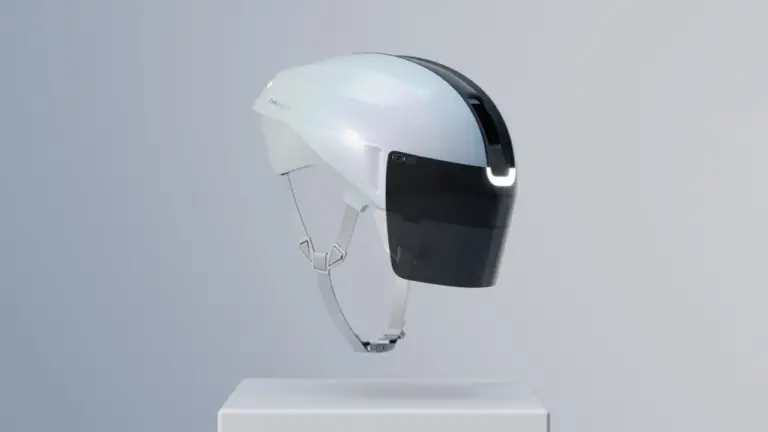
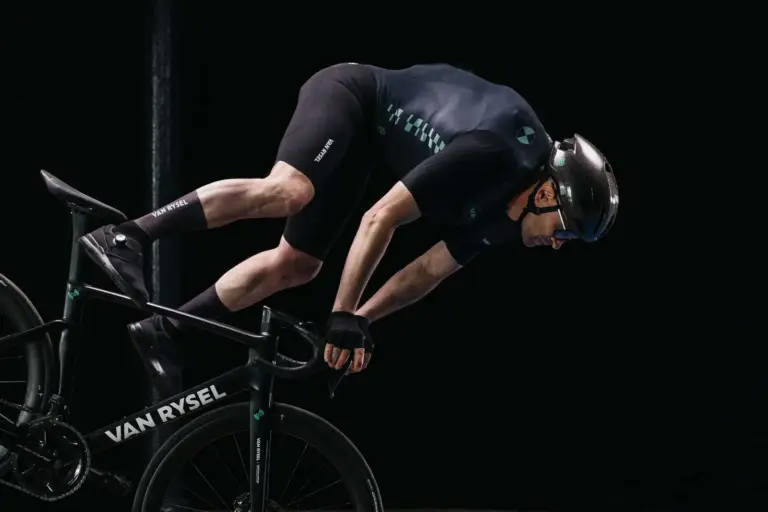
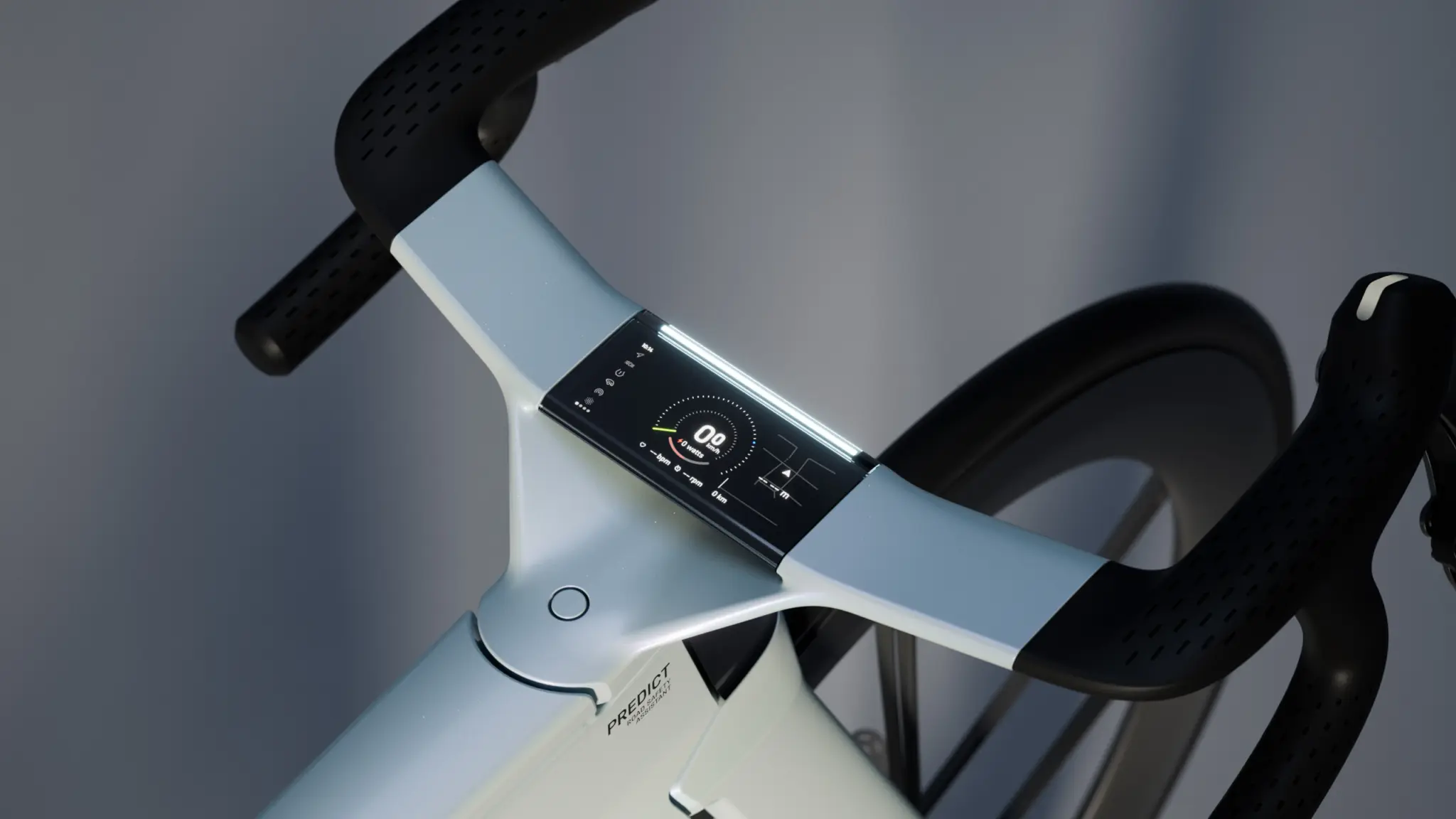
When the AI identifies a risk, it can warn the rider through several channels at once: directional lights, haptic feedback in the handlebar, and a screen built into the bar. The Predict also interfaces with the Canyon Stingr connected helmet, whose augmented-reality visor displays alerts directly in the rider’s field of view, with no need to look down.
The response can go as far as physical action: in situations judged critical, the system can automatically trigger the dropper seatpost, lowering the rider’s centre of gravity to improve stability ahead of a potential impact. Canyon also mentions a collective dimension: “swarm intelligence” lets several Predict bikes share their environmental data, sharpening the accuracy of the alerts for everyone in a group.
A prototype, not yet a product
Canyon will show the Predict at Eurobike 2026 (Frankfurt, 24-27 June, hall 11.0, stand B50) and is expected to give some indication there of how development might progress. For now, neither a timeline nor a price has been announced. The brand describes the Predict as a prototype intended to “explore new approaches to road safety” — cautious wording, but wording that suggests some of these technologies could find their way onto production bikes.
The context gives the initiative weight. According to Canyon, 41% of adults in Germany and 48% in the United Kingdom say the main reason they do not ride a bike is fear of traffic. If technology can remove even part of that barrier, the prospect of a wider market justifies the investment — and Canyon is clearly not the only company to have worked that out.