IN BRIEF
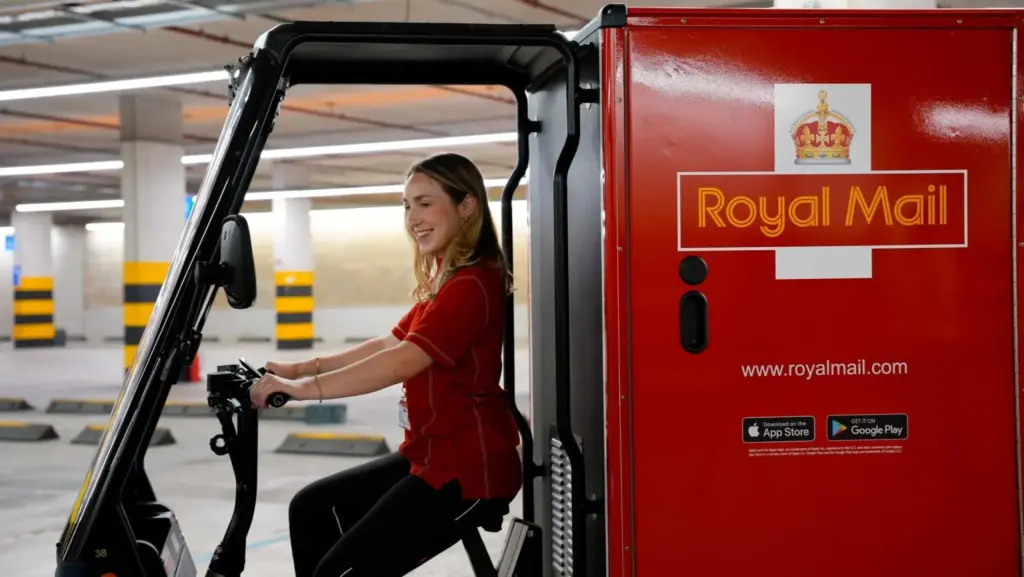
According to Royal Mail’s announcement, the British postal operator is deploying its first electric cargo cycles this month: twenty Minimal Pedal 4 quadricycles, in London, Brighton and Cambridge, with the intention of rolling out to further locations. The machines are built at Minimal’s microfactory in West London. Royal Mail frames the move as part of its Net-Zero 2040 target, but the most concrete argument lies elsewhere: the Pedal 4 requires no driving licence, which, according to Royal Mail, could widen the recruitment of postal workers. Claimed range: up to 37 miles, for 2.5m³ of load volume.
Some steps backwards look a lot like progress. Around a decade ago, Royal Mail wound up its fleet of Pashley Prontos, the unassisted two-wheeled work bikes known as the Mailstar. Ten years on, the British postal operator is putting pedals back into its urban rounds — with a machine that has little left in common with the red bike of old.
Twenty Minimal Pedal 4s in London, Brighton and Cambridge
The rollout starts small — twenty machines — but Royal Mail does not present it as a trial run: the announcement speaks of “adding further to the UK’s largest electric delivery fleet”. “The first twenty Minimal Pedal 4 cycles will be deployed this month in cities including London, Brighton and Cambridge, with plans to roll out to further locations in the future”, writes Transport + Energy, relaying the announcement of 29 July. The vehicles are assembled at Minimal’s microfactory in West London.
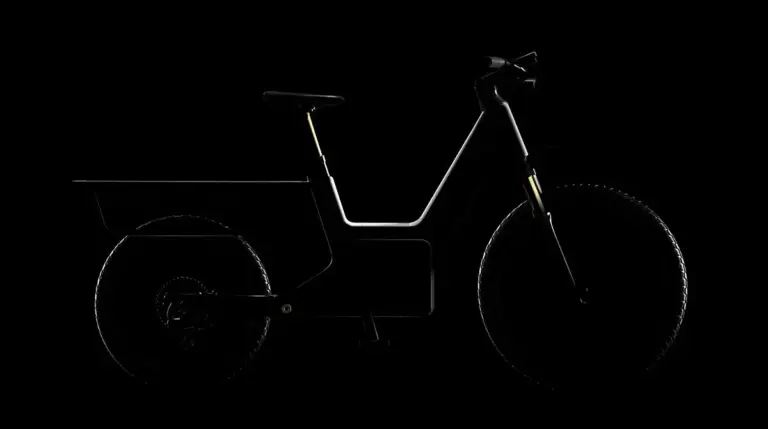
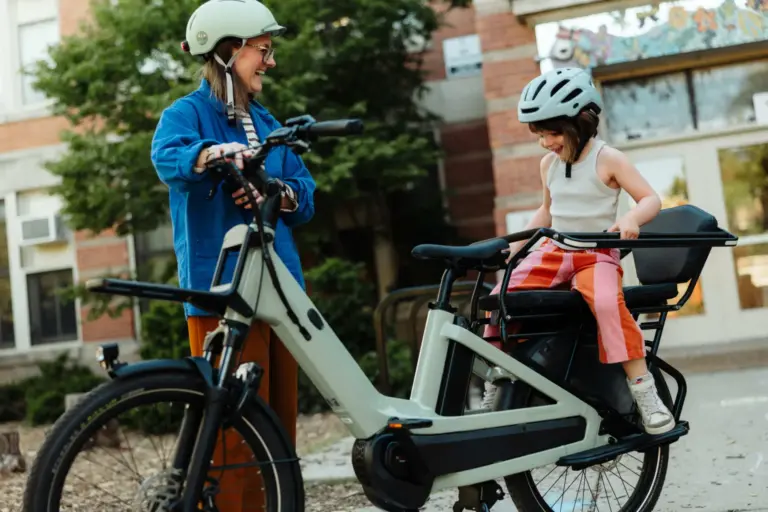
Technically, the Pedal 4 is a pedal-assist quadricycle: four wheels, a cabin around the saddle, a cargo box at the rear. The published spec sheet gives “a range of up to 37 miles and a cargo capacity of 2.5m³” — roughly sixty kilometres, that figure being published in miles by Royal Mail. Charging is done from a standard three-pin domestic socket, which, according to the announcement relayed by Transport + Energy, allows it to operate from any delivery office, “including sites with limited yard space or electricity capacity”.
The cargo bike as a recruitment tool
This is the most interesting argument in the announcement, and it has nothing to do with the environment. Zag Daily puts it this way: “Minimal’s ‘Pedal 4’ cargo cycle does not require a driving licence and can be ridden on cycle lanes, greenways and roads with speed limits of up to 30mph. Royal Mail says this gives delivery offices greater flexibility and could widen recruitment by opening delivery roles to people without licences.”
The announcement also frames it as a comparison: after introducing its first electric micro-vehicles last year, Royal Mail is expanding its zero-emission urban range, and “unlike an electric micro-vehicle”, the Pedal 4 does not require a licensed driver. Royal Mail presents this licence-free access as a recruitment lever, on a par with the carbon argument. Mark Riley, Delivery Design Manager at Royal Mail, explicitly links the two: “Our new electric cargo cycles mark another important step towards reaching Net-Zero by 2040 and making our delivery network more efficient. They will help reduce emissions and improve air quality in the communities we serve, while creating new opportunities to join Royal Mail without needing a driving licence.”
3.3p per mile: Minimal’s own figures
The manufacturer puts forward running figures that should be taken for what they are — its own. According to Zag Daily, “the vehicles reportedly cost around 3.3p per mile to run, which Minimal estimates is around 2.2 times cheaper than an electric van and five times cheaper than a diesel vehicle”. Patrick Bion, chief executive of Minimal, also says his company has found that the Pedal 4 completes more deliveries per hour than van-based alternatives, while operating at lower cost.
He adds, quoted by Cycling Electric: “Royal Mail operates one of the most demanding delivery networks in the country. Their decision to scale Pedal 4 throughout the UK is the clearest possible signal that right-sized electric vehicles will be central to how we move goods through cities more efficiently.”
Cycling Electric points to a precedent that helps judge the move: the Royal Mail Group already runs cargo bikes outside the UK, through its Italian subsidiary GLS, in Rome, Milan and Bologna. The UK itself had given up on them — in 2016 according to Cycling Electric, with the British press of the time reporting the withdrawal for 2014. Twenty machines is not much for a national network: Royal Mail says it wants to “roll out to further locations in the future”, without announcing either a timetable or a volume. The outcome will depend as much on how rounds are organised as on the vehicle itself.