IN BRIEF
PORT, a London company that rents e-bikes to couriers from urban hubs, has raised €14.5 million in a round led by the EBRD and Balnord. The money is to fund its “AI Driver” driving software and autonomous delivery vehicles, trained on data filmed by its bikes. PORT operates around 3,500 e-bikes and claims more than 50,000 registered couriers. The company also announces a planned micro-hub in central Paris, which it presents as its first site outside the United Kingdom.
| Amount | €14.5 million (equity and debt) |
| Lead investors | EBRD and Balnord |
| Total raised | €29 million |
| Fleet | Around 3,500 e-bikes |
| Network | 24 micro-hubs in London, Birmingham and Manchester |
| Founded | 2020 |
With this round, which combines equity and debt, PORT brings the total it has raised since its founding in 2020 to €29 million. The company employs 76 people and is hiring in research and development and in artificial intelligence.
PORT, an e-bike network for couriers
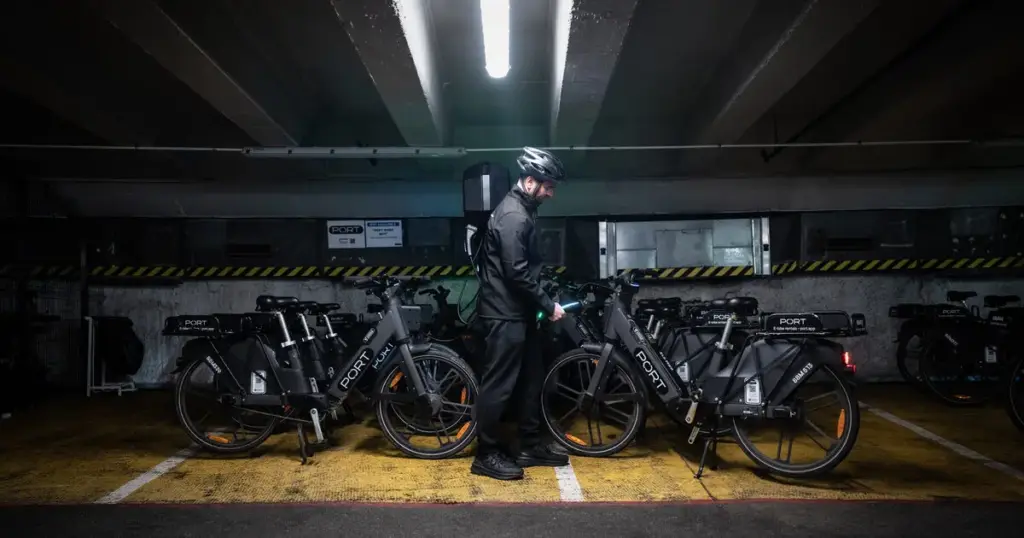
PORT rents e-bikes to delivery couriers. Its 24 hubs, set up in underground car parks, warehouses and railway arches, total 52,000 square feet across three British cities: London, Birmingham and Manchester. More than 50,000 couriers have signed up to its platform, and its fleet has covered more than 50 million kilometres since 2024. In London, the network covers 92% of the area within one mile of the Congestion Charge zone.
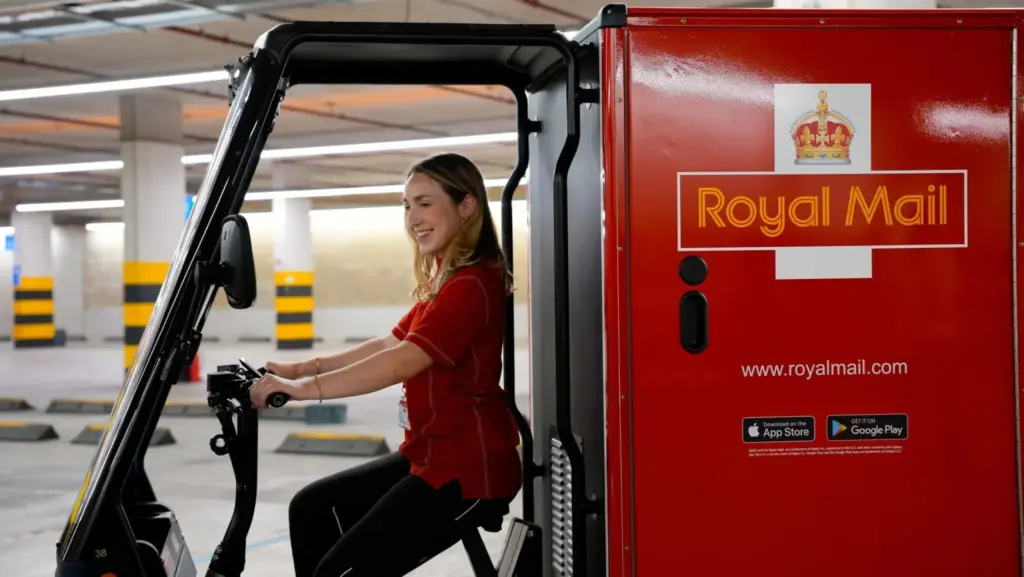
Royal Mail already uses its equipment for parcels, with cargo bikes and trailers added to the fleet in September 2025. PORT reports more than 300,000 parcels delivered by its cargo bikes, and is developing a new robotic delivery system with Royal Mail; the commercial terms of this partnership were not disclosed at the announcement.
Bikes that film to train the robots
Some of the bikes carry cameras and a lidar running on NVIDIA chips. They record delivery conditions: kerbs, cyclists, traffic, drop-off points. When the bikes return to the hub, the footage is uploaded automatically over fibre optic; PORT searches it for the situations that will be used to train the AI Driver, the software meant to drive its robots.
Kamil Suda, founder and CEO of PORT, defends this order of things:
“We believe robotised logistics does not start with the robot; it starts with the infrastructure, operations and data required to put robotics to work in the real world.”
Kamil Suda, founder and CEO of PORT
Ervin Luga, Head of Venture Capital Investments at the EBRD, says that “PORT’s impressive, proven commercial operation provides the ideal foundation for the next evolution of autonomous, robotic urban infrastructure”.
A first micro-hub planned in Paris
PORT says it intends to expand beyond the United Kingdom with a micro-hub in central Paris, which it presents as its first site outside its home market.