IN BRIEF
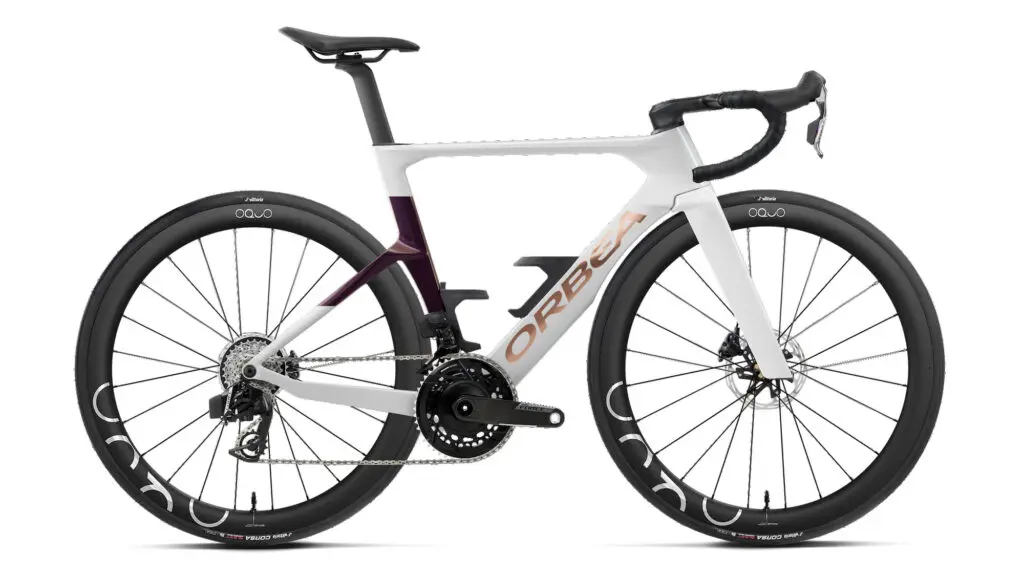
Orbea unveiled the new generation of its Orca Aero on 2 July, presented by the brand as the fastest bike it has ever produced. The frame sheds 5.1 watts of drag at 50 km/h compared with the previous model, tyre clearance climbs to 37 mm and the bottom bracket drops to 78 mm, which Orbea claims is the lowest on the market. The electronic battery has been moved into the bottom bracket area to slim down the seat tube, and the bike debuts OQUO wheels designed alongside it from the wind tunnel stage onwards. The Lotto-Intermarché team will race it at the Tour de France, which sets off on 4 July in Barcelona. Prices start at €5,699 with a Shimano 105 build and rise to €10,999 for the SRAM Red or Shimano Dura-Ace versions.
| Bottom bracket drop | 78 mm |
| Maximum tyre clearance | 37 mm |
| Frame weight | around 900 g |
| Frame stiffness | 93 Nm/° |
| Frame aerodynamic gain (50 km/h, vs previous model) | 5,1 W |
| Price | from €5,699 to €10,999 |
The new Orca Aero was presented under embargo on 2 July, the day before the Tour de France grand départ in Barcelona. For Orbea, this is the fastest bike ever to come off its lines, shaped in the wind tunnel, on the track and on the road with the Lotto-Intermarché team.
The Orca Aero banks on a very low bottom bracket
The main change is not the one you notice first. Orbea has lowered the bottom bracket of its Orca Aero to a 78 mm drop, which the brand claims is the lowest figure on the market. Kepa Otxoa, road category manager at Orbea, explains: “We have the lowest bottom bracket in the industry. It is the most important feature of the bike: it gives the bike-and-rider system its stability, and it also cuts drag.”
According to Otxoa, that lowering is the most significant result obtained from computational fluid dynamics (CFD) work and wind tunnel sessions. The Di2 electronic battery has also been moved into the bottom bracket area, which made it possible to slim down the seat tube and the seatpost, and so to cut drag further.
Tyre clearance widened to 37 mm and stability worked on
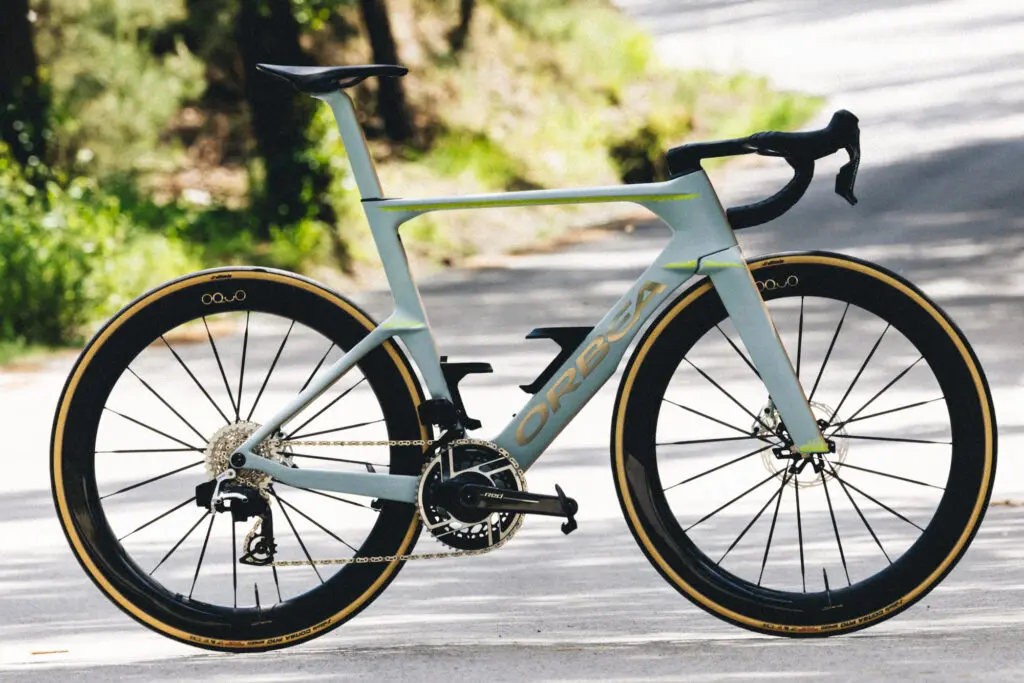
The frame alone is said to save 5.1 watts at 50 km/h compared with the previous model, a modest margin by Orbea’s own account: the old Orca Aero was already a very well optimised machine. Tyre clearance goes up to 37 mm, with a fork and fork crown reworked to stay efficient across a width range of 29 to 35 mm. That extra tolerance is said to be worth 6 to 7 watts at 40 km/h on cobbles or broken surfaces, by cutting the losses caused by vibration.
The frame also gains stiffness: 93 Nm per degree for around 900 g, against 90 Nm/° for 1,150 g on the previous model. Orbea claims around 2 watts saved at 17 km/h on an 8 % gradient. The brand also claims 14 watts gained by cutting the drag caused by instability at 50 km/h. BikeRadar, which has tested the bike, reports a claimed total gain of 21 watts over the old model. A 90° steering limiter, the Spin Block, also protects the bike in a crash and makes it easier to transport.
OQUO wheels and a bike built for the Tour de France
For the first time, Orbea has built wheels from its sister brand OQUO directly into its CFD calculations from the moment the frame was designed. OQUO, founded in 2020 and based some fifteen kilometres from Orbea, says it now has a hundred or so employees against six when it started out in 2021, plus two generations of mountain bike wheels and road wheels in its catalogue.
The new Orca Aero has already been used by the Lotto-Intermarché team at the Tour Auvergne-Rhône-Alpes, the former Critérium du Dauphiné. It is expected at the Tour de France, where Belgian sprinter Arnaud De Lie will be chasing a first stage win in his new colours.
Prices and customisation
The Orca Aero comes in several configurations (M10i LTD, M11e LTD, M21e LTD, M20i LTD, M22 LTD, M30i LTD), with different sizes, wheels and custom paint options through the MyO programme. Prices run from €5,699 with a Shimano 105 build to €10,999 for the top-end SRAM Red or Shimano Dura-Ace versions. More details are available on the Orbea website.