IN BRIEF
Bosch is overhauling three parts of its Smart System ecosystem for summer 2026: the LED Controller handlebar remote, the Intuvia 200 central display and the ConnectModule anti-theft unit. The remote is around 65% more compact than the LED Remote it replaces and finally gains a USB-C port to charge a phone while riding. The Intuvia 200 succeeds the Intuvia 100 with a brighter 2.4-inch screen, now cable-powered and customisable from the eBike Flow app. As for the ConnectModule, it adds Bluetooth to track down a stolen bike to within a few metres, where GPS alone struggles indoors.
| LED Controller remote | Handlebar remote, around 65% more compact than the LED Remote |
| Intuvia 200 display | Monochrome 2.4-inch central display, cable-powered |
| USB-C port | 10 W (not on the LED Remote) |
| ConnectModule | Connected GPS + Bluetooth anti-theft (eBike Alarm feature, Flow+ subscription) |
| Ecosystem | Bosch’s Smart System |
| Availability | Summer 2026 |
No flashy new motor or record-breaking battery this time. Bosch has turned its attention to the parts you handle and look at on every ride: the little thumb remote and the display perched on the handlebar. The German supplier unveiled them in mid-June in Hamburg, alongside its new Hub Line rear hub motor and the slim PowerTube 360 battery, all due for summer 2026. Plus a third, more discreet member of the cast: the ConnectModule anti-theft unit, which is learning to make itself easier to find.
The remote shrinks, USB-C arrives
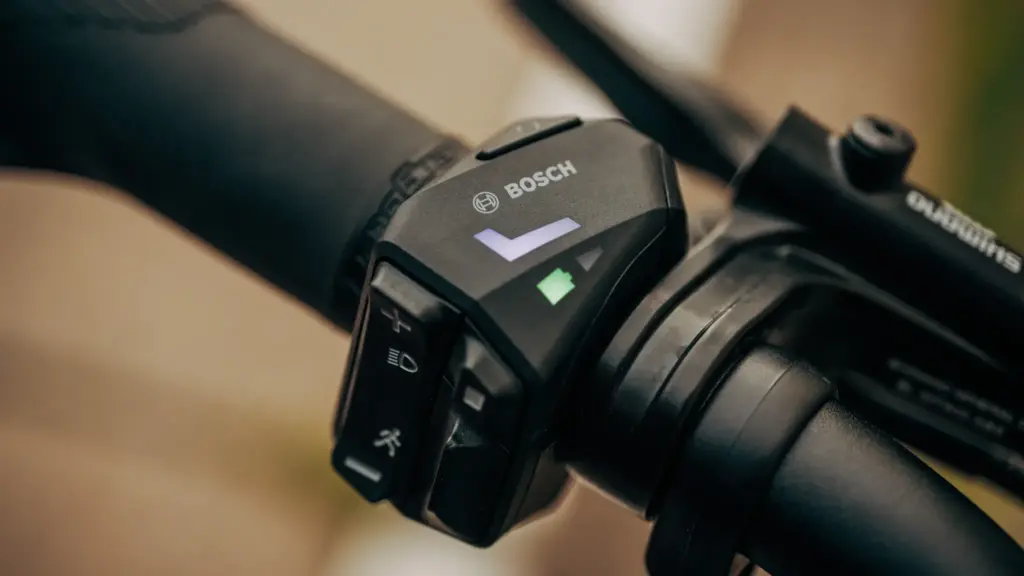
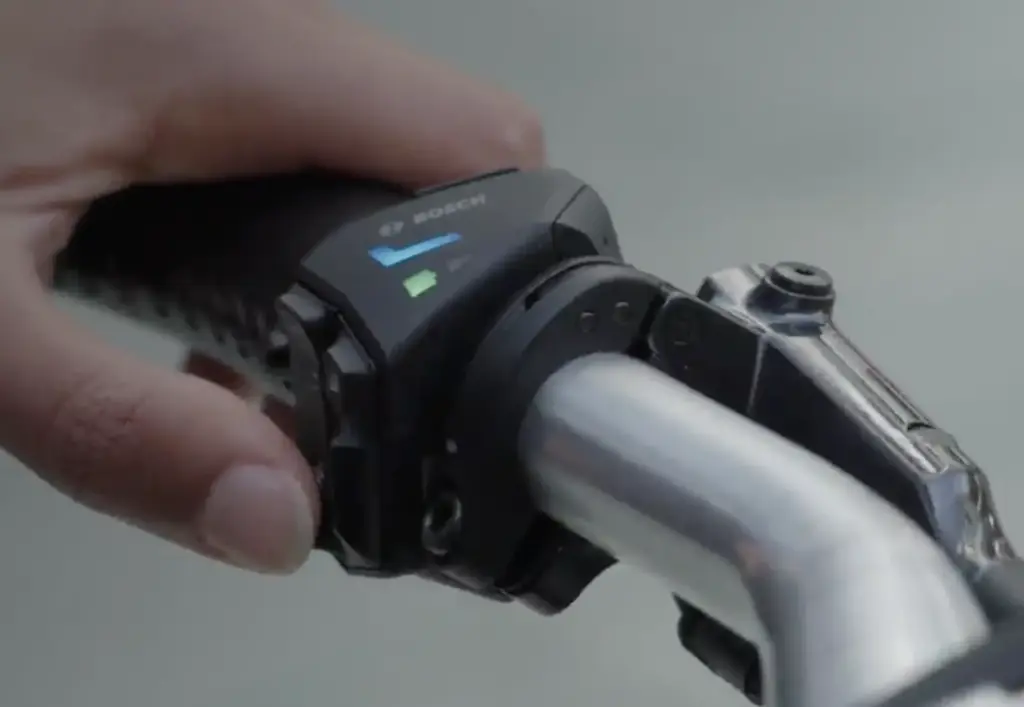
The most visible change happens at the handlebar. The LED Controller replaces the LED Remote with a simple idea: take up less room without losing anything in practice. Bosch says the housing is around 65% more compact than that of the old remote, for a tidier cockpit.
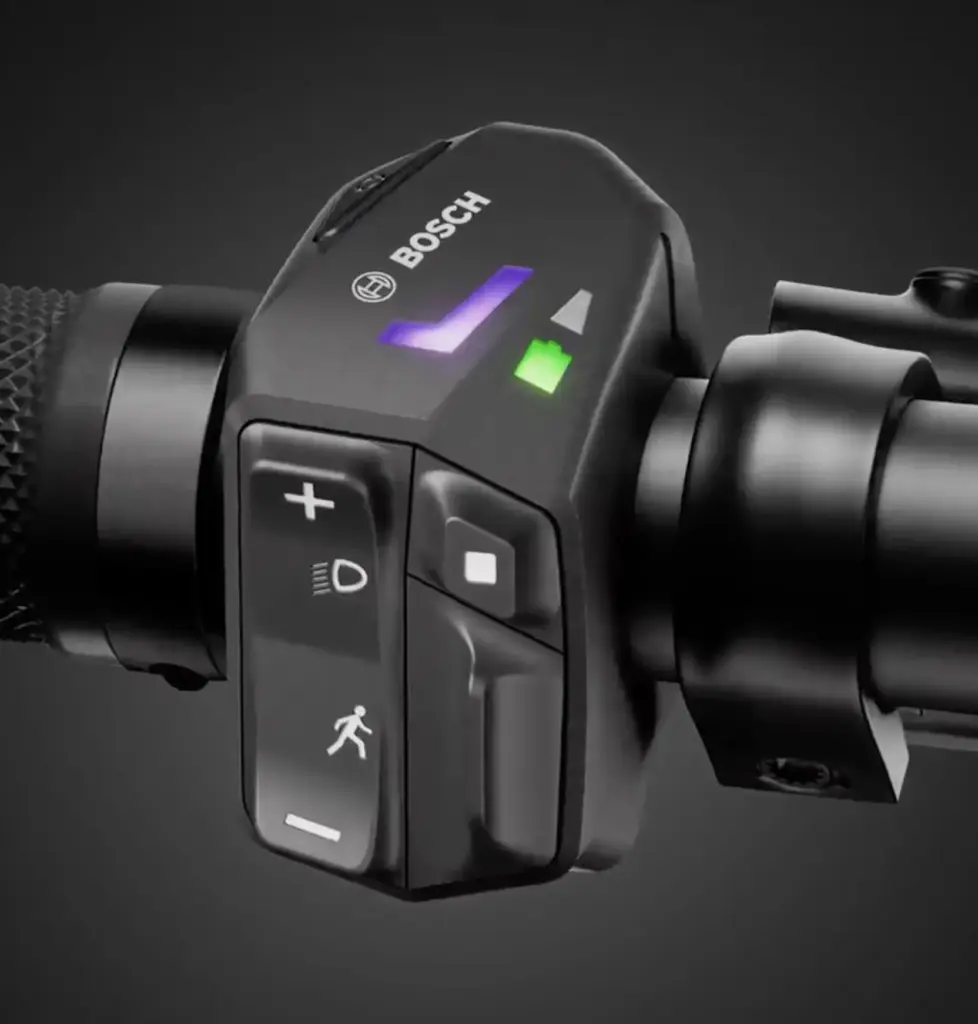
Under the thumb are four buttons of different sizes, big enough to stay easy to aim for without taking your eyes off the road. They handle the assistance modes, walk assist and lights, with both tactile and audible feedback.
Two indicator lights sum up the essentials. The left one takes on the colour of the current mode: red for Turbo, green for Eco, as on Bosch displays. The right one works like a traffic light for the battery, green when the charge is comfortable, yellow around 30%, red below 10%. Some would have preferred a multi-segment gauge; Bosch stands by its choice in the name of universal, at-a-glance legibility. A sensor adjusts the brightness of the lights to the ambient light.
The real novelty is the USB-C port, absent from the LED Remote. Tucked into the top right corner under a cover, it delivers 10 watts. That is not much, but it is enough to keep a phone afloat under heavy use, or even to claw back a few per cent while riding. Enough to do without a power bank on everyday journeys.
The Intuvia display goes wired and becomes customisable
The second project is the central display. The Intuvia 200 succeeds the Intuvia 100 and moves upmarket. Slimmer and more understated, it blends in better with the lines of recent bikes. The screen measures 2.4 inches, barely less than the old model’s 2.5 inches, but the result is a world apart.
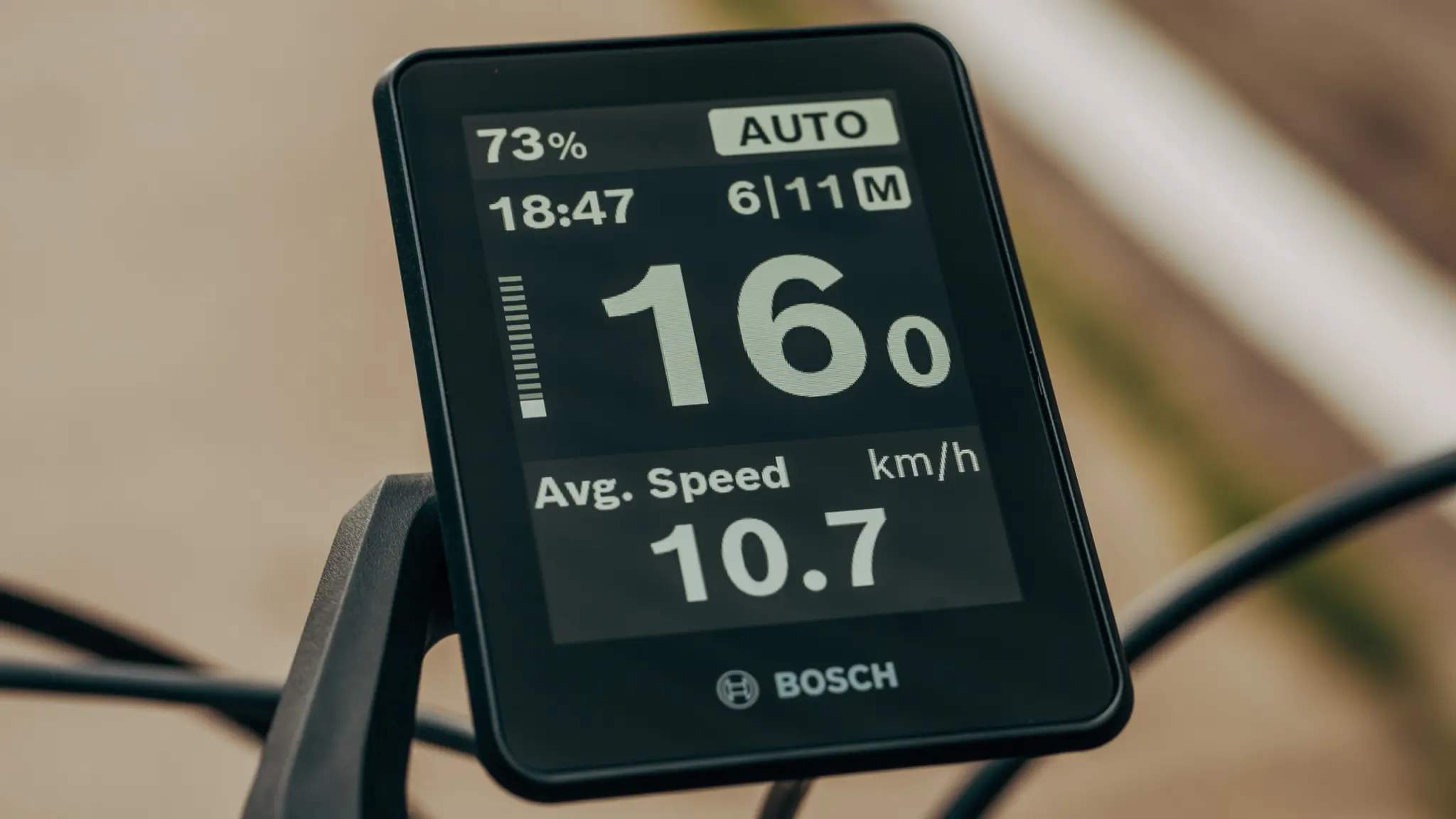
The backlight is generous, a claimed 1 000 candelas, and the definition flattering, legible from various angles and in all weathers. One reservation: the display remains black and white, with no colour. Another concrete change is that the screen now runs off a cable rather than a battery cell.
The Intuvia 200 permanently keeps a strip of information at the top (mode, battery level, time, speed) and scrolls the rest underneath. Above all, you can finally choose which data is displayed from the eBike Flow app, as on a Kiox and unlike the old Intuvia, navigation included. This is the range’s modernised fixed display, sitting alongside the removable colour Kiox 300 and 500.
An anti-theft unit that lets itself be found to within a metre
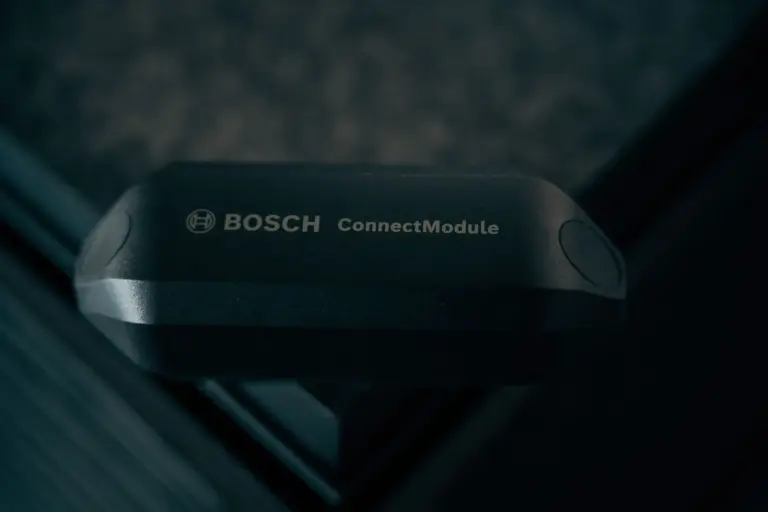
The third part is the most discreet: the ConnectModule. This is the little box that houses Bosch’s connected anti-theft functions, with a GPS chip, a mobile connection and motion sensors. Paired with the Flow+ subscription, it powers the eBike Alarm feature: real-time geolocation and a notification at the slightest suspicious movement.
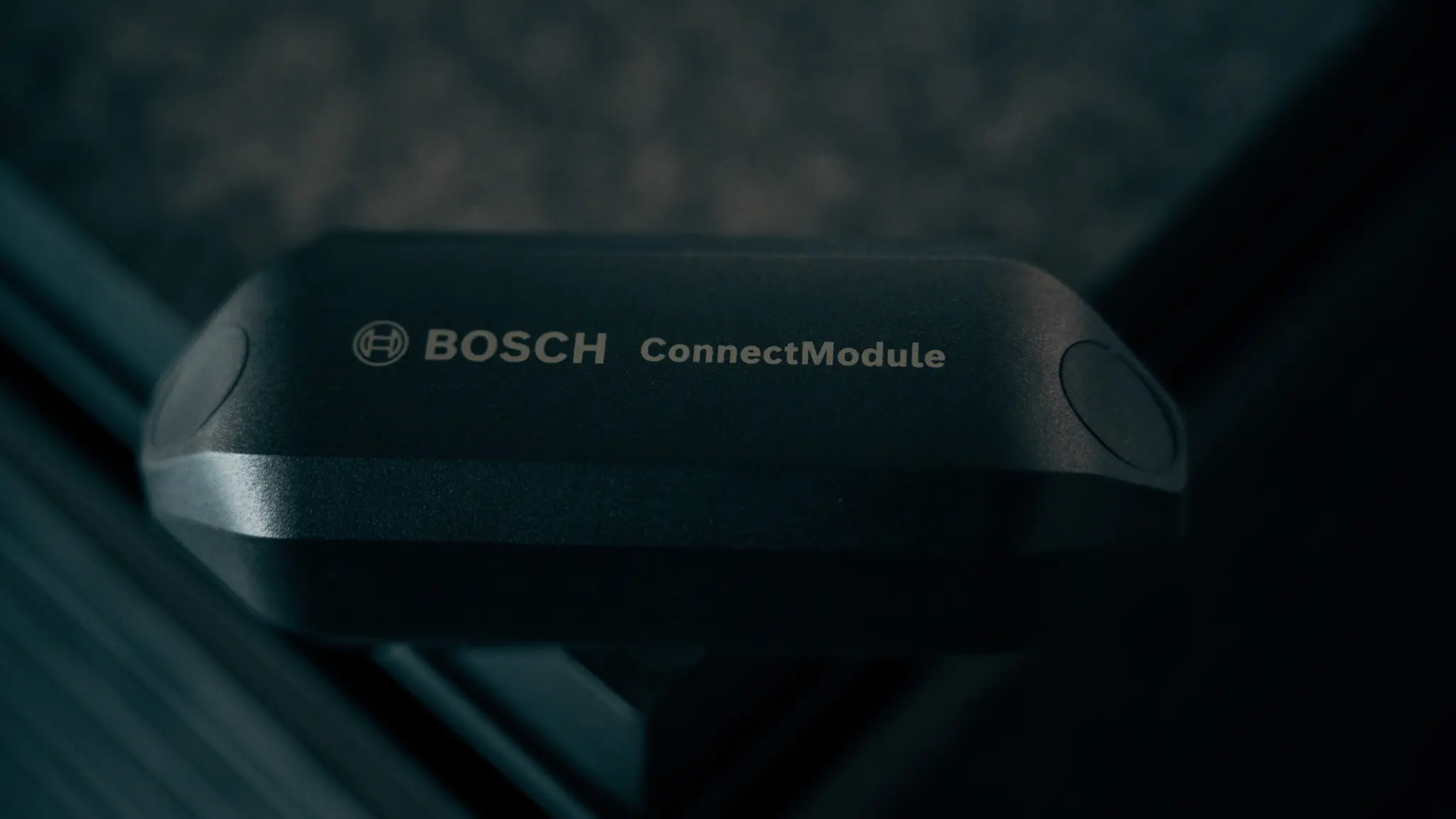
The new generation brings two changes. First, low-energy Bluetooth, which markedly sharpens short-range location. Where GPS loses the thread in a cellar, an underground car park or a courtyard, Bluetooth makes it possible to find the bike to within a few metres, a helping hand for owners as well as for the police officers who assist them.
Then there is installation. Bosch has redesigned the mounting so that the module can be added more easily, including after the bike has been bought. Enough to fit out a compatible e-bike without changing hardware.
Nothing spectacular, then. Bosch is not touching the architecture of its Smart System and is content to refine the parts the rider has under their fingers and in front of their eyes. The kind of detail you only notice in use: the day you plug in your phone without an extension lead, or the day you find your bike at the back of a car park.