IN BRIEF
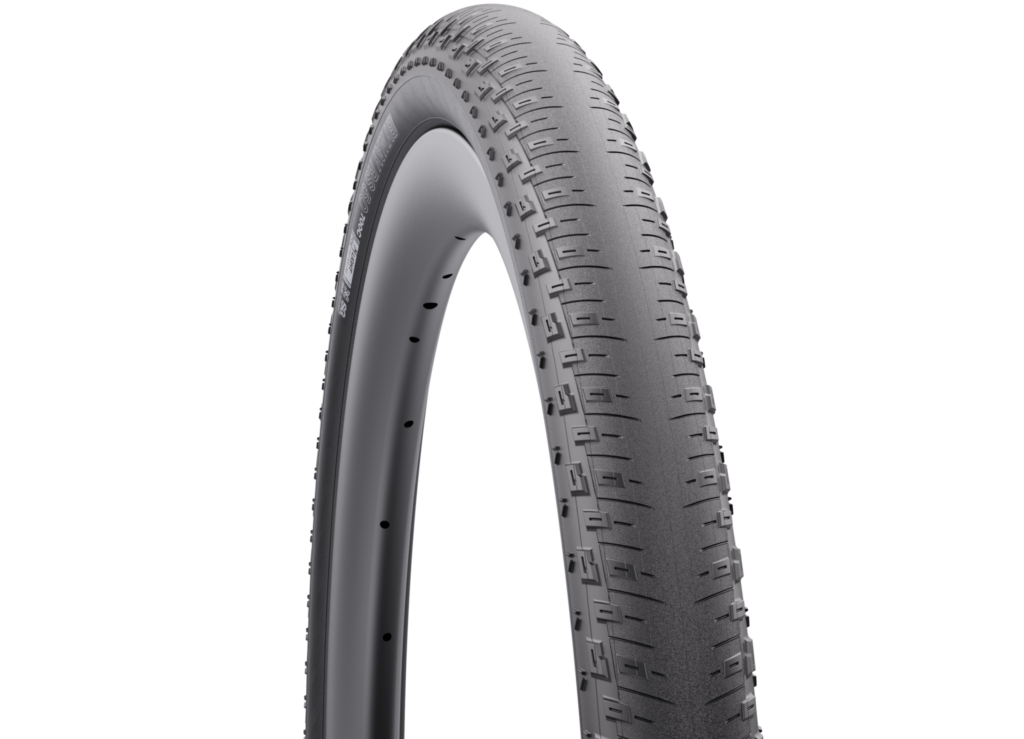
WTB has teamed up with Stromm, the designer of the Raktt road bike, to graft vortex generators and trip strips onto the sidewalls of three gravel tyres. Using the Chung method and against an identical control tyre without the aerodynamic features, the American manufacturer claims a saving of 5.8 watts at 30 km/h and 13.8 watts at 40 km/h. The range brings together the Byway RS 50, the Course 52 and the Macro 54. On the brand’s official store, accessed from France on 9 September, the Byway RS 50 was served at $89.95; the specialist press gives a European price of €79.95. It weighs 620 grams in the 120 tpi casing.
| Models | Byway RS 50, Course 52 and Macro 54 |
| Aero technology | Stromm Aerotech (vortex generators and trip strips) |
| Claimed gain (against an identical control tyre without aero features) | 5.8 W at 30 km/h · 9.3 W at 35 km/h · 13.8 W at 40 km/h |
| Price | $89.95 on WTB’s official store (accessed from France on 9 September) · €79.95 in Europe according to Escape Collective and Velozine |
| Weight (Byway RS 50) | 620 g |
| Casing | 120 tpi, SG2 protection, Dual DNA compound |
| Fitment | Folding tubeless, 25 to 45 psi, 50-622 section |
Aerodynamic work in gravel has so far focused mainly on the frame, the wheels and the handlebar. WTB is moving it to the tyre sidewall: the Californian manufacturer called on Stromm, the company behind the Raktt road bike, to design features able to work the air flowing around the tyre and the rim.
Vortex generators on a gravel tyre
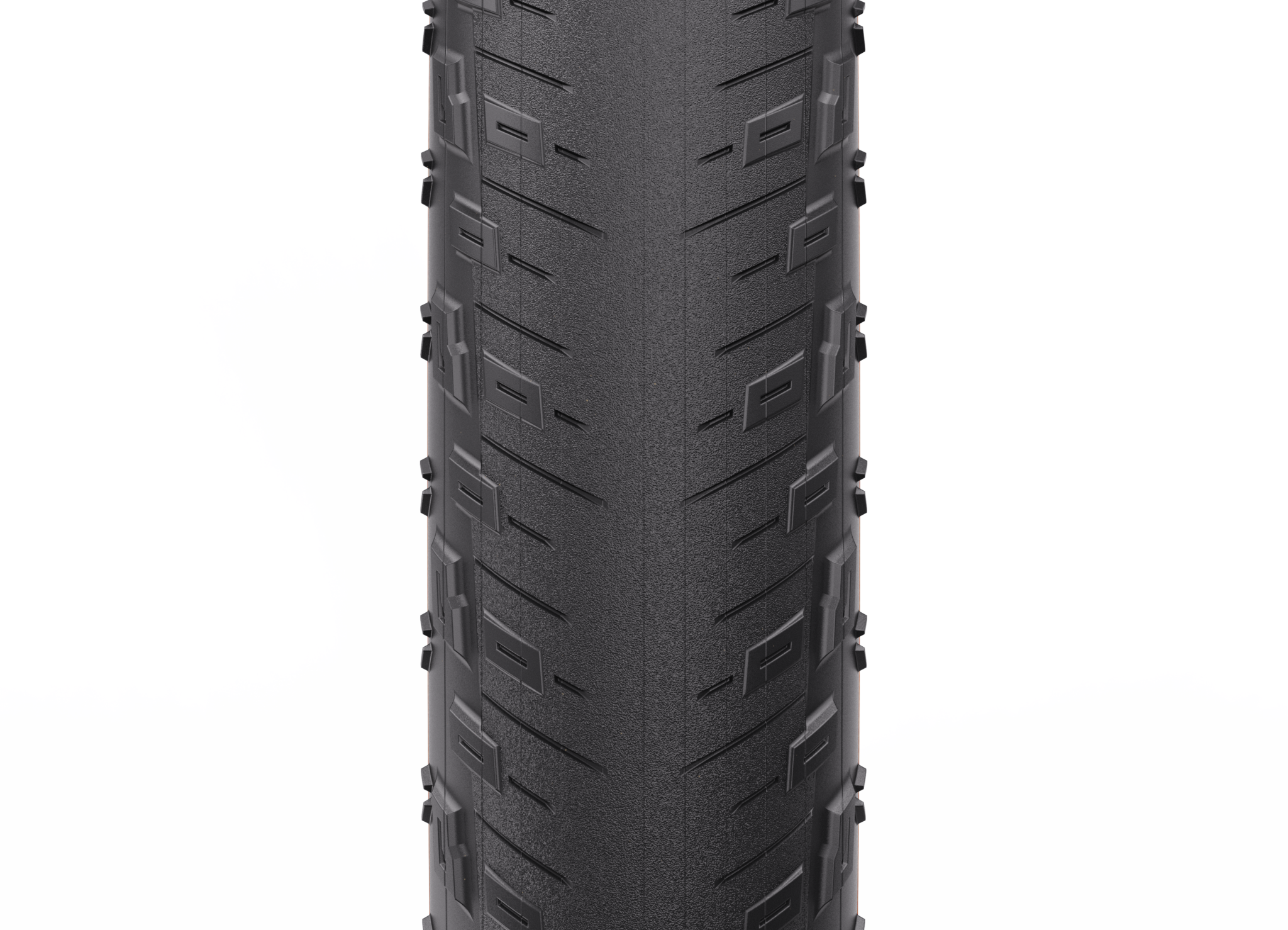
The principle is borrowed from aviation and the car industry. “We partnered with the aero experts at Stromm to counteract aerodynamic drag using Vortex Generators and Trip Strips placed at key intervals along the tyre,” WTB writes on its product page. According to road.cc, these features are integrated into the sidewalls. The product page refers to this package under the name Stromm Aerotech.
What WTB claims as a gain
The brand publishes its own figures, obtained using the Chung method — a field protocol that infers drag from a power and speed trace. “The aero benefits are technically in play soon after you start moving, but the effects are more noticeable as your speed increases,” states the product page, which gives 5.8 watts at 30 km/h, 9.3 watts at 35 km/h and 13.8 watts at 40 km/h. These values are claimed by the manufacturer, measured against an identical control tyre without the aerodynamic features according to Escape Collective, and had not been independently measured as of the date of this article.
Three tyres, from the slickest to the knobbiest
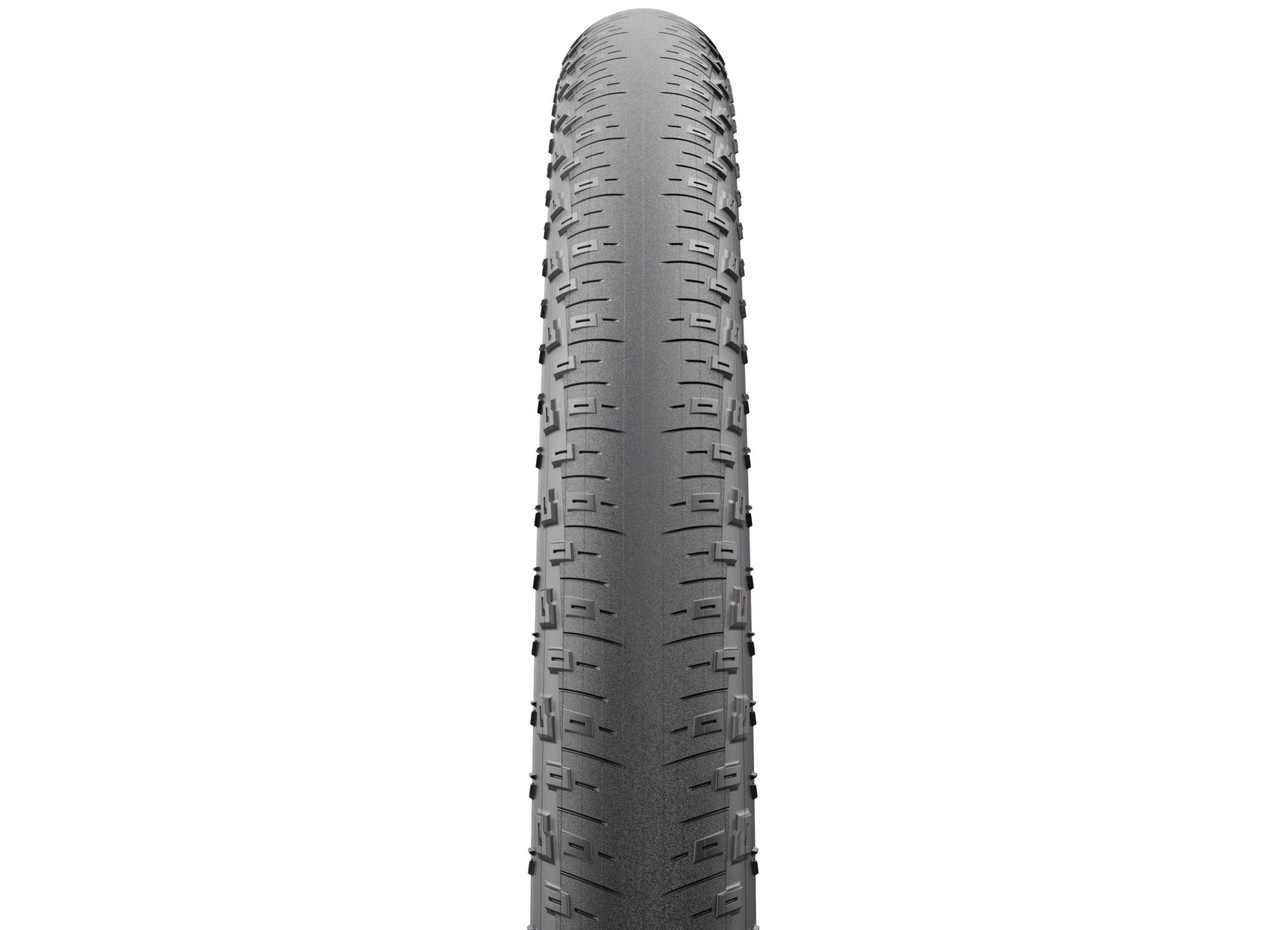
The range has three models: the Byway RS 50, the Course 52 and the Macro 54, road.cc reports. “The Byway RS is built for pure speed on gravel. A slick centerline paired with low-profile transition and shoulder knobs delivers exceptional rolling efficiency on hard pack gravel, and pavement, while maintaining predictable cornering traction when conditions become loose,” WTB writes. The brand aims it at “racers aiming to maximize straight-line speed without sacrificing grip in the corners”.
Price and availability
On WTB’s official store, accessed from France on 9 September, the Byway RS 50 is listed at $89.95. That store’s market selector does offer France and the euro, but the page served to a French connection that day showed a price in dollars. Escape Collective and the Dutch outlet Velozine give a European price of €79.95, the same for all three models, on sale at WTB dealers and on wtb.com. The spec sheet gives 620 grams for the 50-622 version, with a 120 tpi casing, bead-to-bead SG2 puncture protection, the Dual DNA compound and a pressure range of 25 to 45 psi.