IN BRIEF
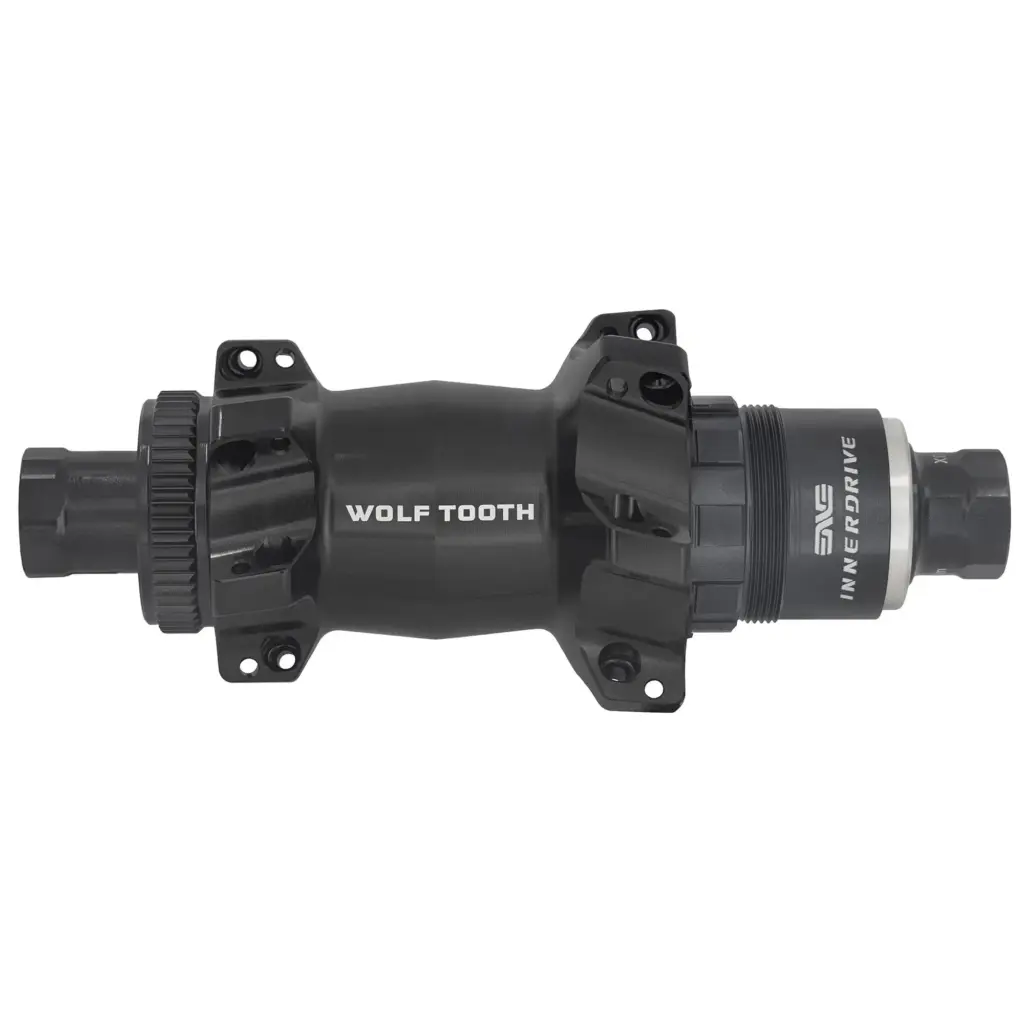
Wolf Tooth Components, known for its chainrings and its small machined parts, is moving into hubs. The US brand writes that its hub shells, designed and machined in-house from aerospace-grade 7075-T6 aluminium, bring its design language to wheel building “for the first time”. The mechanism itself is not its own: Wolf Tooth uses Enve Innerdrive internals, with 42 mm steel ratchets and four tooth counts — 40 PRO, 60, 80 and 100 teeth — the densest of which engages, according to the brand, in as little as 3.6 degrees. On the brand’s own store, the road and gravel rear hub is listed at €550 as rendered in a browser from France on 18 September; pricing from a European distributor remains to be established.
| Shell material | Aerospace-grade 7075-T6 aluminium, CNC machined in-house |
| Internals | Enve Innerdrive |
| Ratchets | Steel, 42 mm diameter |
| Tooth counts available | 40 PRO, 60, 80 and 100 teeth, stainless steel |
| Engagement | From 3.6° with the highest tooth count |
| Preload | Perfect Preload system, tool-free and adjustment-free |
| Drilling (road / gravel, straight pull) | 24 holes |
| Price (brand store, browser rendering from France, 18 September) | €550 for the road / gravel rear hub |
| Road / gravel rear hub weight | 216 g with XDR · 221 g with N3W · 224 g with Micro Spline · 228 g with HG |
Some brands are identified with a single part. For Wolf Tooth, that part is the chainring, the cable stop, the small anodised bolt added to the basket without a second thought. Moving to hubs is another trade altogether: you have to hold a wheel, take the torque and last without play.
Wolf Tooth’s first hubs are machined in-house
The brand claims in-house manufacturing and says so on its collection page: designed and machined in-house from aerospace-grade 7075-T6 aluminium, its angular hub shells “bring the Wolf Tooth design language to wheel building for the first time”, in three shapes “destined to become future classics”.
The road and gravel rear hub listing sets out the logic of the range: each model is tuned for its use, with “optimized weight, high rolling efficiency, prolonged bearing life, and immediate, zero flex engagement tailored to suit their intended riding applications”.
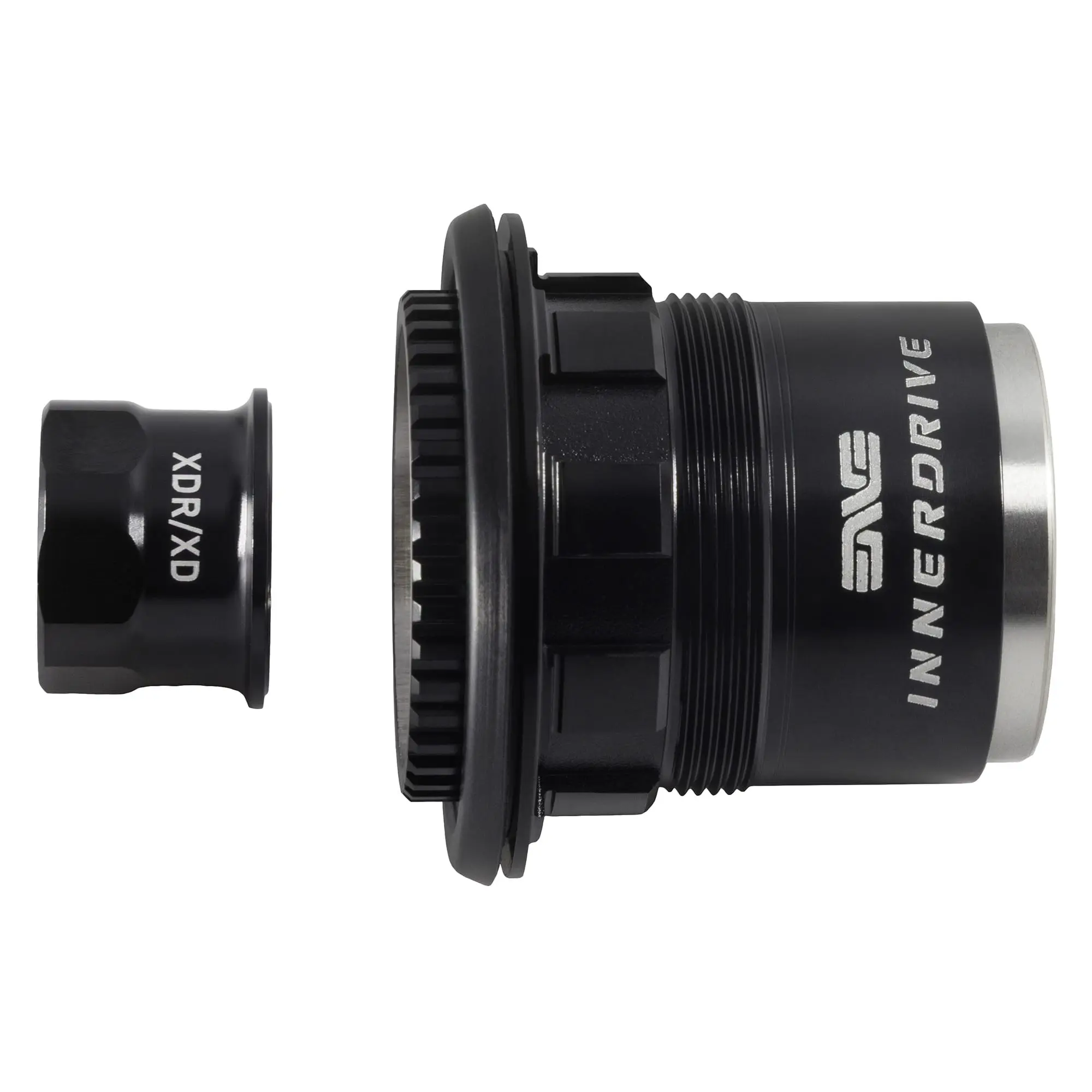
An Enve mechanism, 42 mm ratchets
This is the most telling choice in the launch: Wolf Tooth designs and machines the shell, but hands the mechanism to a third party — its hubs use Enve Innerdrive internals, the brand writes. In other words, the ratchet freehub system comes from Enve, the US carbon wheel manufacturer.
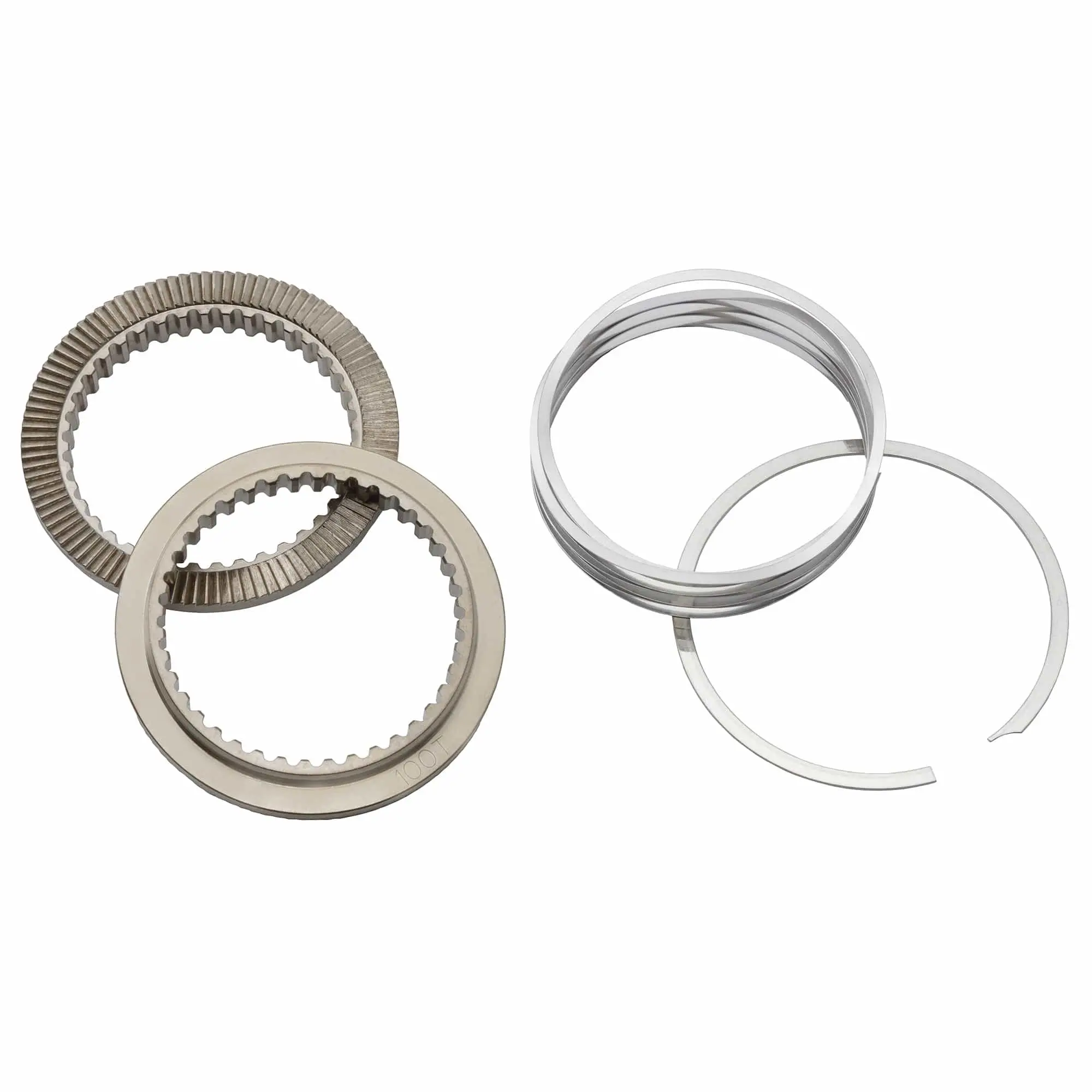
The technical point that follows is diameter: the Innerdrive internals take oversized 42 mm steel ratchets, and Wolf Tooth explains the benefit — “the larger diameter drive rings allow for higher engagement tooth counts without sacrificing durability”. Hence the four densities on offer, from 40 to 100 teeth.
The engagement claim follows the tooth count, and the brand sets its bounds clearly: “With the highest tooth count, INNERDRIVE hubs will engage in as little as 3.6 degrees.” The figure therefore applies to the 100-tooth version, not to the whole range. At the other end of the choice, the 40-tooth PRO ratchet does the opposite: “To reduce drag and save weight, the standard ratchet’s diameter is reduced, and additional material is milled out”, with a dedicated spring applying a minimal amount of force. A ratchet that drags less, against a less immediate engagement — the classic trade-off, left to the customer.
The claimed weights, and the store price
On the road and gravel rear hub, the official listing gives the weights by freehub body: twelve grams separate, according to it, the lightest version (XDR, 216 g) from the heaviest (HG, 228 g). Added to that is the Perfect Preload system, a preload on the hub internals that the brand describes as “tool-free, adjustment-free”, intended to space out servicing.
That leaves the price. As rendered in a browser from France on 18 September, the brand’s store lists the road and gravel rear hub at €550; the US pricing for the same product shows $489.95. Wolf Tooth sells direct from the United States: the price from a European distributor, if there is one, remains to be established. For a component sold individually and built up by a wheelbuilder, that is the figure that will decide its fate in Europe.