IN BRIEF
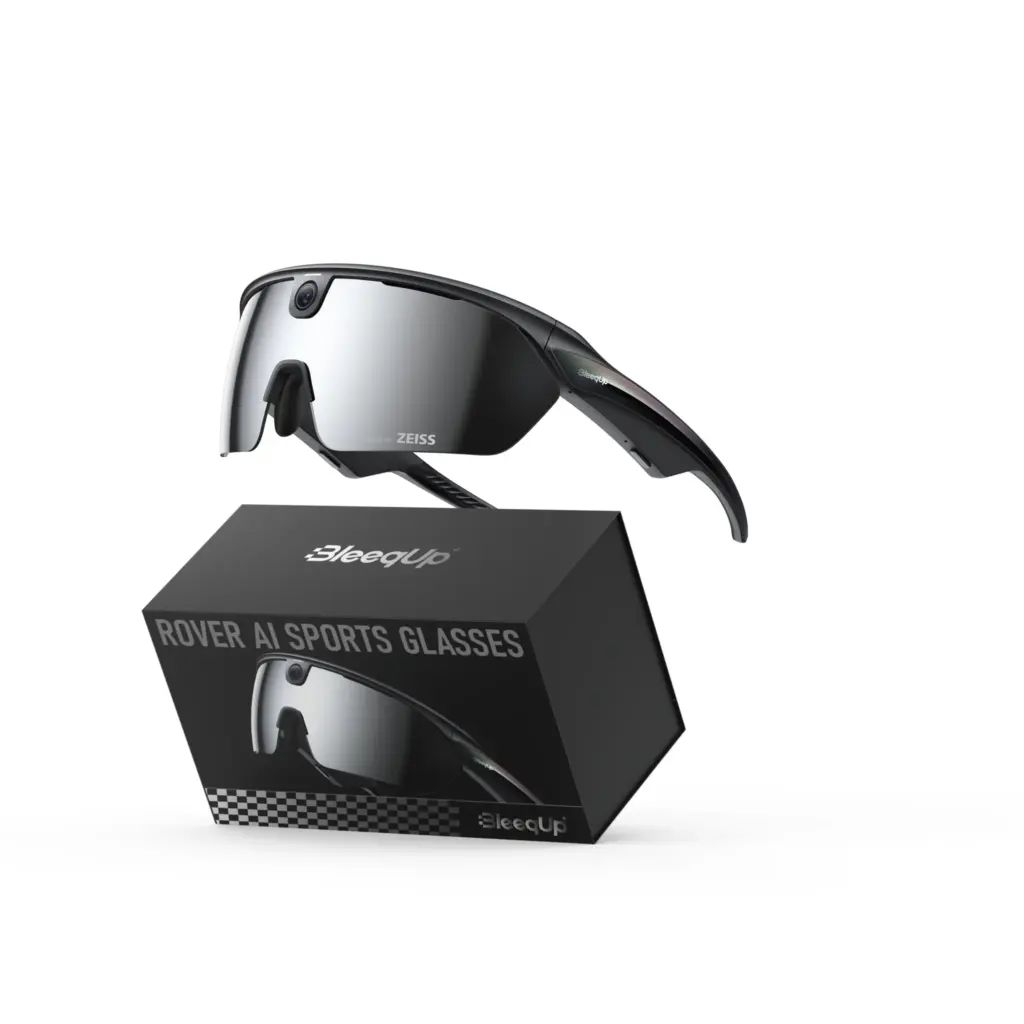
BleeqUp has put the Rover on sale, a pair of sports glasses that packs in a camera, open-ear audio and artificial-intelligence assistance. The official spec sheet claims 53 grams on the scales, a TR90 frame, ZEISS lenses and a camera that tilts to three positions, from – 10 to 15 degrees. It films in 3K at 60 frames per second and lasts one hour of continuous video on its own battery, then four hours or more with the Power Plus add-on battery. In France, the 64GB version with a ZEISS lens is listed at €459 on the brand’s own shop, with the full bundle starting at €519.
| Price (64GB, black frame, ZEISS lens) | 459 € |
| Rover Bundle price | From €519 |
| Weight | 53 g |
| Frame | TR90 |
| Video formats | 1080p30, 1080p60, 3K30, 3K60 |
| Photo resolution | 4,656 × 3,496 pixels |
| Adjustable camera | Three positions: – 10°, 0°, 15° |
| Field of view | 120° at eye level |
| Batteries | 260 mAh (glasses), 1,600 mAh (Power Plus) |
| Continuous video runtime | 1 h, then 4 h or more with the Power Plus |
| Storage | 64GB |
| Spare ZEISS lens | €83.95 or €89 depending on the listing |
A camera mounted on the helmet or the handlebar has become commonplace; a camera inside the arms of a pair of glasses much less so. BleeqUp has put the Rover on sale, its second generation of connected sports glasses, and is trying to fit four devices into them at once: an action camera, earphones, an activity sensor and an assistant.
The BleeqUp Rover films in 3K from the arms
The official spec sheet lists four video formats: 1080p at 30 and 60 frames per second, then 3K at those same two rates. For stills, resolution rises to 4,656 × 3,496 pixels. The field covered is 120 degrees “at eye level”, according to the brand.
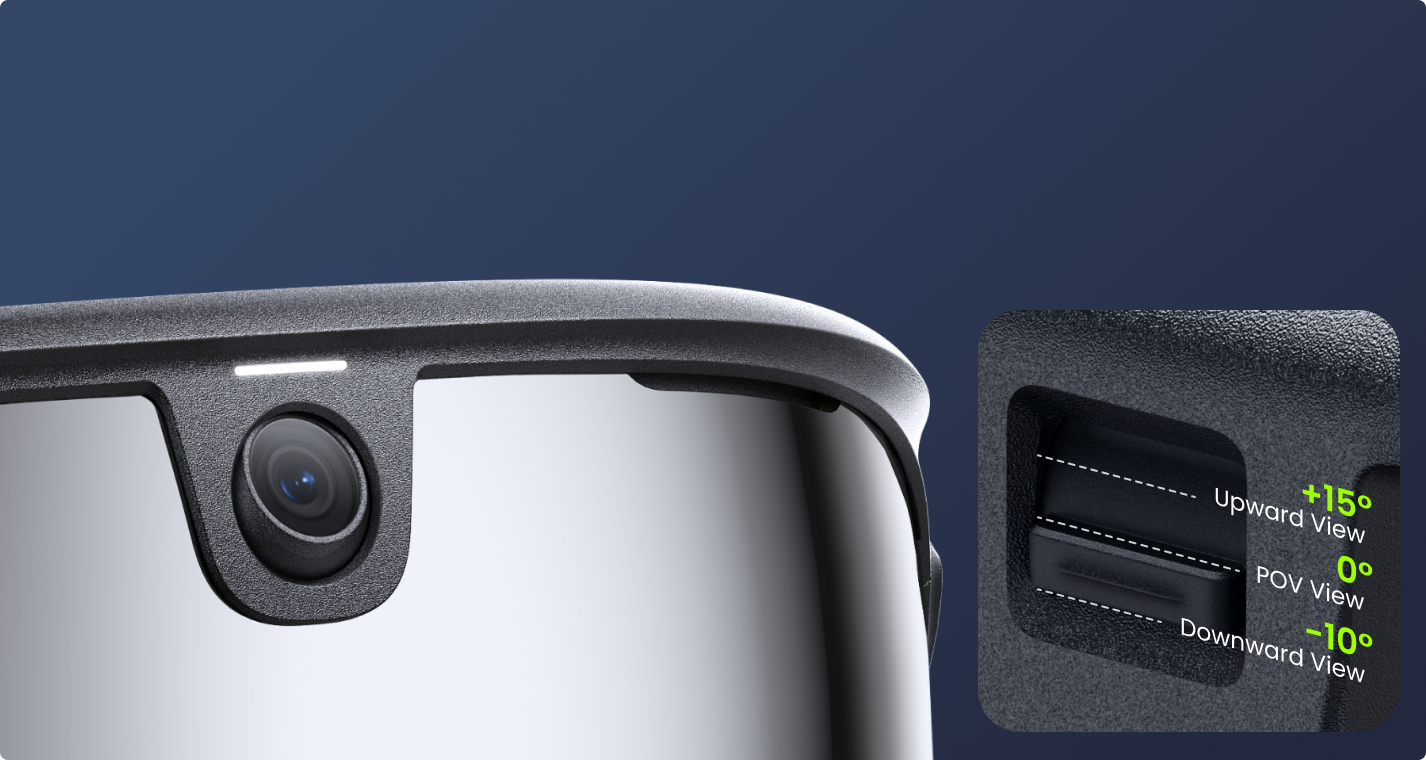
One detail is worth pausing on. According to the official spec sheet, the camera tilts through three notches, – 10, 0 and 15 degrees. On a bike, head position changes completely between a flat bar and a racing position on the hoods, and a fixed camera ends up filming the tarmac or the sky. The adjustment answers that problem directly.
One hour of video, then the add-on battery
That is the limit the brand itself gives. The glasses carry 260 mAh, which yields “1 h + 4 h or more” of continuous recording according to the spec sheet: one hour on the internal battery, then four hours or more once plugged into the Power Plus, the 1,600 mAh accessory. For a long ride, the add-on is not optional.
Incident detection and ten seconds kept
According to the official spec sheet, the Rover detects hard braking in real time and starts recording by itself if it was not already filming, with a ten-second pre-capture keeping what happened before the event. BleeqUp, quoted by road.cc, states that the glasses automatically detect “close passes, collisions and hard braking” and keep “the 10 seconds of video before the event as evidence”. The spec sheet also says that it is AI that then analyses the footage to spot potential incidents, noting that “not every sudden stop is an emergency”.
The rest is standard sports-glasses kit: a TR90 frame, a nose pad adjustable on three axes, ZEISS lenses offered in a gold or silver finish. On the brand’s shop, the replacement ZEISS lens appears under two listings, at €83.95 under “BleeqUp Rover ZEISS Lens” and at €89 under “BleeqUp Rover Replacement Lenses”.
€459, and a superlative to take for what it is
BleeqUp’s French shop lists the 64GB version with a black frame and a ZEISS lens at €459. The Rover Bundle, which adds the Power Plus battery and a Bluetooth remote, starts at €519; it climbs to €579 with a clear photochromic lens on top.
That leaves the phrase the brand puts forward and that road.cc reproduced in quotation marks in its headline: “The world’s first AI sports companion built into eyewear”. The phrase is presented as a BleeqUp claim, including by road.cc, which puts it in quotation marks. As of the publication date of this article, we are aware of no independent test of the Rover: the performance described above is what the brand claims.