In Oulu, people cycle all winter. The secret isn’t toughness
Details
- Section
- Long read · Explainer
- Places
- Oulu (Finland), Sweden, Montreal, Paris
- Reading time
- 8 min
In Oulu, Finland, the December sun barely rises, the snow lies for months, and the bicycle remains an ordinary way to get around. We picture residents who handle the cold better than everyone else. The figures tell a different story: here too, winter cuts cycling’s share by more than half. But what remains, the city owes less to its residents’ courage than to a municipal rule: two centimetres of snow.
At a glance
- In the Oulu region, about 170 km from the Arctic Circle, cycling accounts for 22% of residents’ trips in summer and still 10% in winter (Finnish national travel survey, 2021). In France, it accounts for 2.7%, all seasons combined (2019 survey).
- On its 165 km of main cycle routes, the city has morning snow cleared within three hours once 2 cm is on the ground. Its main roads wait for 3 cm, with four hours to clear them.
- A 2003 Swedish study measured it: between summer and winter, the bike trips of the employees surveyed fall by 47%. What keeps summer-only cyclists off their bikes is temperature, rain or snow, and road conditions. The cold can’t be removed; the road surface can: better winter maintenance of cycle routes could increase bike trips by 18%.
- The danger lies on the ground: in Sweden, over the year, 80% of seriously injured cyclists are hurt in a crash involving no other vehicle. Winter adds ice to the causes.
- In Paris too, winter empties the cycle lanes: in January 2026, each bike counter recorded an average of 60 bikes per hour, against 103 in June.
Three and a half hours of daylight
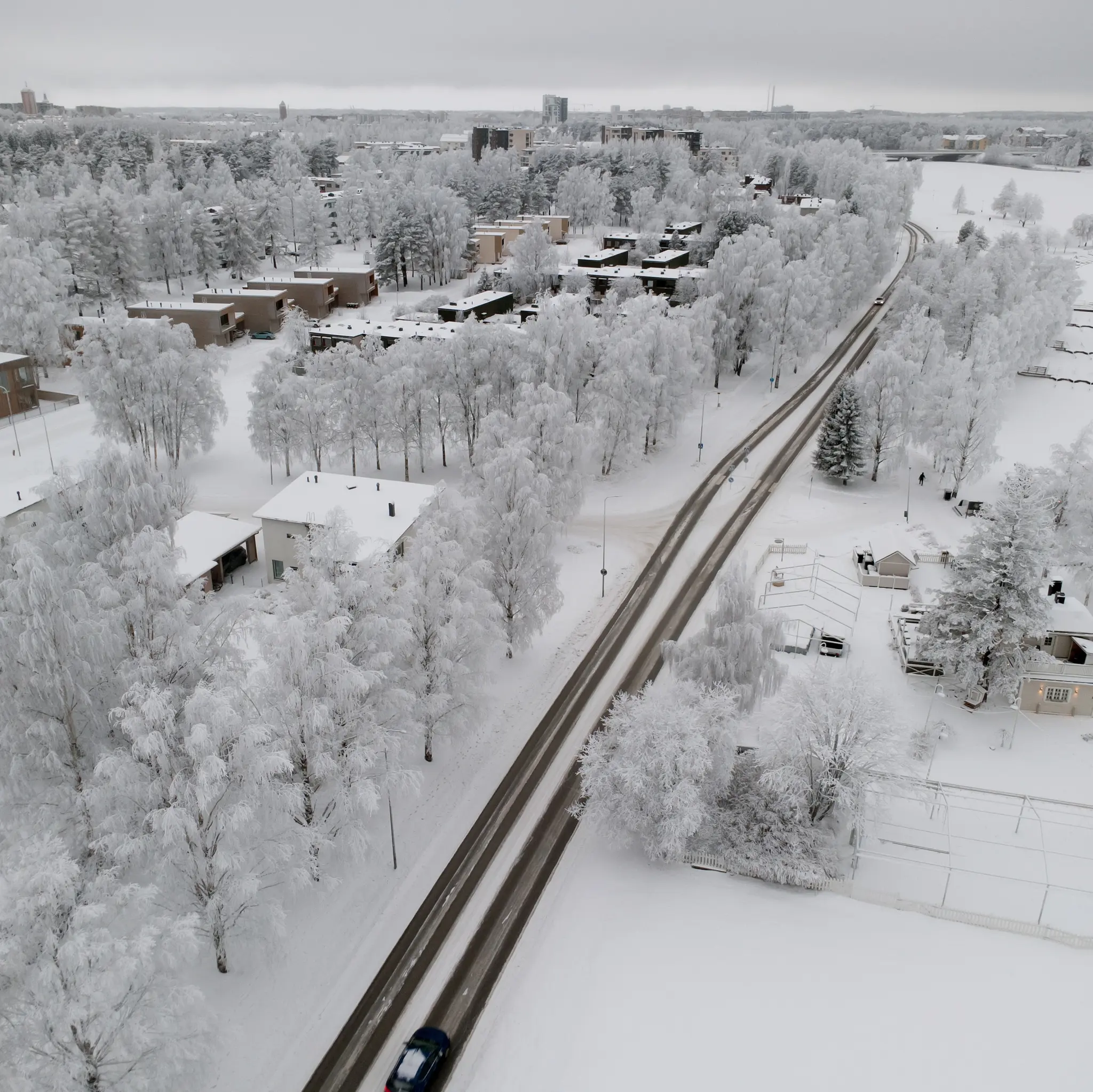
Oulu is a city of 217,556 people on the Gulf of Bothnia, at 65 degrees north. The Arctic Circle lies about 170 kilometres away. On 21 December, at this latitude, the sun stays above the horizon for a little over three and a half hours. The rest of the day, people get around under street lighting.
Three and a half hours
21 DecemberThe rest of the day, people ride under street lighting.
Yet it is the region of Finland where people cycle the most. The city counts 930 kilometres of cycle lanes. The widest are called the Baana: broad red-concrete routes running from the centre to the north, east and south. There are 14 kilometres of them today; the city aims for 75 by 2030.
Oulu is a European Capital of Culture in 2026. Its cycling network, though, has drawn attention for a long time, in Finland and abroad. In 2013, the first international winter cycling conference, the Winter Cycling Congress, was held here. More than 150 delegates from 12 countries came to see how the Finns do it.
The answer fits on one page of the city’s website: the one about snow clearing. There is nothing heroic about it. It is a schedule.
Ten per cent in the depths of winter
Let’s start with what the legend leaves out. Winter cuts cycling in Oulu too, and sharply.
Finland’s national travel survey, run in 2021 by the transport agency Traficom, splits the year into four seasons. In the Oulu region, cycling accounts for 22% of residents’ trips in summer, from June to August. From December to February, it falls to 10%. Walking, meanwhile, rises from 16% to 26%: the survey spells it out, during the winter months walking replaced some of the bike trips. Over the whole year, cycling accounts for 18% of trips.
Summer, winter
Traficom, 2021So cycling’s share is more than halved when the snow arrives. This is not a city of supermen. But the figure that remains is huge. Ten per cent of trips by bike, in the depths of winter, 170 kilometres from the Arctic Circle: that is almost four times cycling’s share in France over a whole year, which stood at 2.7% of trips in the latest national survey, in 2019.
Children say even more. In spring 2024, the city ran an online survey on travel safety, open to all residents. Its answers are not a representative poll, but they sketch a habit. Among school-age children, the bike is the main means of transport for 63% in summer, and still for 24% in winter. In winter, the parents’ car gains ground. But nearly one child in two still gets around mostly on foot or by bike.
Two centimetres
The city’s snow-clearing page sorts its streets and paths into maintenance levels. It starts with the roads. Level I roads, the most important ones, are ploughed within four hours once there are 3 centimetres of snow on the ground.
Then comes a category of its own, reserved for the main cycle routes: class “Super”. There, snow must be cleared within three hours once there are 2 centimetres on the ground, between 5 and 11 a.m. At night and in the afternoon, the threshold rises to 4 centimetres. During the day, slush is scraped off from 2 centimetres. When the lane freezes over, it is gritted within three hours. The city sums it up: these lanes are kept “in great condition for 24 hours every day”. They cover 165 kilometres, including the neighbouring municipality of Kempele.
Two centimetres
City of OuluMain cycle routes
class “Super”
2 cm
cleared within 3 hrs
in the morning, 5 to 11 a.m.
Main roads
level I
3 cm
cleared within 4 hrs
| Route | Threshold | Time limit |
|---|---|---|
| Main cycle routes (“Super”, 165 km) | 2 cm from 5 to 11 a.m. · 4 cm from 11 a.m. to 5 a.m. | 3 hrs |
| Main roads (level I) | 3 cm | 4 hrs |
| Footpaths and cycle paths (level I) | 3 cm · overnight snow cleared by 7 a.m. on weekdays | 4 hrs |
| Footpaths and cycle paths (level II) | 5 cm | 6 hrs, after level I |
In other words, on the routes that matter, in the morning, the cycle lane has a lower threshold and a shorter deadline than the main road. And it is written into a schedule, not a speech.
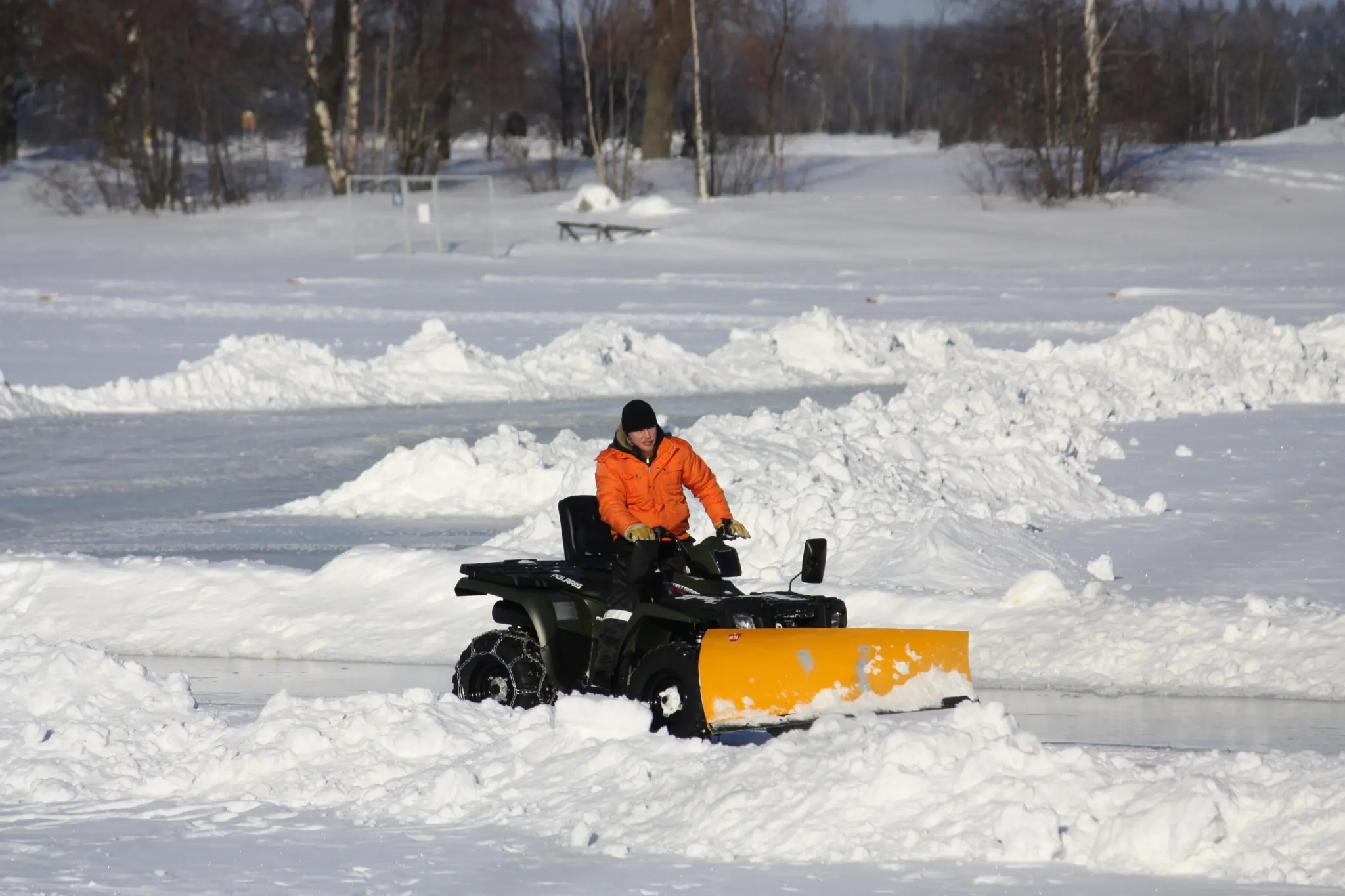
Ordinary paths are not forgotten. Level I paths are ploughed within four hours from 3 centimetres, and on weekday mornings the overnight snow must be gone by 7 a.m. Level II paths wait for 5 centimetres and come straight after.
The city measures, too. It has counted cyclists on the bridges over the Oulujoki and around the centre every two years since the 1960s. And since 2002 it has asked residents, also every two years, about the quality of snow clearing. In 2010, the overall score for clearing streets and paths was only “satisfactory”, slightly lower than in 2008.
The cold, and above all the ground
Why so much care? The cold matters, of course. But it is the one obstacle no city can remove. What cyclists have under their wheels, on the other hand, can be dealt with.
In 2003, two Swedish researchers, Bergström and Magnusson, surveyed 1,000 employees of four large companies in two Swedish cities. They compared their summer and winter trips. The result: from summer to winter, car trips rise by 27% and bike trips fall by 47%.
What gets people off their bikes
Sweden, 2003What keeps summer-only cyclists awaytemperature · rain or snow · road conditions
Car+27% from summer to winter · −6% with better winter maintenance
They then asked what mattered. Among those who cycle in summer but not in winter, the three reasons that weigh most are temperature, rain or snow, and road conditions. Among frequent winter cyclists, the top reason is exercise. And the researchers estimate that better winter maintenance of cycle routes could push winter bike trips up by 18%, and car trips down by 6%. The most useful measure is snow clearance; gritting matters less for choosing the bike, even if it counts for safety.
In Oulu, Timo Perälä founded the Winter Cycling Federation, the association that runs the congress. In 2016, he summed things up this way, in a WWF Scotland case study devoted to his city:
“People who stop cycling as the winter comes mention two obstacles—no safe infrastructure, no winter maintenance—as the most important barriers. Once there’s no proper cycling infrastructure nor winter maintenance, cycling through the year becomes an extreme sport. By investing in winter maintenance, the number of winter cyclists has increased by 25% in Oulu.”
Timo Perälä, founder of the Winter Cycling Federation (2016)
The danger lies on the ground
Winter doesn’t just discourage cyclists. It makes them fall.
Sweden keeps precise records. The transport administration, Trafikverket, says so on its cycling page: across all seasons, about 80% of seriously injured cyclists, and nearly half of those who die, are hurt in a crash involving no other vehicle. The most common cause among the seriously injured is falling off the bike: on ice, loose gravel, leaves, a damaged road surface. In May 2026, Trafikverket published its review of 2025. About 2,700 pedestrians were seriously injured in falls in the street, 68% of them women. The main cause: slippery or uneven surfaces, in other words poor maintenance. Its road-safety target director, Maria Krafft, is worried above all about one group: “What stands out in particular is injured cyclists.” She is calling in particular for better road grip and more helmet use.
Some municipalities draw an order of priority from this. In Karlskoga, Sweden, the rule is posted on the municipality’s website: footpaths and cycle paths have “the highest priority”, along with preschools, bus streets and main roads, and they are cleared first.
Who goes first
Karlskoga, Trafikverket80%
of seriously injured cyclists: a fall, no other vehicle (Sweden, all year)
2 700
pedestrians seriously injured in falls in 2025, 68% of them women
Karlskoga · cleared first
- Footpaths and cycle paths
- Preschools
- Bus streets
- Main roads
The principle is simple. A car copes with a few centimetres of snow; a bike or a pedestrian, much less well. They are the ones who fall.
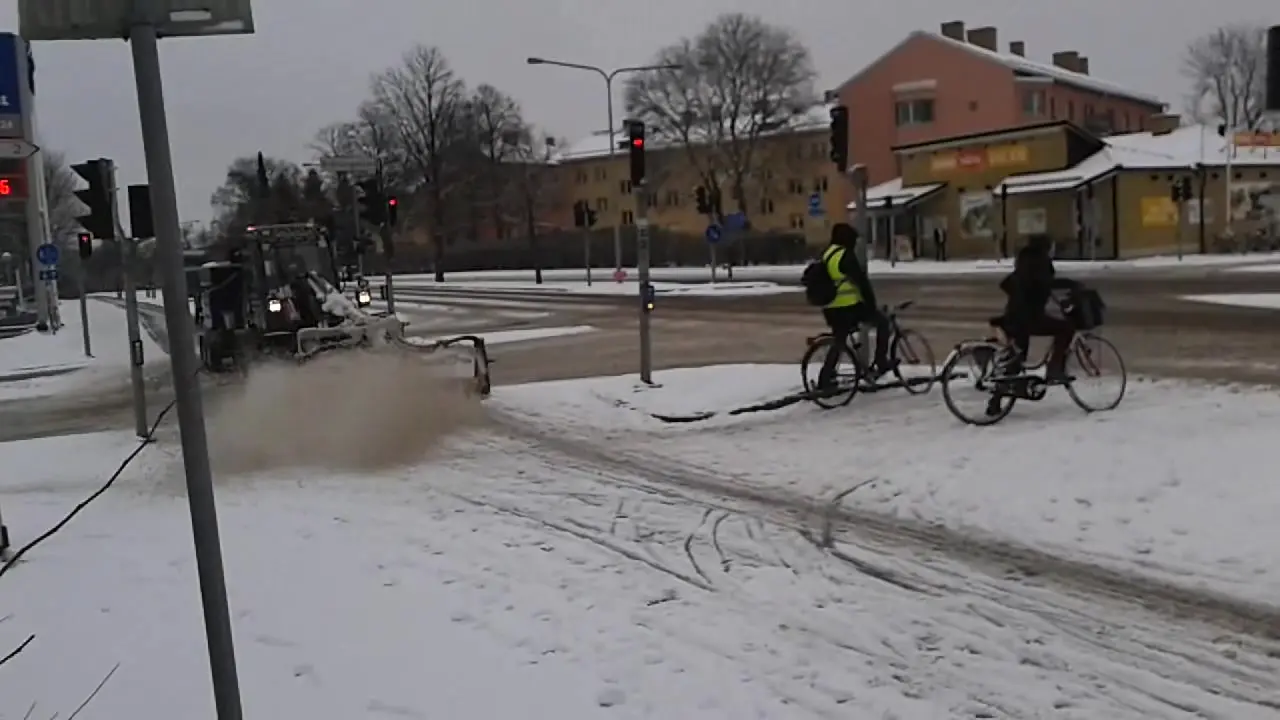
In France, winter is dark before it is white
In France too, winter empties the cycle lanes. The City of Paris’s counters, available as open data, show it month by month. In January 2026, each Paris counter recorded an average of 60 bikes per hour. In June, 103. In September, 115. Between June and January, two passes in five disappeared.
Paris, month by month
Bike counters, Oct 2025–Sep 2026In Paris, the enemy is less the snow than the dark. On 21 December, the sun sets there before 5 p.m., after a little over eight hours of daylight. The ride home happens in the dark. That is where the law comes in: a bike must carry a white or yellow front light and a red rear light, switched on “at night, or during the day when visibility is poor”. Outside built-up areas, at night, the cyclist must also wear a high-visibility vest. Riding without lights can cost a fine of up to €38.
The comparison with a large French-speaking city is telling. Montreal has 1,083 kilometres of cycle lanes. The city says so: “many cycle lanes are cleared of snow, either at the same time as the street they run along, or shortly afterwards”. In the Rosemont–La Petite-Patrie borough alone, 62 kilometres of protected lanes are cleared of snow during the 2025–2026 winter. On one of them, the Saint-Denis route, a single counter recorded 120,467 passes between 1 December 2024 and 1 April 2025. Yet it is much colder there than in Paris.
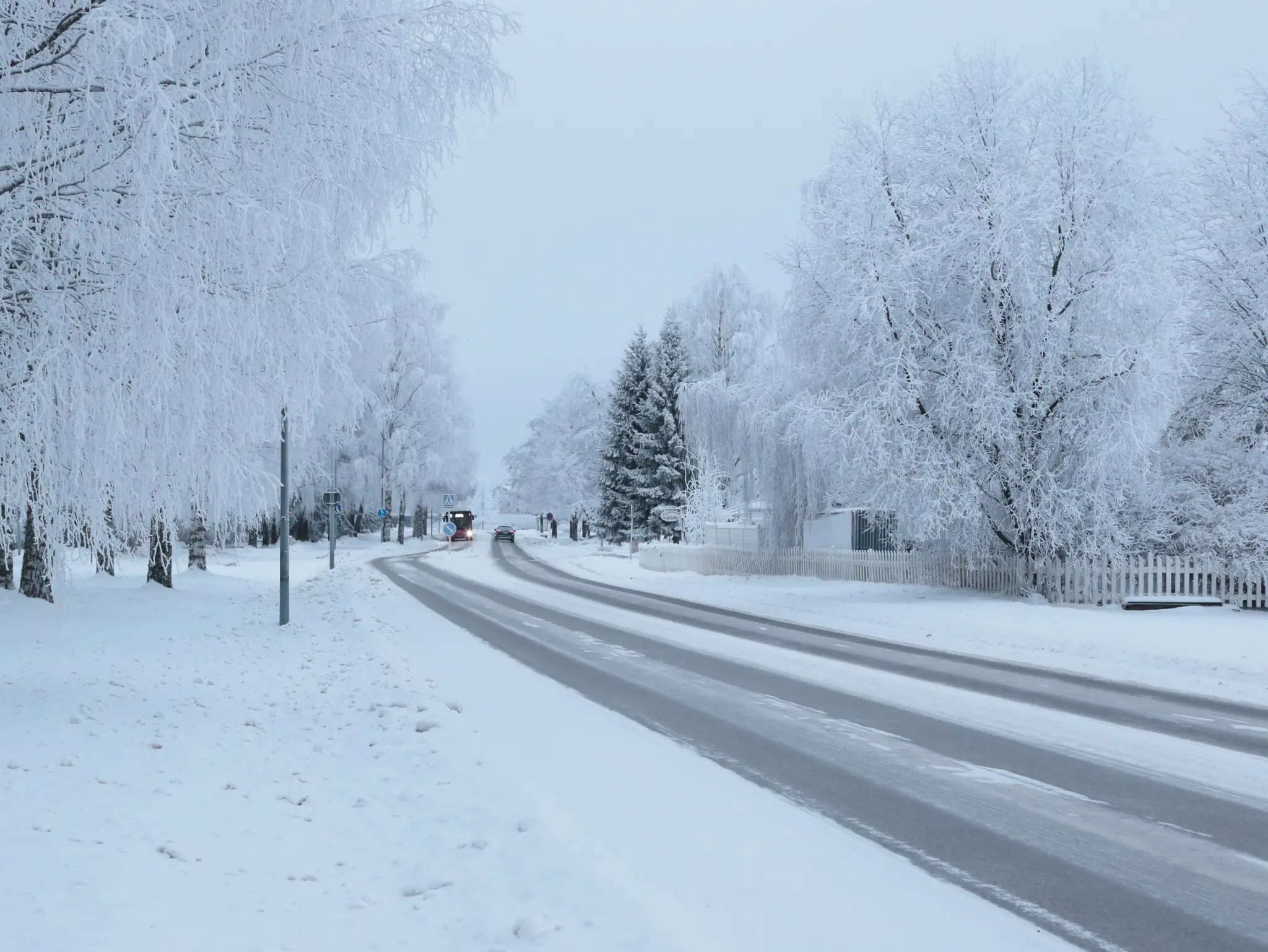
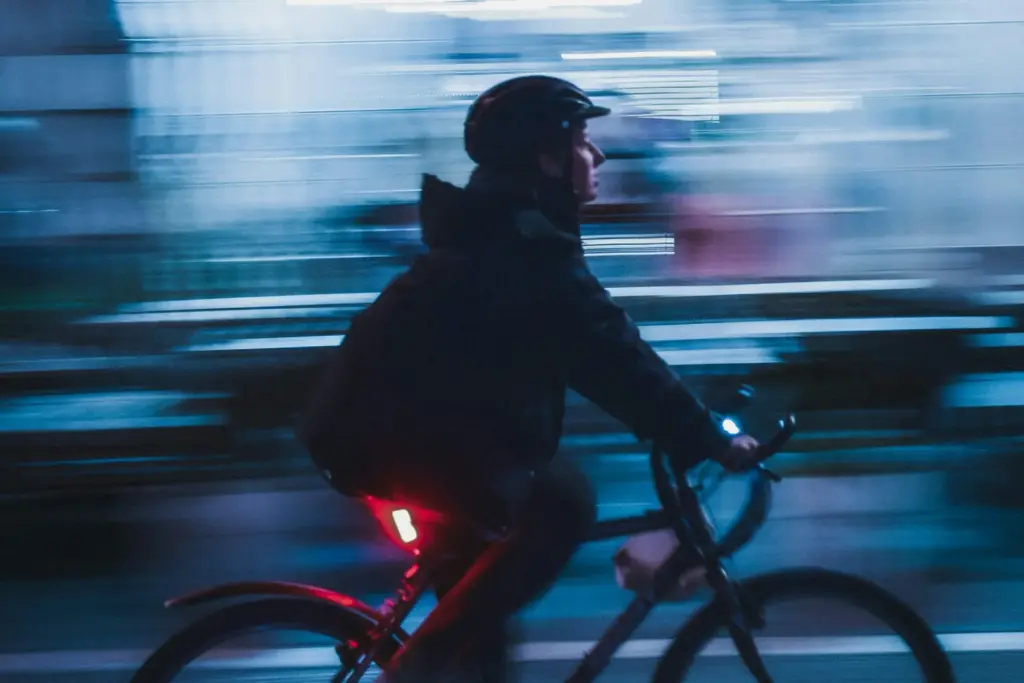
Buying guide
Bike lights: eight models compared
Decathlon, Knog, Busch & Müller, Sigma, Magicshine and Garmin: output, runtime and price, from city streets to unlit roads.
What winter asks of the cyclist
A cleared lane is not enough. The body and the bike have their own demands.
Hands first. On a bike, they barely move and take the wind head-on, while the rest of the body is working. A pair of winter gloves changes a commute. Then the upper body, which has to cut the wind without turning the rider into a steam room after ten minutes of effort.
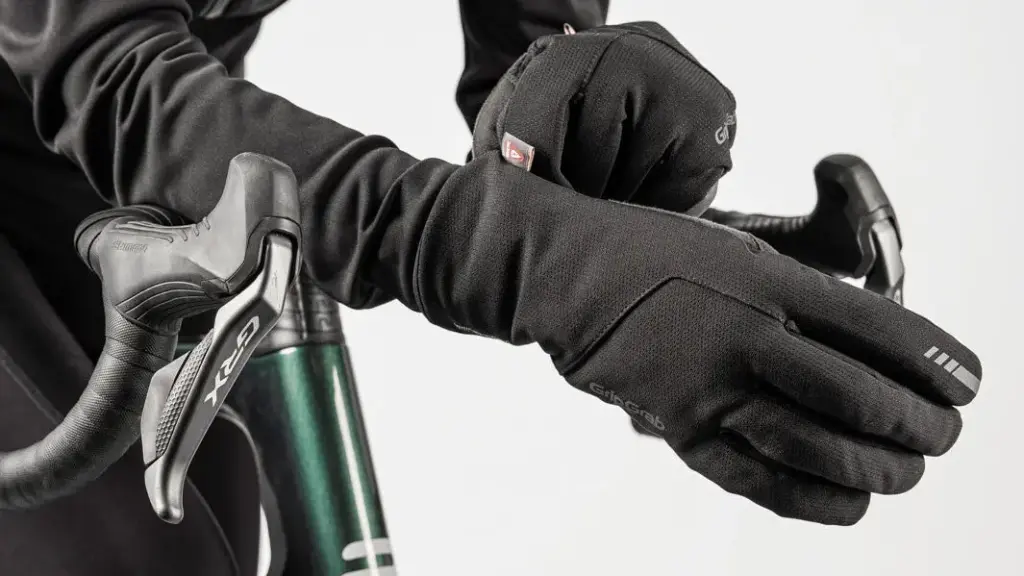
Buying guide
Winter cycling gloves: seven models compared
Seven gloves, from autumn to deep cold, chosen on their materials: membrane, insulation, palm and price.
The e-bike, for its part, has a weak spot: its battery. Bosch, one of the main motor makers, says so in its winter advice. The battery can lose capacity at low temperatures, which reduces range. Below zero, the manufacturer recommends storing it at room temperature, putting it back on the bike only when it is time to leave, and charging it at room temperature as well.
That leaves the ground. Trafikverket reminds Swedish cyclists: in winter, you need tyres suited to the road conditions.
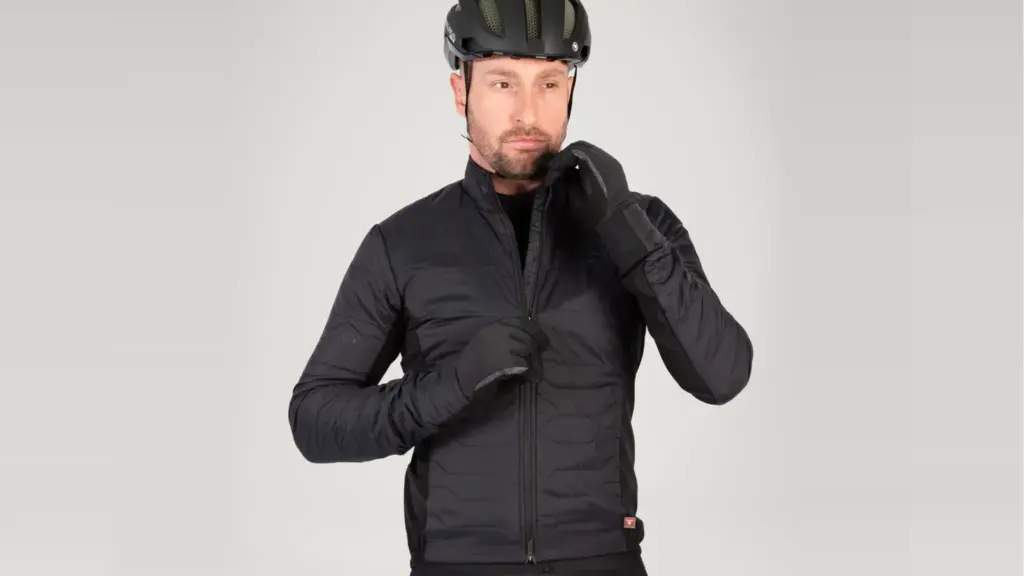
Buying guide
Winter cycling jackets: seven models compared
Seven jackets, from autumn to deep cold, chosen on their materials: wind, rain, insulation and price.
Oulu’s first congress had a sequel. Since 2013, the Winter Cycling Congress has moved city almost every year: Winnipeg, Leeuwarden, Minneapolis, Montreal, Calgary, Moscow, Joensuu, then Edmonton in 2024, after the pandemic break. Everywhere, the same lesson travels. The cold will always put off some cyclists. But many others give up because the lane isn’t cleared, isn’t lit, isn’t designed for January. In Oulu, the city simply decided that two centimetres was already too much.
Sources
- City of Oulu, “Snow ploughing and anti-skid treatment” (snow-clearing standards by class). https://www.ouka.fi/en/street-maintenance/snow-ploughing-and-anti-skid-treatment
- City of Oulu, “Cycling” (930 km of cycle lanes, Baana, class Super 165 km). https://www.ouka.fi/en/cycling
- City of Oulu, “Information and Statistics” (population on 31/12/2025). https://www.ouka.fi/en/information-and-statistics
- Traficom, Henkilöliikennetutkimus 2021: Oulun seutu (national travel survey, regional publication). https://muhos.fi/wp-content/uploads/2023/02/HLT2021-seutujulkaisu-Oulun-seutu.pdf
- City of Oulu / Traficom, Lasten ja nuorten liikkumismahdollisuudet Oulussa (residents’ survey, May–June 2024). https://traficom.fi/files/media/file/Oulu_OSA1_Raportti_lasten_ja_nuorten_liikkumismahdollisuudet.pdf
- City of Oulu, Kevyen liikenteen verkon kehittämissuunnitelma, 2011 (counts since the 1960s, satisfaction surveys since 2002). https://www.ouka.fi/media/1689/download
- Bergström A., Magnusson R., “Potential of transferring car trips to bicycle during winter”, Transportation Research Part A 37(8), 2003, pp. 649–666. https://ideas.repec.org/a/eee/transa/v37y2003i8p649-666.html
- WWF Scotland, Year-round cycling, Oulu, Finland (case study, 2016). https://www.wwf.org.uk/sites/default/files/2016-12/Finland%20case%20study%20-%20active%20travel.pdf
- Winter Cycling Federation, “Winter Cycling Congress”. https://wintercycling.org/congress
- Trafikverket, “Säkerhet på cykel” (Cycling safety). https://www.trafikverket.se/resa-och-trafik/trafiksakerhet/sakerhet-pa-vag/sakerhet-pa-cykel/
- Trafikverket, “Vi behöver göra mer för att minska antalet omkomna och allvarligt skadade i vägtrafiken” (We need to do more to reduce road deaths and serious injuries), May 2026. https://www.trafikverket.se/om-oss/nyheter/nationella-nyheter/2026/maj/vi-behover-gora-mer-for-att-minska-antalet-omkomna-och-allvarligt-skadade-i-vagtrafiken/
- Karlskoga municipality, “Snöröjning och halkbekämpning” (Snow clearing and anti-skid treatment). https://karlskoga.se/trafik--resor/gator-och-vagar/snorojning-och-halkbekampning.html
- SDES, “Comment les Français se déplacent-ils en 2019 ? Résultats de l’enquête mobilité des personnes” (How did the French travel in 2019? Results of the travel survey). https://www.statistiques.developpement-durable.gouv.fr/comment-les-francais-se-deplacent-ils-en-2019-resultats-de-lenquete-mobilite-des-personnes
- City of Paris, open data “Comptage vélo — Données compteurs” (bike counts; VELODISCO calculation: passes per counter per hour, monthly average). https://opendata.paris.fr/explore/dataset/comptage-velo-donnees-compteurs/
- Service-Public.fr, “Équipements obligatoires du vélo” (mandatory bicycle equipment; checked 10 June 2026). https://www.service-public.gouv.fr/particuliers/vosdroits/F34169
- City of Montreal, “Vélo et pistes cyclables”; “Un réseau cyclable 4 saisons dans Rosemont–La Petite-Patrie”. https://montreal.ca/sujets/velo-et-pistes-cyclables
- Bosch eBike Systems, “Safely through the winter with the eBike”. https://www.bosch-ebike.com/en/news/safely-through-the-winter-with-the-ebike