IN BRIEF
Bike lights do two different jobs in town and on a country road. Under street lights, the point is to be seen: the kits in this selection put out 400 lumens at the front and add a rear light. Without street lighting, you need to see the road: the 1,000 to 1,300 lumen front lights in this selection claim a beam range of 100 to 205 metres. Eight models compared, including Decathlon’s ST930 kit (£49.99 in the UK) and the Garmin Varia RTL515 (£169.99 or $199.99 from Garmin), a rear light with a radar that warns you of cars coming up behind.
| Decathlon ST930 (kit) | £49.99 · 400 lumens front, 15 rear · brake light |
| Knog Blinder 400 and Plus (kit) | £44.99 / $59.99 · 400 lumens front, 20 rear |
| Knog Blinder 1000 | £79.95 / $89.95 · 1,000 lumens · 100 m beam |
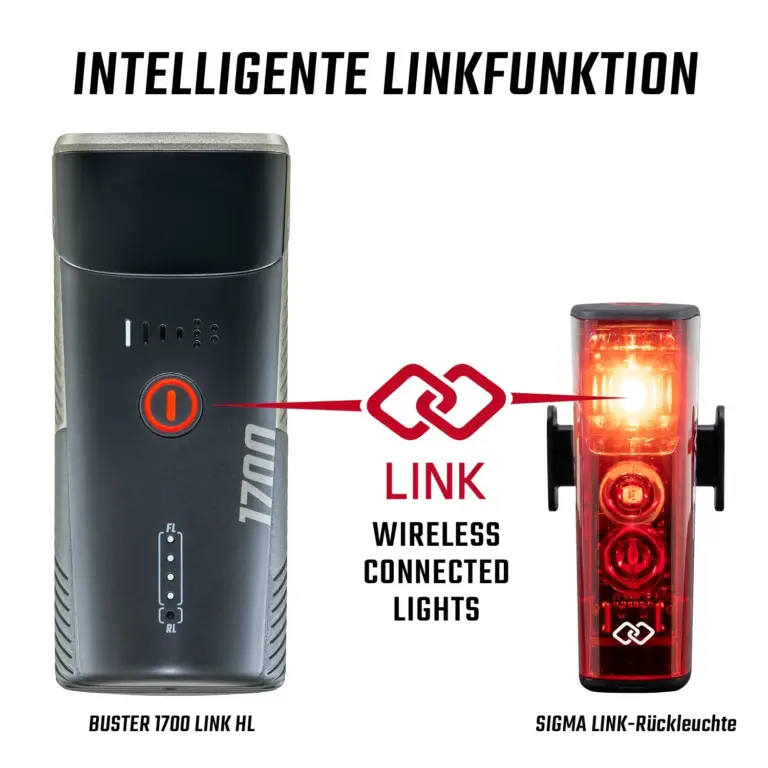
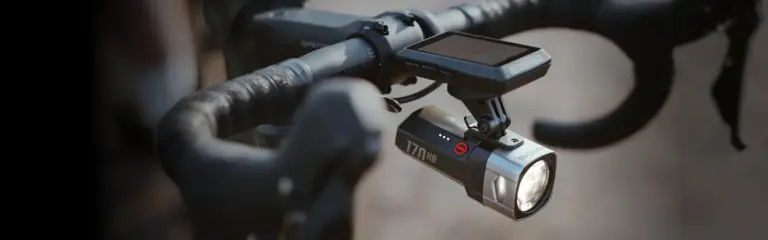
| Sigma Buster 1100 | €89.95 · 1,100 lumens · 165 m beam |
| Magicshine Hori 1300S | £80 / $89.99 · 1,300 lumens · low and high beam |
| Busch & Müller IXON Core 2 | €59.90 · 70 lux · StVZO approved |
| Garmin Varia RTL515 | £169.99 / $199.99 · radar tail light · vehicles detected at 140 m |
| Magicshine SEEMEE 100AD | £49 / $54.99 · radar tail light · 30 lumens steady |
The prices in this bike lights comparison are the brands’ own (their online store or recommended retail price), checked on 4 October 2026 for the UK and the US; Sigma and Busch & Müller only publish a euro price. Retailers, Amazon included, often sell for less: the “See the price on Amazon” buttons show today’s price.
In the UK, the law sets the minimum. The Highway Code (rule 60) states that “at night your cycle MUST have white front and red rear lights lit”. A bike must also have a red rear reflector, and amber pedal reflectors if it was made after October 1985. Flashing lights are allowed, but the Highway Code recommends a steady front lamp where there is no street lighting. France, where VeloDisco is based, is stricter: the compulsory rear light must not flash, and a hi-vis vest is required outside built-up areas at night.
A word on the figures: most brands give a light’s output in lumens, the amount of light it emits. Busch & Müller, whose headlight is approved under the German StVZO standard, gives it in lux, the light received at a distance. The two cannot be compared.
In town: light sets to be seen
Decathlon ST930: a kit that gets brighter when you brake
Decathlon claims 400 lumens (50 lux) at the front, with a wide beam, and 15 lumens at the rear, with a brake light function: the kit gets brighter when the bike slows down, in town or on the road. It charges over USB-C and gives 2 to 8 hours of runtime depending on the mode, out of three (power, eco and automatic). The brand says the front light fits a Garmin-type quarter-turn mount, on handlebars from 25 to 31.8 mm, and that both lights are rated IPX4 against heavy, continuous rain. Price: £49.99 on Decathlon’s UK store.
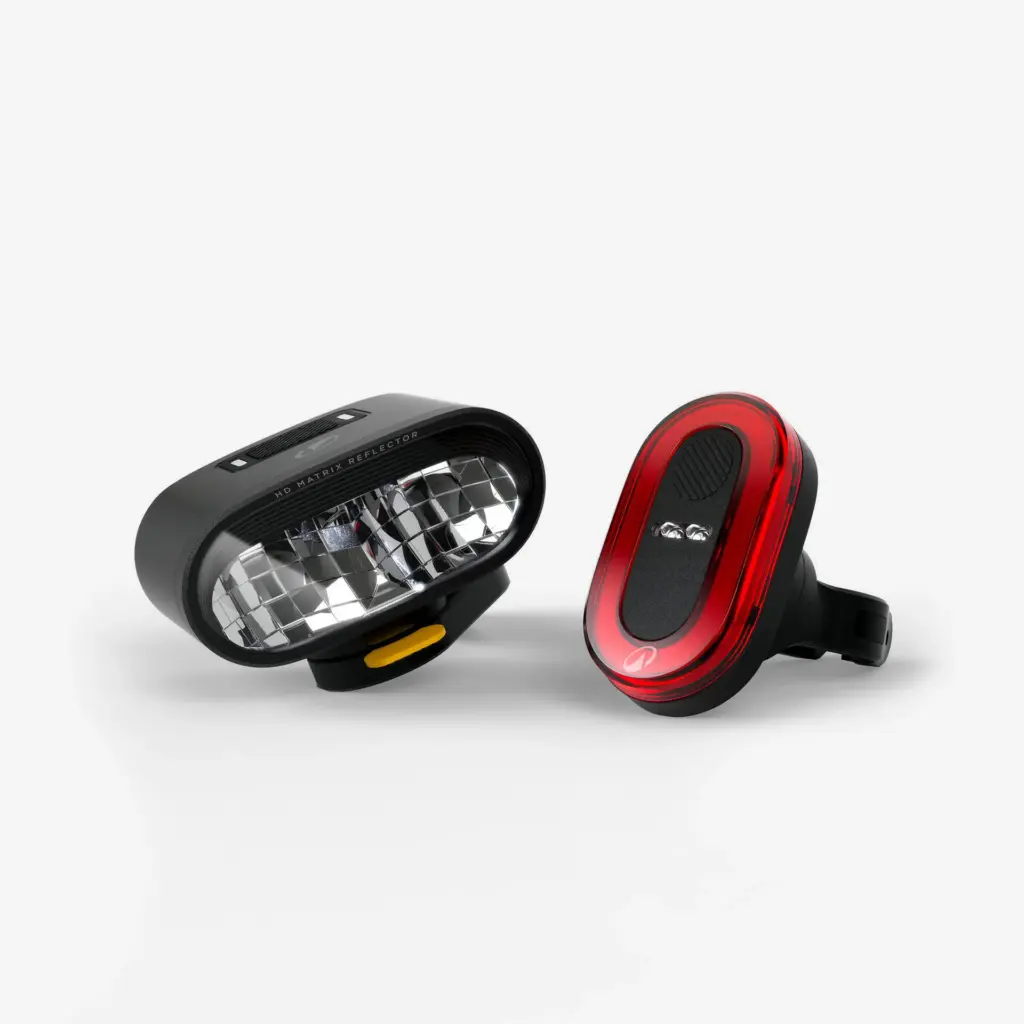
Knog Blinder 400 and Plus: the lightweight set
The Blinder 400 front light puts out 400 lumens and weighs 90 g. Knog claims 2.5 hours on high steady, up to 70 hours on eco flash, and a 2-hour charge over USB-C (cable not included). The Plus rear light, rated at 20 lumens, weighs just 17 g and charges without a cable through its built-in USB-A plug; the brand says it can be seen from up to 450 metres. It lasts 2 hours on steady and 40 hours on eco flash, and its clip lets you attach it to a bag or a jacket. Knog price: £44.99 in the UK, $59.99 in the US.
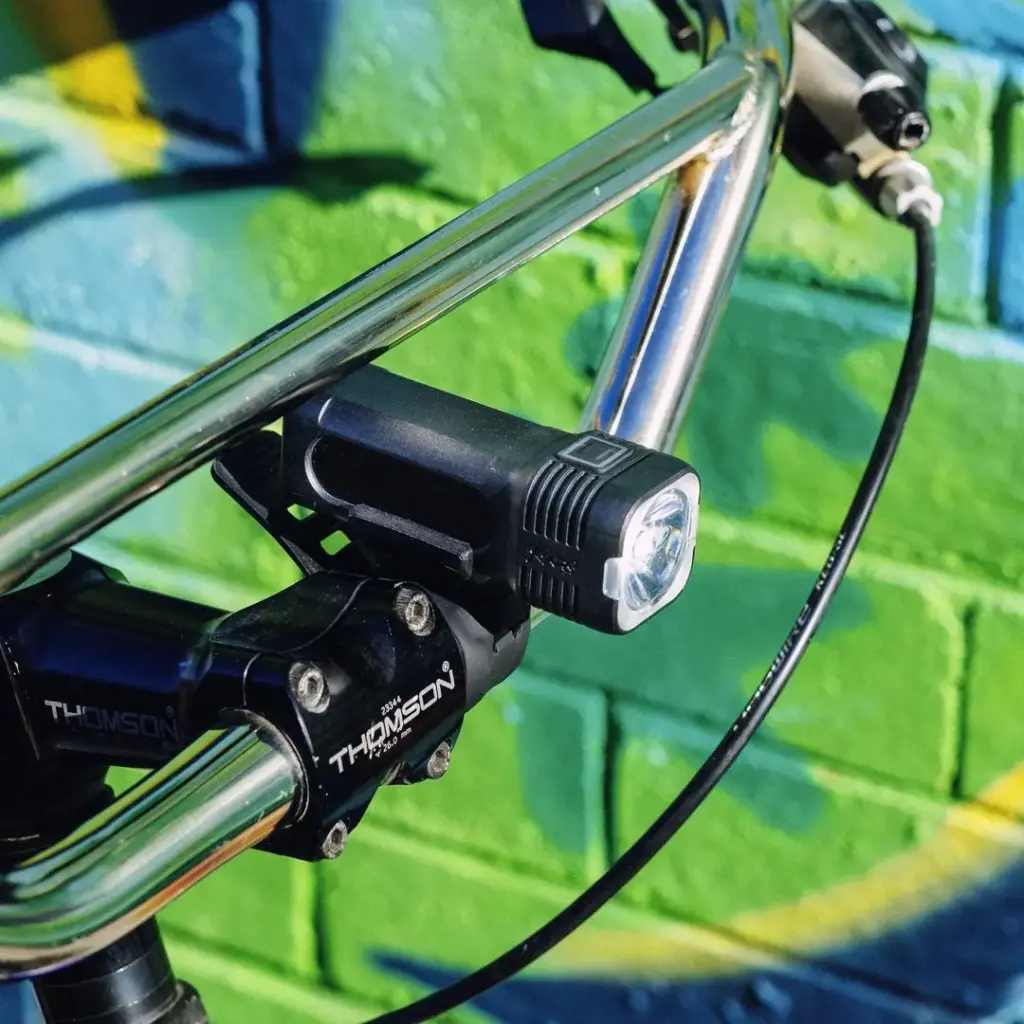
Unlit roads: powerful bike lights
Away from towns, you need to see the road surface. Knog, Sigma and Magicshine claim 1,000 to 1,300 lumens and a beam range of 100 to 205 metres. Busch & Müller counts in lux and cuts off its beam so as not to dazzle. A powerful light should be aimed at the road, so that it does not dazzle oncoming road users.
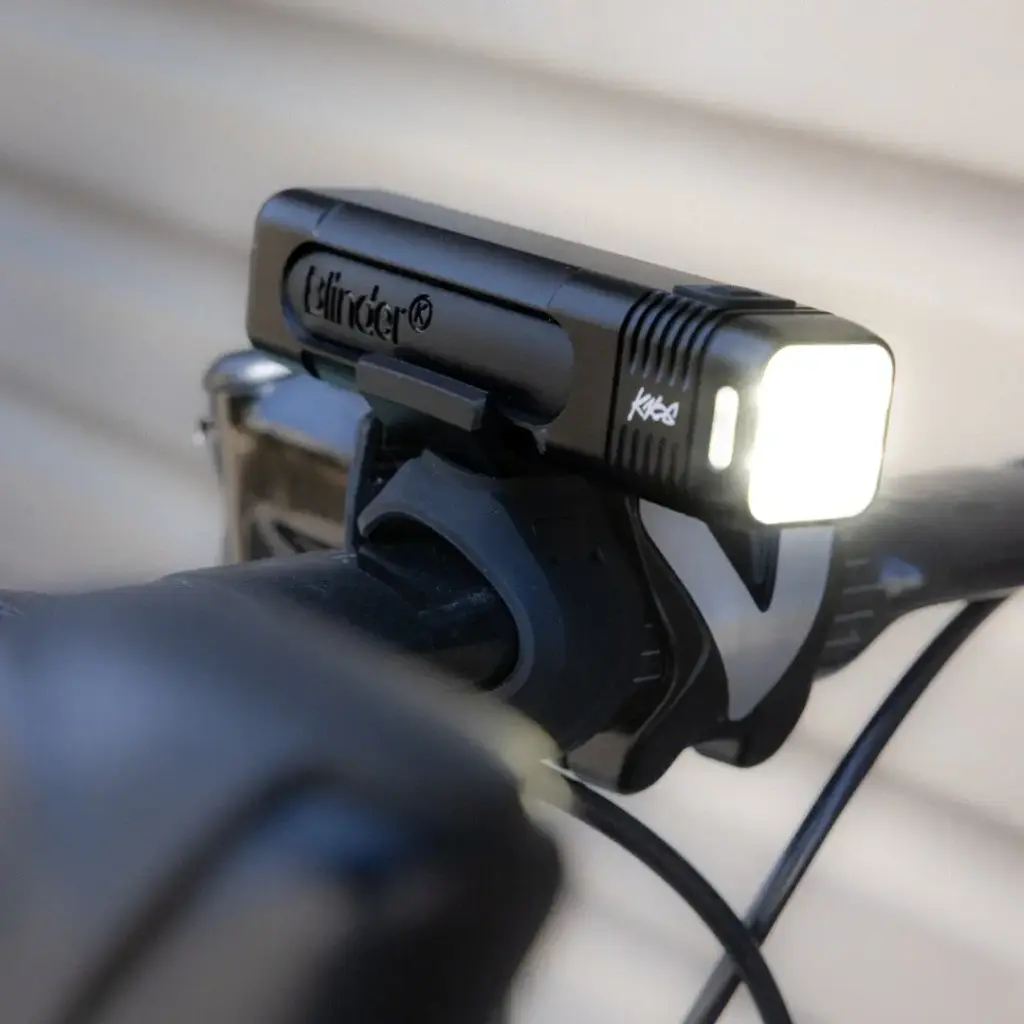
Knog Blinder 1000: 1,000 lumens in 167 g
Knog claims up to 1,000 lumens and “up to 100m of quality illumination”, from two wide-angle and two spot optics. At 950 lumens steady, its 5,000 mAh battery lasts 2 hours; on eco flash, up to 120 hours. It charges in 5 hours over USB-C (cable not included), it is waterproof to IP67 and its housing is CNC-machined aluminium. It weighs 167 g and comes with two mounts: a rubber strap for 22.2 to 35 mm handlebars and a GoPro-compatible mount to hang it under a bike computer. Knog price: £79.95 in the UK, $89.95 in the US.
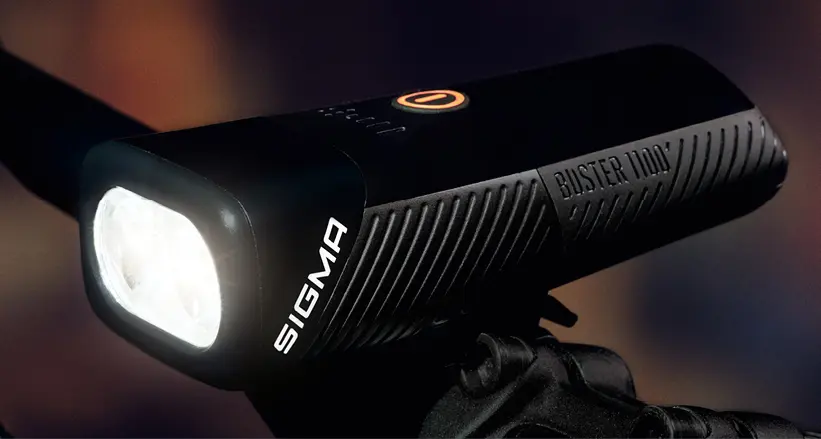
Sigma Buster 1100: a 165-metre beam
Two LEDs behind a double lens: Sigma claims 1,100 lumens and a 165-metre beam. Six modes: 2 hours of runtime on high, 2.5 hours at 800 lumens, 5 hours at 400 lumens, 16 hours in Eco mode (150 lumens), 5 hours on night flashing and 50 hours on day flashing. A full charge takes 3 hours over USB-C, and the light can be charged from a power bank while you ride. Splash resistant to IPX4, it weighs 215 g with its bracket. Recommended price from Sigma: €89.95 on its European store; Sigma notes that it is not available in Germany. The brand has also just expanded its Buster range: our article on the new Sigma Buster and Nyte lights.
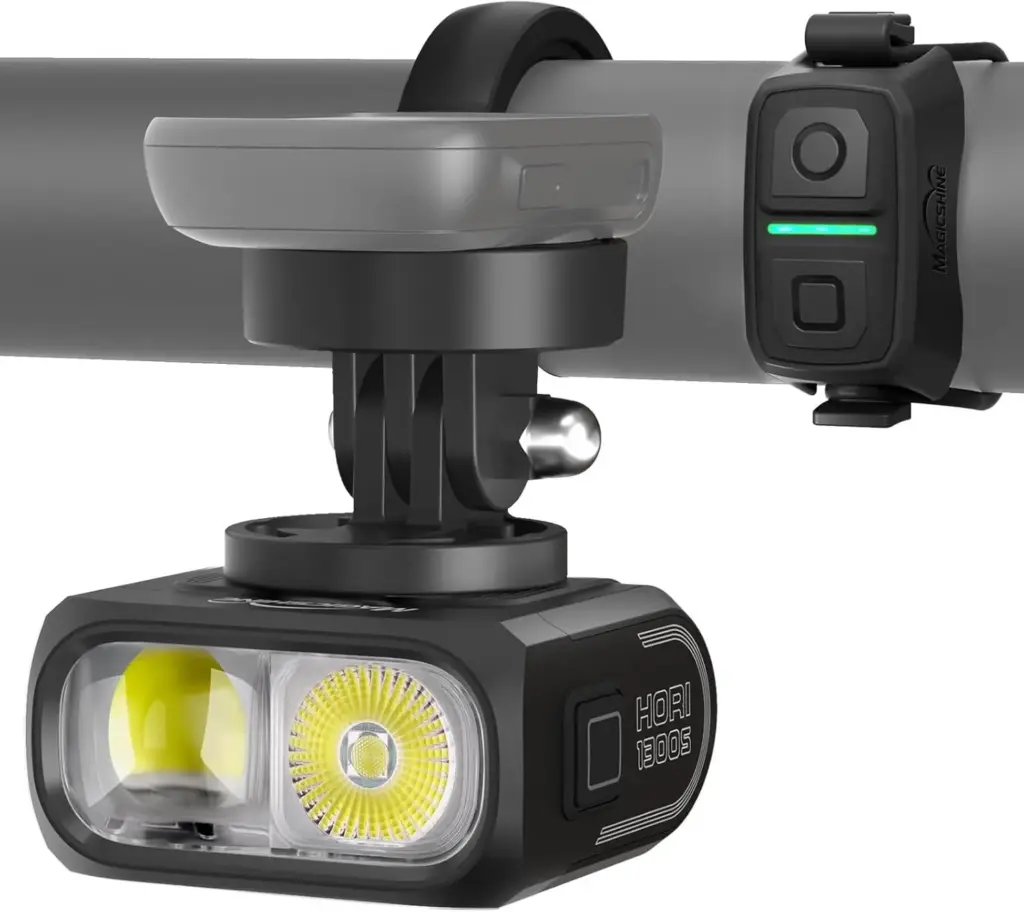
Magicshine Hori 1300S: a low beam and a high beam
Like a car headlight, the Hori 1300S has two optics. The first gives a wide low beam, from 200 to 900 lumens, with what Magicshine describes as a “Precision cut-off: No glare to oncoming traffic”. The second, a 1,300 lumen high beam, reaches 205 metres. Claimed runtimes: 6.5 hours at 200 lumens, 2.5 hours at 900 lumens, 2 hours on high beam. Its 3,200 mAh battery charges in 2 hours over USB-C; it is rated IPX6 and weighs 151 g. Magicshine says a motion sensor switches it on and off automatically; a handlebar remote is included, along with mounts for Garmin, Wahoo and Bryton bike computers and a GoPro adapter. Magicshine price: £80 in the UK, $89.99 in the US. Amazon currently sells it for less.
Busch & Müller IXON Core 2: the headlight that does not dazzle
The IXON Core 2 from German maker Busch & Müller is approved under the StVZO standard. The brand explains that it keeps a sharp cut-off between the lit and the dark zone, so as not to dazzle oncoming road users, while lighting far ahead. Three modes: 70 lux (2.5 hours), 35 lux (6.5 hours) and 15 lux (18 hours). Its 3,000 mAh battery is replaceable, fast-charges over USB-C and doubles as a power bank. The light weighs 125 g. The brand aims it at sporty bikes. It is a front light only: you will need a rear light too. Recommended price in Germany: €59.90.
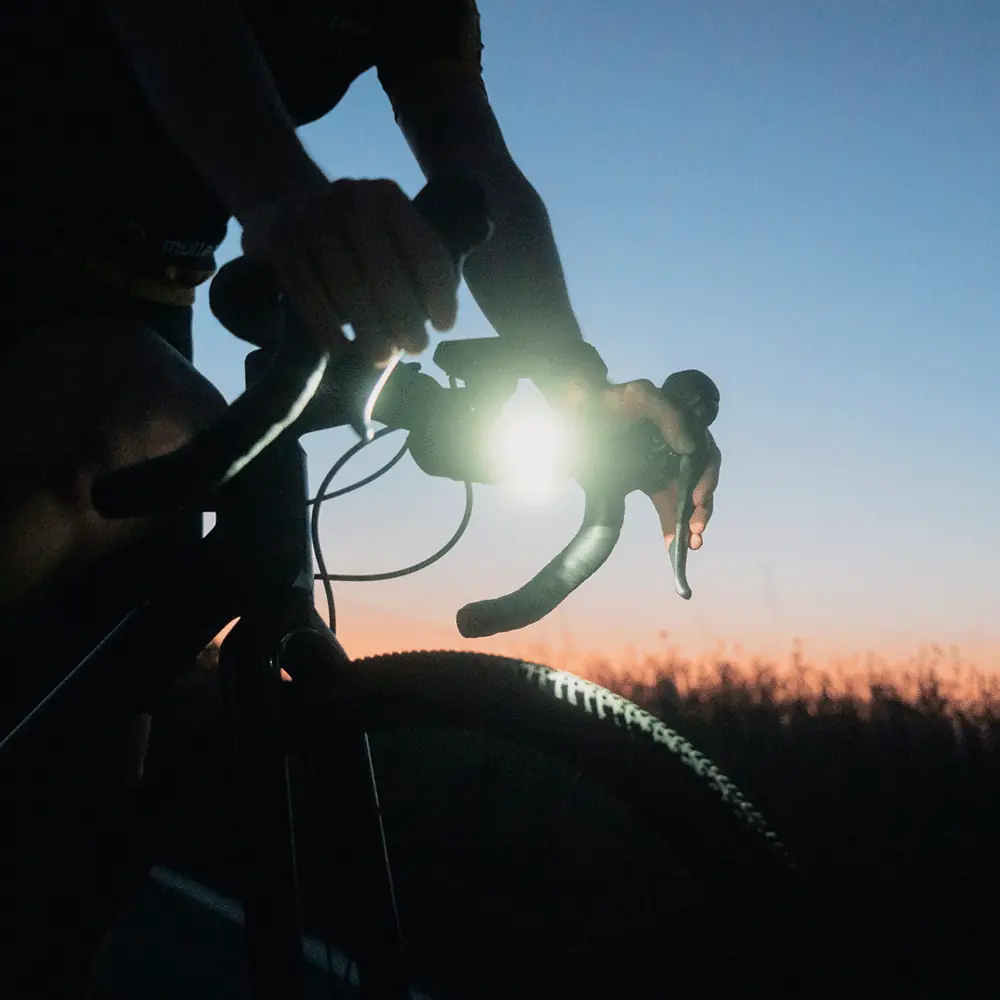
Coming soon: the Dynamic Lytes range
Dynamic Bike Care, a brand that also sells bike care products, is launching its Lytes lighting range: three front lights of 400, 800 and 1,200 lumens, priced from €59.99 to €89.99, and a rear light at €39.99.
At the rear: two radar tail lights
These rear lights have a built-in radar that picks up vehicles approaching from behind. The Garmin warns the rider; the Magicshine responds with a brighter flash.
Garmin Varia RTL515: cars flagged at 140 metres
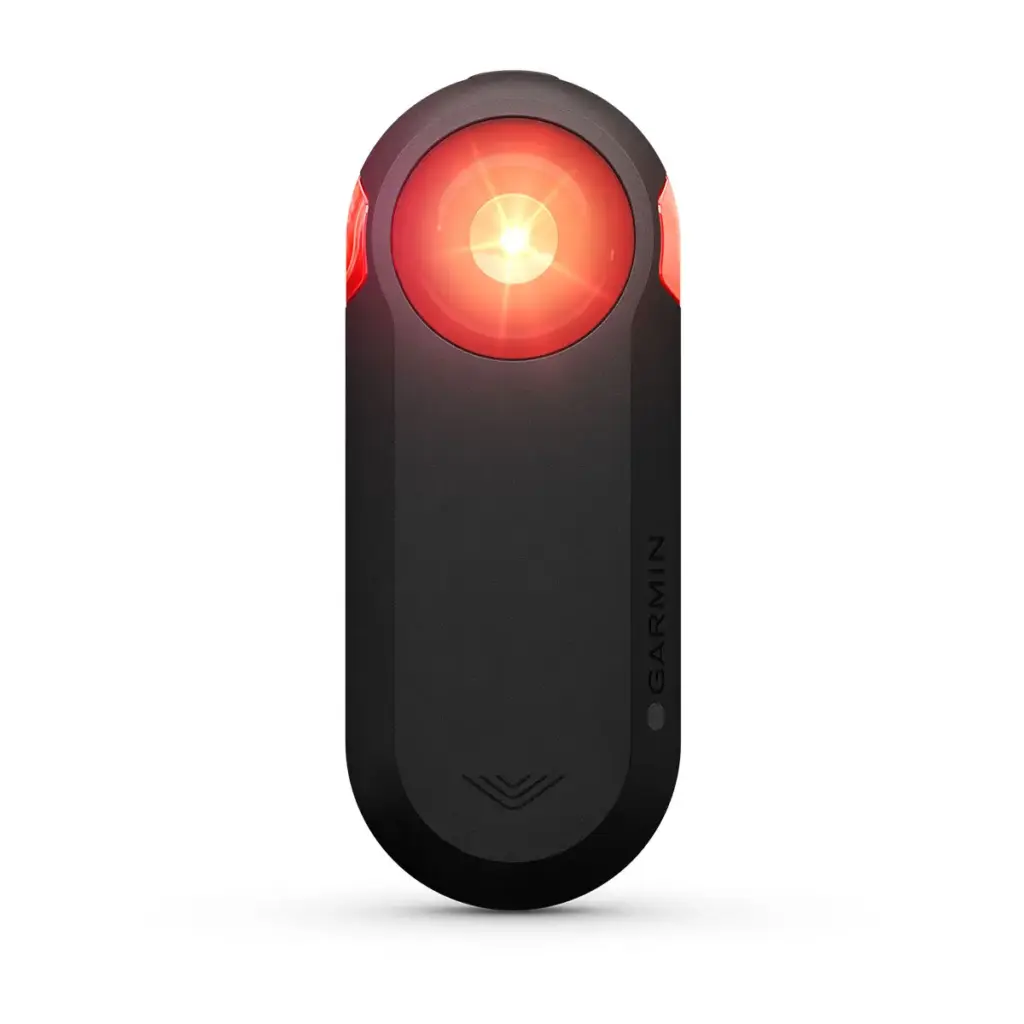
Garmin says its radar detects vehicles up to 140 metres behind the bike. Alerts show up on one of the brand’s Edge bike computers, on some Garmin smartwatches or on a smartphone, where the Varia app shows the position and speed of approaching cars, with audible and vibrating alerts. The light has four modes: steady at 20 lumens (6 hours of runtime), peloton (8 hours), night flash (6 hours) and day flash at 65 lumens (16 hours). Garmin says it is visible from 1.6 km, over a 220° angle. It weighs 71 g and is waterproof to IPX7. Garmin price: £169.99 in the UK, $199.99 in the US. Amazon currently sells it for much less.
Magicshine SEEMEE 100AD: a radar light for under $60
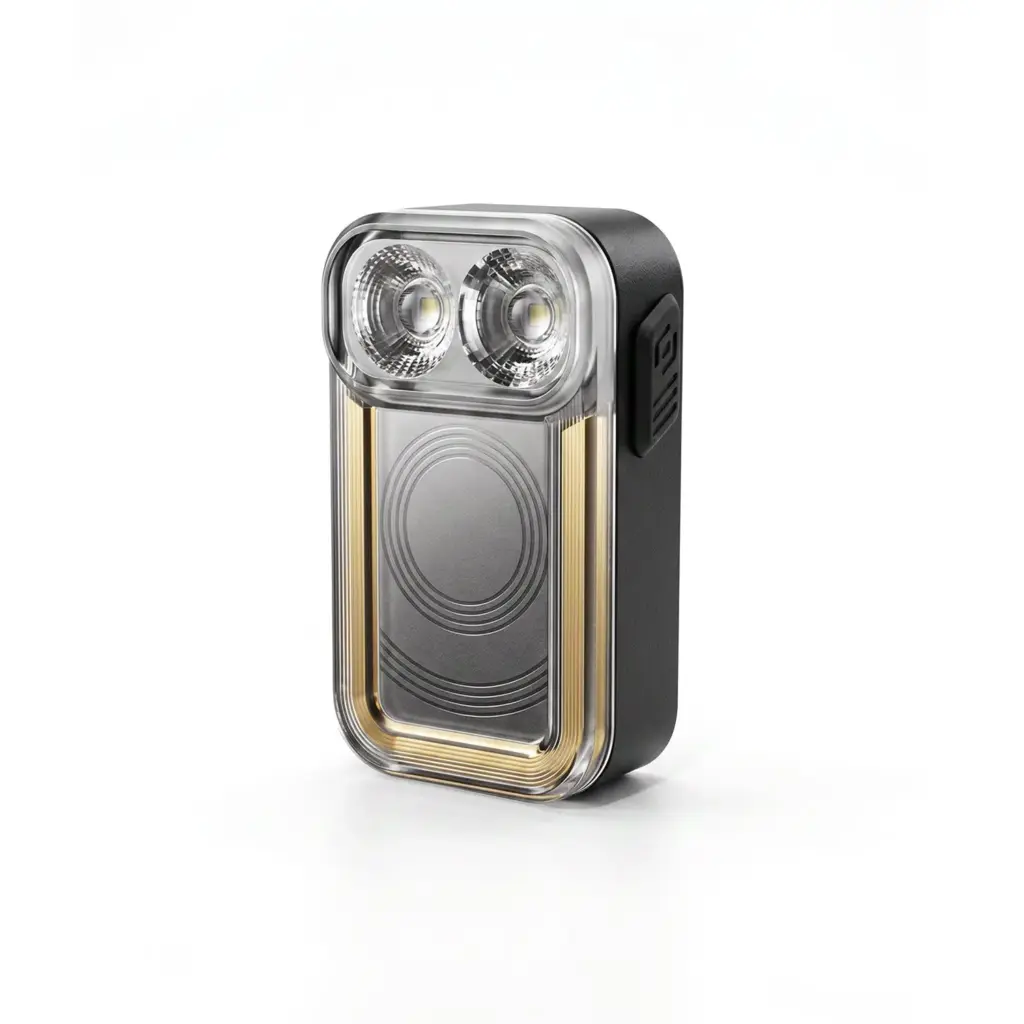
Magicshine describes a light that reacts by itself: when its radar picks up an approaching vehicle, it switches to an alert mode and flashes, alternating between 30 and 100 lumens. Outside alerts, it has a 12 lumen mode (7 hours) and a 30 lumen mode (3.5 hours), plus three flashing modes, with up to 18 hours of runtime. 700 mAh battery charged over USB-C, IPX6 rating, 38 g. Magicshine price: £49 in the UK, $54.99 in the US.
How to choose bike lights
- Where you ride. In town, the aim is to be seen: the kits in this selection put out 400 lumens at the front. On roads without street lighting, you need to see: the 1,000 to 1,300 lumen lights in this selection claim a 100 to 205 metre beam.
- Do not dazzle. Among the models compared, the Busch & Müller IXON Core 2 and the low beam of the Magicshine Hori 1300S have a cut-off beam, designed for this. Aim the others at the road.
- Runtime on full power. The powerful lights in this selection last about 2 hours on full steady power. The dozens of hours advertised apply to the low or flashing modes.
- Steady or flashing. The Highway Code allows flashing lights but recommends a steady front lamp where there is no street lighting; in France, the rear light must not flash. Check that your lights have a steady mode.
- Budget. At the brands’ prices, from £44.99 for a full set to £169.99 or $199.99 for a radar tail light; retailers often sell for less.
Frequently asked questions
What bike lights are required by law in the UK?
Rule 60 of the Highway Code states that at night a bike must have white front and red rear lights lit. It must also be fitted with a red rear reflector, and amber pedal reflectors if it was made after 1 October 1985. White front reflectors and spoke reflectors are recommended.
How many lumens do bike lights need?
To be seen in town, the kits in this selection put out 400 lumens at the front. To ride on roads without street lighting, the 1,000 to 1,300 lumen lights in this selection claim a beam range of 100 to 205 metres.
Are flashing bike lights legal?
In the UK, yes: the Highway Code permits flashing lights, but recommends a steady front lamp in areas without street lighting. In France, the compulsory rear light must be steady.
Do I need to wear hi-vis clothing?
Not in the UK, where the Highway Code (rule 59) recommends light-coloured or fluorescent clothing in daylight and poor light, and reflective clothing or accessories in the dark. In France, a hi-vis vest is compulsory outside built-up areas at night or in poor visibility.
What does a radar tail light do?
It picks up vehicles approaching from behind. The Garmin Varia RTL515 flags them up to 140 metres away on a bike computer, a smartwatch or a smartphone. The Magicshine SEEMEE 100AD switches to an alert mode and flashes more brightly.
Lumens or lux: what is the difference?
Lumens measure the light a lamp emits, lux the light received at a distance. Busch & Müller gives the output of its IXON Core 2, approved under the German StVZO standard, in lux (70 lux). The two cannot be compared.