IN BRIEF
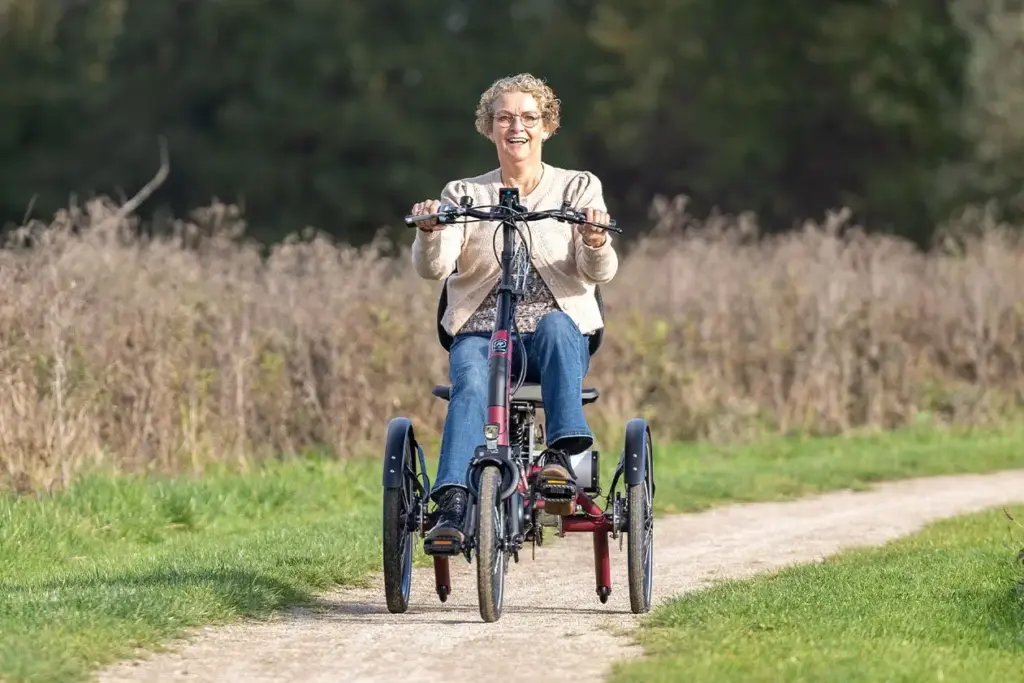
Dutch manufacturer vanRaam, a specialist in adapted electric cycles (low-seat trikes, bikes for carrying a wheelchair, side-by-side tandems), unveiled its new BiSSA seat suspension at the Prodays 2026 trade show. Named after “Bi-Spring Shock Absorber”, this patented technology makes its debut on the Easy Rider Compact+, the brand’s best-selling compact electric trike. Its distinctive feature: it works entirely without oil, combining a steel coil spring with a Cellasto element, a microcellular elastomer that absorbs vibration with no risk of leaks and with maintenance kept to a minimum.
| Technology name | BiSSA (Bi-Spring Shock Absorber) |
| First model fitted | Easy Rider Compact+ (compact electric trike) |
| Principle | Steel coil spring + Cellasto elastomer (oil-free) |
| Claimed benefits | No risk of leaks, maintenance kept to a minimum |
| Retrofit | Cannot be fitted to bikes already sold |
| Electric assistance | In-house Silent System (designed by vanRaam since 2011) |
| Brakes | Magura or Tektro |
| Tyres | Schwalbe |
| Build time | 3 to 6 weeks (bike built to order) |
vanRaam is not a brand you come across every day in the bike aisles. This Dutch manufacturer, which arrived in France three years ago, specialises in adapted electric cycles: low-seat trikes, bikes for carrying a wheelchair, side-by-side tandems. Its customers are mainly older people or people with disabilities, more often in suburban areas or in the countryside. It was at the Prodays 2026 trade show in Paris that the brand presented its new suspension technology, named BiSSA.
A seat suspension without a drop of oil
BiSSA, short for Bi-Spring Shock Absorber, is a patented system making its debut on the seat of the Easy Rider Compact+, the brand’s best-selling compact electric trike. Its distinctive feature: the damper works entirely without oil. Where a conventional damper relies on a fluid, BiSSA combines two elements: on one side, a steel coil spring that carries the weight and lets the seat move; on the other, a Cellasto element, a polyurethane-based microcellular elastomer, which absorbs vibration. Under an impact, the elastomer gives slightly then returns to its shape, converting the movement into a small amount of heat — a phenomenon engineers call hysteresis. The direct consequence: no fluid is used, so there is no risk of leaks, and maintenance is kept to a minimum since cleaning the suspension is enough.
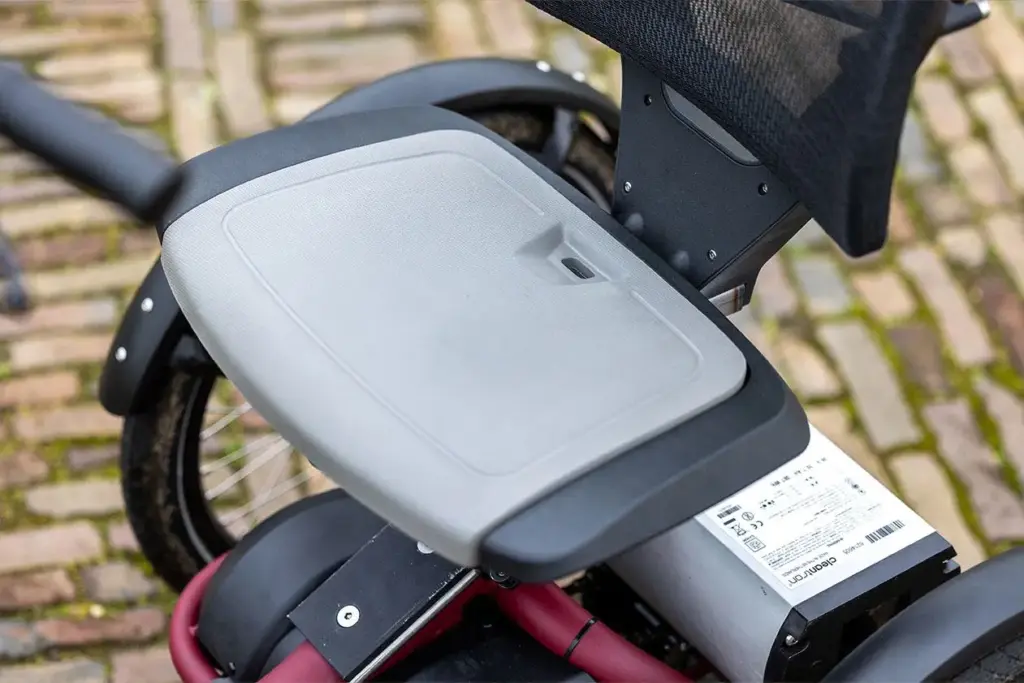
“Until now, we had a simple damper: we wanted to simplify the system, not be dependent on a supplier, and have zero maintenance,” says David Limaux, the brand’s sales manager, quoted by fellow journalists at the show. The comfort argument also counts for a lot given the brand’s customers: “This allows our users, who are sometimes frail, to keep cycling, when without this comfort they would no longer be able to,” vanRaam explains in a press release. The brand intends to roll BiSSA out across all its forthcoming models, but the system cannot be retrofitted to bikes already sold.
Made in Europe, the brand claims
This new development is also a chance to look more closely at how vanRaam works. The brand lays claim to more than 110 years of history: it originally built frames for other brands before refocusing on adapted cycles. The frames are now produced in-house, from steel tubing supplied by a German company, laser-cut and then welded by robots or by hand. “We have complex welds done by the robot, because a human hand cannot go all the way round the weld,” says David Limaux, with the finishing passes completed by hand.
“We have a genuine commitment to made in Europe,” he insists. The brand even uses metal 3D printing to produce titanium parts. Only the motors come from Asia, but their development remains in-house: vanRaam designed its own electric assistance system, the Silent System, back in 2011. For the rest, the brand sources from established European suppliers: Magura or Tektro brakes, Schwalbe tyres, batteries produced in the Netherlands and in Poland. Every bike is also built to order, just in time, with adaptations that can go a long way depending on the customer’s disability — as far as switching the brakes to the other side or locking part of the drivetrain. Delivery takes between three and six weeks.