IN BRIEF
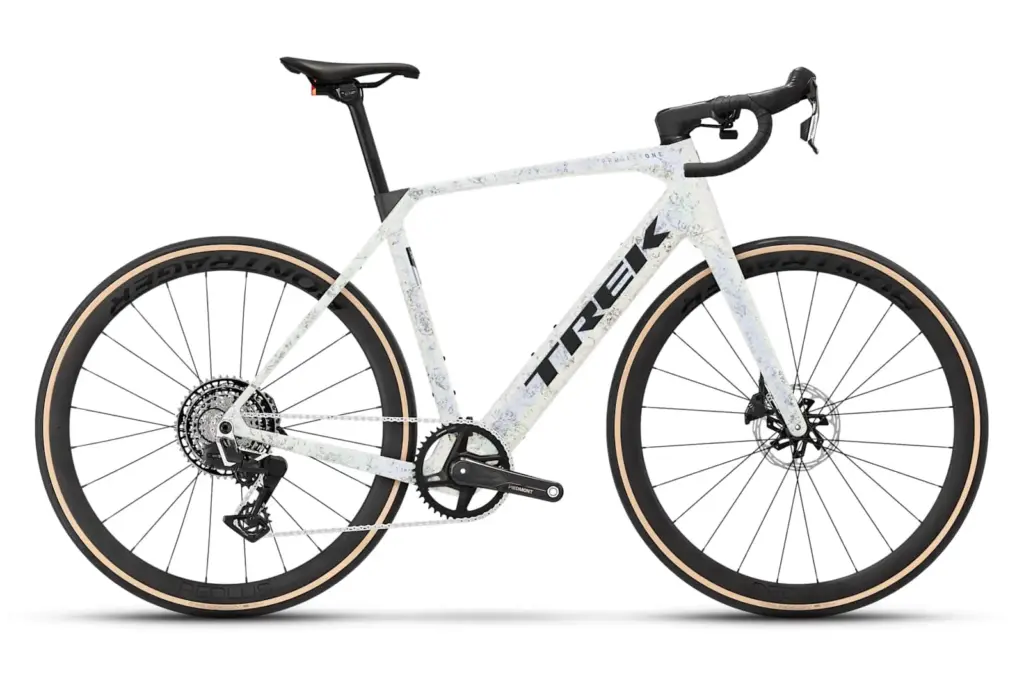
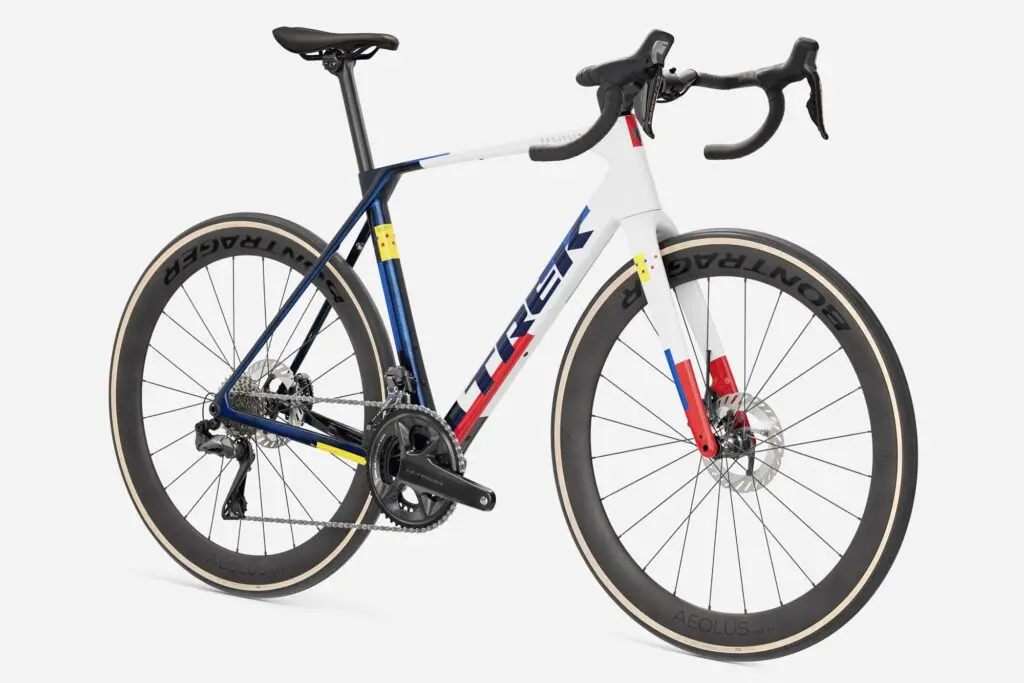
Trek launched the fifth generation of its Domane on 13 August, and it drops IsoSpeed, the mechanical decoupler that damped vibration and had accompanied the brand’s endurance bike since 2012. In its place, a reworked carbon layup, a round 27.2 mm seatpost designed to flex and wider tyres. The brand claims a frameset 305 g lighter, with a bare frame of 835 g in size ML and a 367 g fork on the SLR. The Domane now takes tyres up to 40 mm, with 35 mm fitted as standard, but loses the storage hatch in its down tube.
| Domane SLR frame (bare, size ML) | 835 g |
| Fork | 367 g |
| Frameset weight saving | up to 305 g |
| Lightest complete bike | 6.63 kg (SLR 9 AXS 1x, 28 mm tyres) |
| Tyre clearance | up to 40 mm (35 mm as standard) |
| Seatpost | round, 27.2 mm |
| Carbon range pricing (UK) | from £2,500 |
| Domane SLR pricing (UK) | £6,300 to £9,000 |
| France pricing (Trek website) | SL 5: €2,499 · SLR 7: €6,999 · SLR 9 AXS: €10,499 |
| Project One ICON No. 76 limited edition | £11,250 / €12,999 — 124 units |
There are technologies a brand defends for fourteen years, then removes. Trek’s IsoSpeed was one of them. road.cc describes it as “a mechanical decoupler technology designed to smooth out vibrations from rough roads”; in practice, according to Cyclingnews, the system “separated the seat tube from the top tube at the tube junction”, bearings and all. It had been fitted to the Domane since the model was born, in 2012. The fifth generation, unveiled on 13 August, goes without.
Trek Domane: what the brand has taken out
The statement is blunt: “IsoSpeed is now gone from the Domane range, replaced by a new carbon layup, a revised seatpost designed to flex, and wider tyres,” road.cc writes. The storage hatch built into the down tube goes too — Cyclingnews confirms as much.
The reasoning is that of a simpler bike. Fewer mechanical parts at the tube junction also means fewer bearings to replace. And it is weight saved: according to Cycling Weekly, Trek claims a bare SLR frame of 835 g in size ML and a 367 g fork, a claimed 305 g reduction in frameset weight over the model it replaces. The Domane SL, moulded in a lower-grade carbon, is quoted at 1,055 g and 430 g.
For the rest of the range, the brand quotes complete bikes from 6.63 kg and a carbon entry point at £2,500. Complete Domane SLRs run from £6,300 for the SLR 7 to £9,000 for the SLR 9 AXS and SLR 9 AXS 1x, joined by a Project One ICON No. 76 limited edition at £11,250, built in 124 units worldwide. That entry price is down: road.cc notes that the previous generation’s Domane SL 5 was listed at £2,800. Trek has also published its euro pricing: on its French website, the Domane SL 5 is listed at €2,499, the SLR 7 at €6,999 and the SLR 9 AXS at €10,499.
Domane comfort without the decoupler
Which leaves the real question: does an endurance bike that loses its comfort system stay comfortable? Trek’s answer rests on three levers — “a carbon layup optimised for vertical compliance”, a round 27.2 mm seatpost, just like the old days, and more tyre volume.
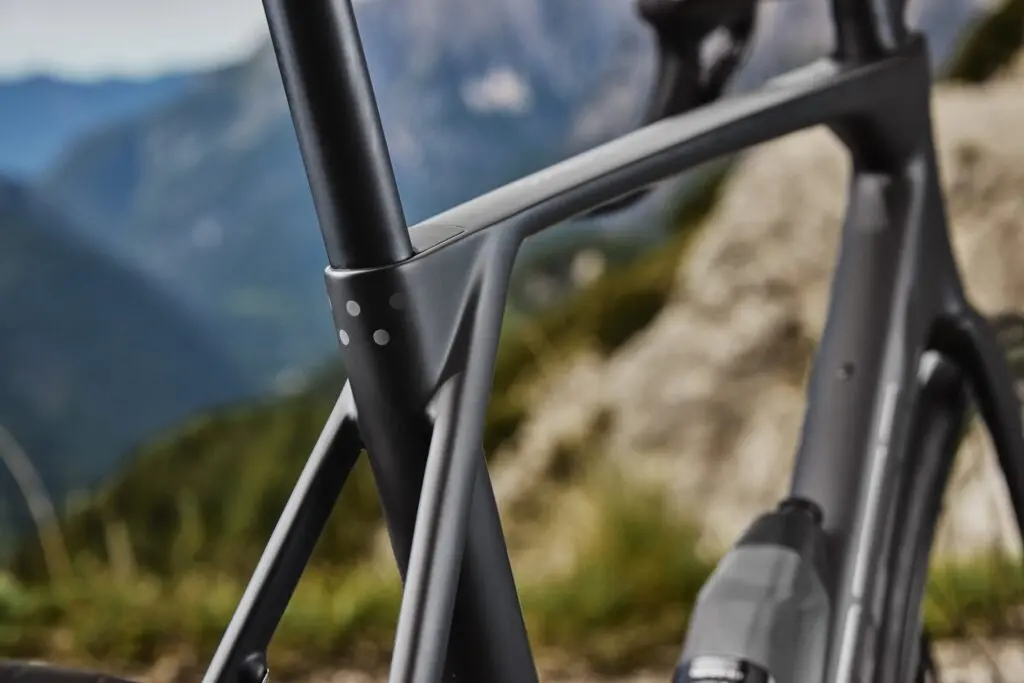
That last point does most of the work. The Domane has gone from 25 mm in 2012 to 32 mm on the fourth generation, then to the 35 mm fitted as standard on this one, with room for 40 mm. “The Domane now has clearance for tyres up to 40 mm, giving riders more volume for comfort, grip and confidence, from fresh tarmac to rough roads and light gravel,” the brand says.
Trek puts a figure on the result: the new Domane is said to stay “within 5% of the previous generation’s vibration energy performance”. That measurement has to be read for what it is. It comes from the brand, not from an independent test. Cyclingnews spells out the scope: the measurement is taken “with stock tyres”, and compares “a 32 mm tyre on the previous bike with IsoSpeed and a 35 mm on the new frame”. So it is not a like-for-like comparison.
What about the Domanes with IsoSpeed already out there?
That is the question previous-generation owners are asking, and Cyclingnews put it to the brand: “IsoSpeed will continue to be serviced.” Nor is the system disappearing from the catalogue altogether — it stays on the Checkpoint gravel bikes, “for now, at least”, road.cc notes.
It is hard not to read this as a deeper shift. The Domane was born in 2012 as a race machine built for cobbles, at a time when a road tyre measured 25 mm and gaining comfort meant mechanics. The same brief is now met with ten more millimetres of rubber and a well-drawn carbon tube. Trek puts it differently in its white paper, quoted by Cyclingnews: it is the growth in tyre volume that “opened the door” to a lighter, less complex bike.