Tour de France 1903: how a newspaper on the brink of bankruptcy invented a MONUMENT
Late 1902. The newspaper L’Auto is losing money, outsold by its rival Le Vélo. Around a table, a twenty-five-year-old writer floats an idea judged outlandish: a bicycle race around the whole of France. The Tour de France was not born of a sporting dream. It was born of a cash-flow problem.
The first Tour in five figures
Act I · A newsroom on the ropes
A last-chance lunch
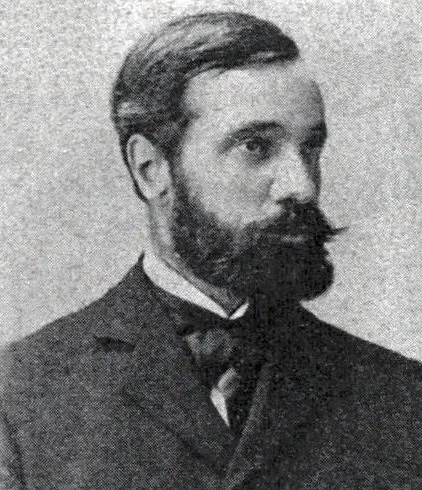
To understand the Tour, you first have to understand a looming bankruptcy. L’Auto-Vélo first appeared on 16 October 1900. It was not an idealists’ venture but an industrialists’ operation: a group of businessmen led by the Count de Dion launched the title to take on Le Vélo and its editor Pierre Giffard, whose Dreyfusard positions they disapproved of. At its head was a former racer turned press boss, Henri Desgrange, who had once held world track records.
The problem was that Le Vélo was crushing the market. Giffard’s paper printed some 80,000 copies a day; Desgrange’s topped out at a little over 20,000. And in January 1903 a court drove the point home: found guilty of using a title too close to that of its rival, L’Auto-Vélo was ordered to drop the word “Vélo”. On 16 January 1903 it became simply L’Auto. A paper that was losing money had, into the bargain, just lost part of its name.
The circulation war · late 1902
Two newspapers, a crushing imbalance
Copies sold per day, approximate figures cited by the paper’s historians. It is this imbalance — four readers out of five for the rival — that pushes Desgrange to look for a “coup”.
It was in this climate that a now-famous lunch is said to have taken place in late 1902. According to the recollections of the man himself, Desgrange invited the head of his cycling desk, Géo Lefèvre, to a brasserie on the boulevard Montmartre that day. The boss was looking for the idea that would topple Le Vélo. Lefèvre, twenty-five years old, threw it out almost without believing in it: why not a tour of France, a race in several stages broken up by rest days? Desgrange waved the suggestion away at first. Then he thought again. Before deciding anything, he did what a press boss on the ropes does: he talked it over with his financial director, Victor Goddet. It was Goddet’s agreement, as much as any sporting enthusiasm, that gave the green light.
Act II · Manufacturing the event
The newspaper war
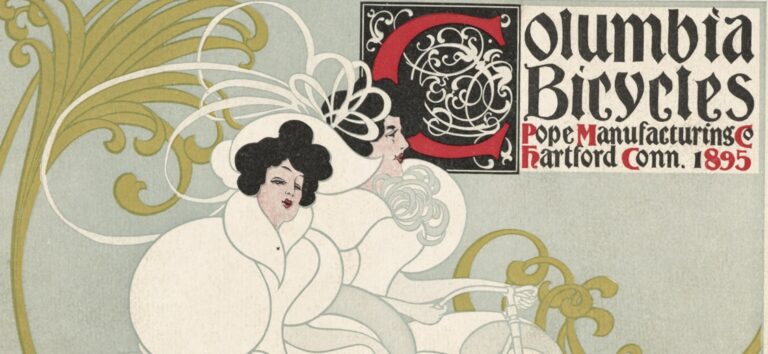
The idea was mad only in appearance. At the time, the bicycle was a mass passion. The “bike fever” of the 1890s had made the machine an object of consumption, of freedom and of dreams — the same craze that, in the same period, was transforming women’s lives. And that passion sold. France’s big sports dailies had grasped a simple rule before anyone else: to sell newsprint, you have to manufacture the event you are then going to cover. Le Vélo under Giffard knew it well, having launched races that became legendary, such as Paris–Roubaix.
Desgrange’s logic was therefore purely commercial. He was not trying to write the history of sport; he was trying to manufacture a serial long enough, spectacular enough and national enough that readers would buy L’Auto every morning for weeks on end. A race crossing the entire country would keep the public hooked stage after stage — and force Le Vélo to chase after it. The Tour, before it was a race, was a weapon in a war between two newsrooms.
Act III · The wild gamble
A race nobody wanted to ride
On 19 January 1903, L’Auto announced the plan to its readers. On paper, the project was dizzying: a loop of several thousand kilometres, in stages of several hundred kilometres, ridden partly at night. Nothing like it existed. The first calendar set out five weeks of racing, from 1st June to 5 July, with an entry fee of twenty francs.
And there the dream came close to collapsing before it even existed. A week before the planned start, only fifteen riders had signed up. Fifteen. The professionals baulked at distances they judged inhuman, with no guarantee of making a living from them.
The rescue · June 1903
How the Tour was saved: by redoing the prices
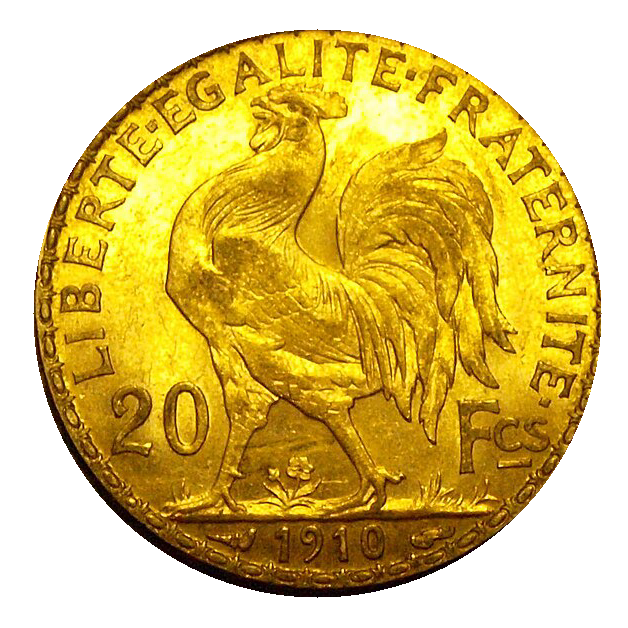
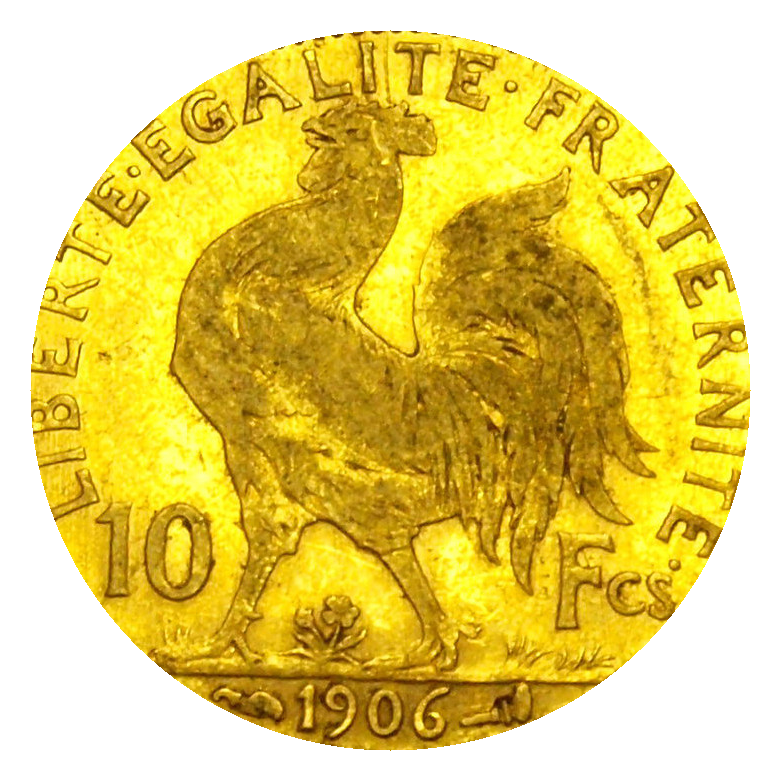
The route is also brought back to a shorter window (1st to 19 July) and the prize money raised. The first Tour de France was saved by a price revision.
Act IV · 1st July 1903
The great leap into the unknown
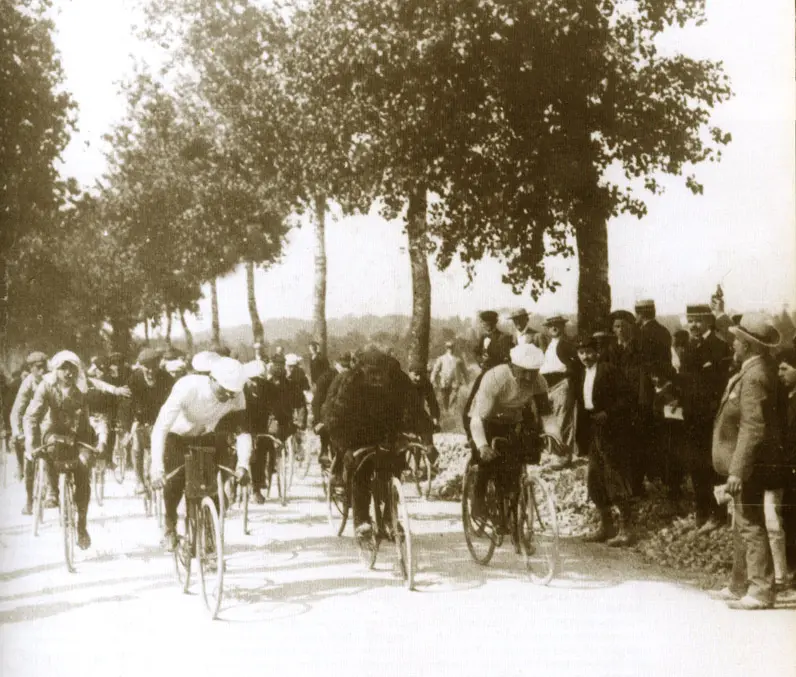
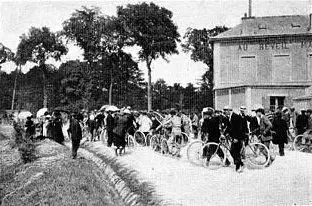
That Wednesday, at 15:16, the start was given not in Paris but at Montgeron, south of the capital, outside an inn with a fitting name: “Au Réveil-Matin”, the alarm clock. The riders had filed one by one into the café’s main room to sign the entry sheet and collect their number. Some sixty of them set off — the vast majority French, with a handful of Belgians and Swiss, two Germans and one Italian. None was backed by a team in the modern sense: each rode for himself.
The programme still makes the head spin today. Six stages, 2,428 kilometres in all, an average of more than four hundred kilometres per stage — against less than two hundred for a stage of the modern Tour. Paris–Lyon, the first of them, was 467 kilometres on its own. Because the distances were enormous, almost every stage set off before dawn; the last one even started at nine the previous evening.
The route · 1st–19 July 1903
- Paris → Lyon467 km
- Lyon → Marseille374 km
- Marseille → Toulouse423 km
- Toulouse → Bordeaux268 km
- Bordeaux → Nantes425 km
- Nantes → Paris471 km
- 6 stages · total2,428 km
Official distances of the six stages.
Act V · The little chimney sweep
Maurice Garin, and the commercial gamble won
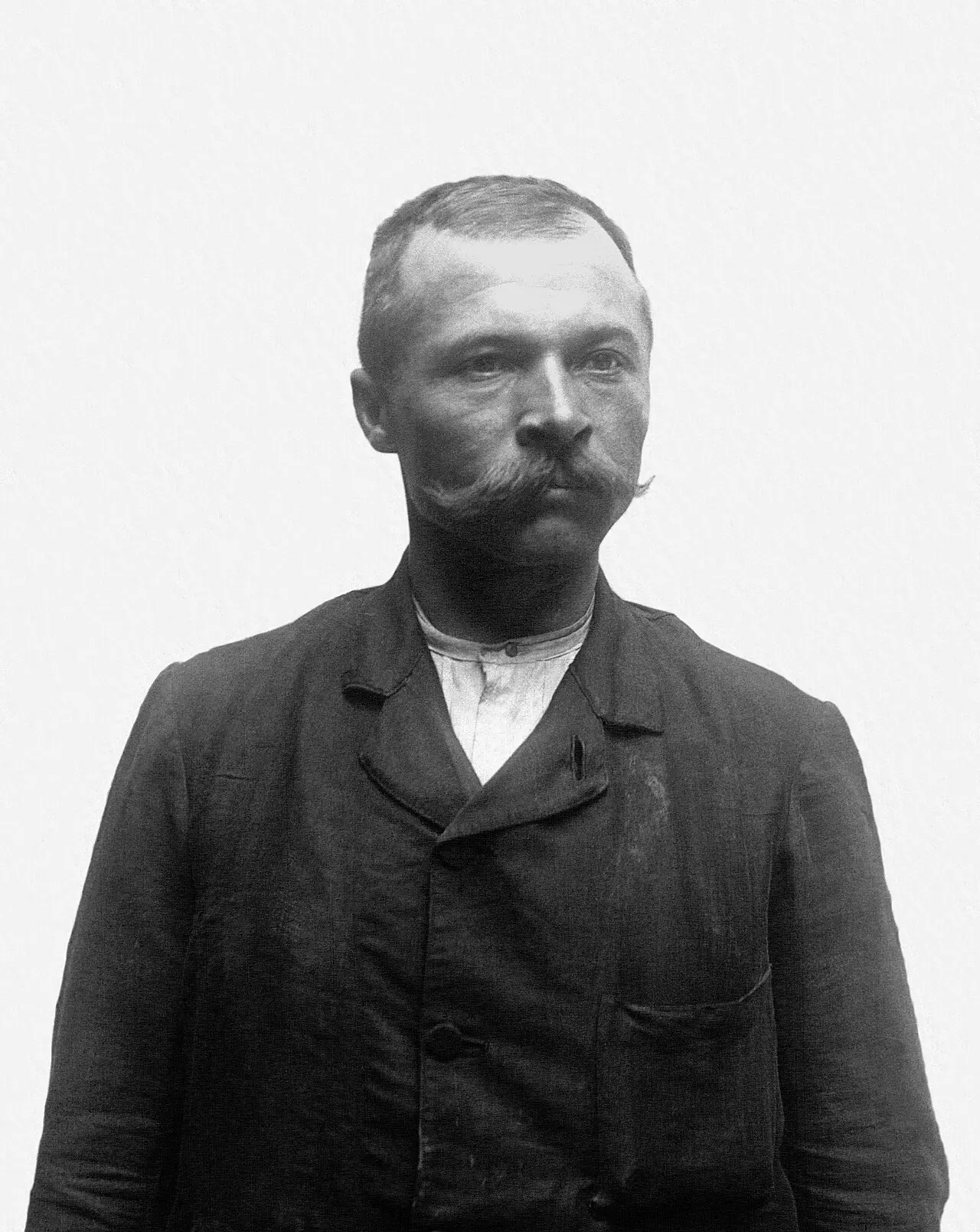
The favourite was Maurice Garin, nicknamed “the little chimney sweep” after his former trade. He won the first stage and never let go of the lead. Winner of the last two stages as well, he covered the 2,428 kilometres in 94h 33min 14s, with almost three hours in hand — 2h 59min 31s exactly — over his closest pursuer. It remains, to this day, the biggest winning margin in the history of the Tour. Of the sixty or so starters, only twenty-one reached the finish having completed all six stages.
The verdict of the road
Total domination
What mattered most, from Desgrange’s point of view, was the sales figures. The print run of L’Auto, around 25,000 copies before the race, climbed to 65,000; a special edition printed after the finish reached 130,000. The commercial gamble had paid off beyond all hope. The paper had its serial; it now had its readership.
The circulation surge · 1903
The serial sells
Copies of L’Auto. In a few weeks, the race quintuples the print run of its finest hour. The commercial calculation is vindicated.
Act VI · The scandal edition
1904: the race that nearly died
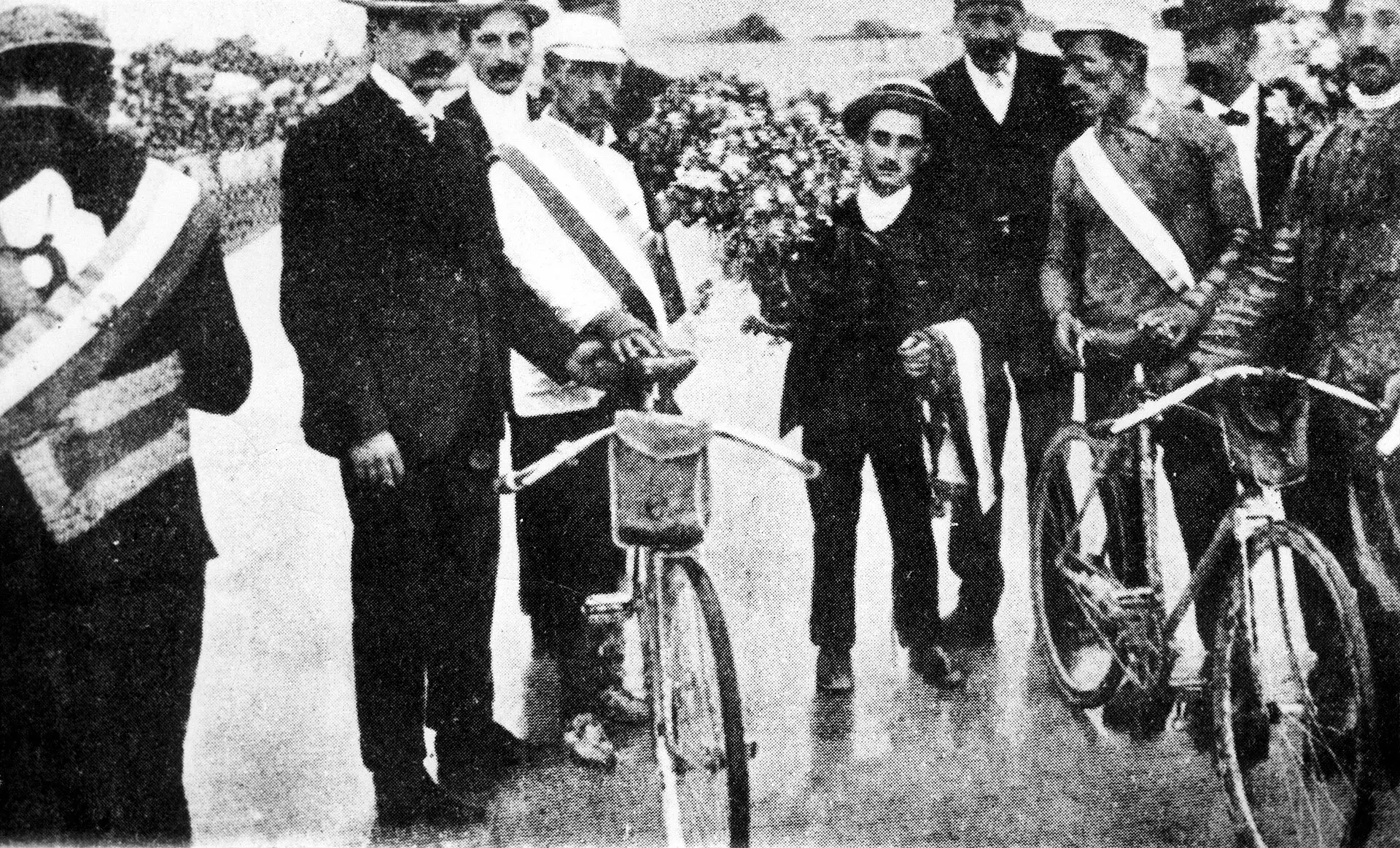
Success called for a sequel. It almost killed the Tour in its cradle. The second edition, from 2 to 24 July 1904, followed the same route — and descended into chaos. Carried away by what was at stake, riders cheated shamelessly: some were accused of taking the train or of being towed by a car. On the roads, spectators scattered nails and broken glass. Near Saint-Étienne, supporters of a local rider set up an ambush to block his rivals; the organisers had to fire shots into the air to clear the way. Maurice Garin himself was assaulted and finished a stage holding his handlebars with one hand.
Garin crossed the line first all the same, and was initially proclaimed the winner. But the Union vélocipédique de France, the country’s cycling federation, received complaints and opened an inquiry. Its verdict came months later, in December 1904: the first four in the standings — Maurice Garin, Lucien Pothier, César Garin and Hippolyte Aucouturier — along with every stage winner were disqualified, twelve riders in all. Garin was suspended for two years. It was finally Henri Cornet, fifth on the road and nineteen years old, who inherited the victory four months after the finish: he remains the youngest winner in the history of the Tour.
The shockwave · December 1904
The verdict of the Union vélocipédique
“The Tour de France is over, and its second edition will, I greatly fear, have been the last. It will have been killed by its success, by the blind passions it unleashed, by the insults and the filthy suspicions…” — Henri Desgrange, editorial titled “La Fin” (“The End”), in L’Auto, the day after the scandal edition (July 1904).
Desgrange, sickened, believed his creation was dead. And yet the Tour survived. The boss of L’Auto changed his mind once again: for 1905 the rules were rewritten — the classification on time was dropped in favour of a points system, less open to cheating — and the Grande Boucle set off again. The race that was supposed to die of its own success had in fact just found its shape.
Epilogue · Chance turned myth
The legacy: from balance sheet to legend
What followed was a victory by knockout. Strangled by the competition, Le Vélo under Giffard ceased publication on 20 November 1904. The small paper that had been losing money had won the war — and the Tour, born as an instrument of that war, would outlive it by a century.
LE TOUR DE FRANCE
The colour of a newspaper
Something of it survives even as a colour. L’Auto was printed on yellow paper, its signature on the newsstands. In 1919, to pick out the leader in the pack, the organisers invented a jersey in the same shade as their pages: the yellow jersey.
Eugène Christophe was the first to wear it, on 19 July 1919, between Grenoble and Geneva — even though he would not win that Tour, taken by Firmin Lambot. The most coveted object in world cycling is, originally, a simple nod to the newsprint of a daily paper.
The model, too, took root: a media outlet that owns and organises the spectacle it reports on. L’Auto would become L’Équipe; the company that organises the Tour today descends in a direct line from Desgrange’s newsroom. What remains is the founding paradox: this monument of sport, this theatre of feats and tears, was not conceived as a feat. It was dreamt up to plug a deficit, adjusted like a price list and launched like a poker bluff. The legend, here, began with a balance sheet.
Milestones · 1900 → 1919
Nineteen years, from a lawsuit to a jersey
Sources and references
- 1903 Tour de France, Wikipedia — route, distances, standings, print run, green armband. en.wikipedia.org/wiki/1903_Tour_de_France
- 1904 Tour de France, Wikipedia — scandal, UVF disqualifications, Henri Cornet. en.wikipedia.org/wiki/1904_Tour_de_France
- Henri Desgrange (19 January 1903), “Le Tour de France”, L’Auto — digitised primary source, Gallica/BnF. gallica.bnf.fr — L’Auto, 19 Jan. 1903
- Alain Denizet, “1902: Géo Lefèvre invents the Tour de France” — after the memoirs of Géo Lefèvre. alaindenizet.fr
- L’Auto, Wikipedia (fr) — founded 1900, Count de Dion, lawsuit over the name. fr.wikipedia.org/wiki/L’Auto
- Le Vélo, Wikipedia — print run ~80,000, ceased publication 20 November 1904. en.wikipedia.org/wiki/Le_Vélo
- Ville de Montgeron, “The Tour de France and the Réveil-Matin”. montgeron.fr
- “1st stage of the 1903 Tour de France”, Wikipedia (fr) — start time (15:16). fr.wikipedia.org — 1st stage 1903
- Franceinfo, “It happened on 1st July 1903: the start of the very first Tour”. franceinfo.fr
- Gallica/BnF, “Eugène Christophe, first yellow jersey” — the 1919 yellow jersey and the yellow paper of L’Auto. gallica.bnf.fr
- Slate.fr, “Cheating and assaults: 120 years ago, the Tour de France came very close to disappearing” — editorial “La Fin”. slate.fr