IN BRIEF
Ortlieb already handled its own welding, closures and hardware, but bought its fabric from outside suppliers: the German brand now makes it in-house. Named Tidura, this thermoplastic polyurethane-coated textile comes in two versions, one hard-wearing and one softer aimed at everyday use, quoted at 2,400 and 1,500 newtons of tensile strength respectively. Four bags introduce it from 1st September 2026, from a rear pannier to an urban backpack, priced between €110 and €220. The fabric is woven in the Benelux countries then coated in Germany, at the Heilsbronn site where Ortlieb already carries out its high-frequency welding.
| Material | Tidura, TPU-coated fabric developed by Ortlieb |
| Versions | Tidura strong (2,400 N) and Tidura core (1,500 N) |
| Stated water column | 100,000 mm |
| Manufacturing | Woven in the Benelux countries, coated in Germany (Heilsbronn campus) |
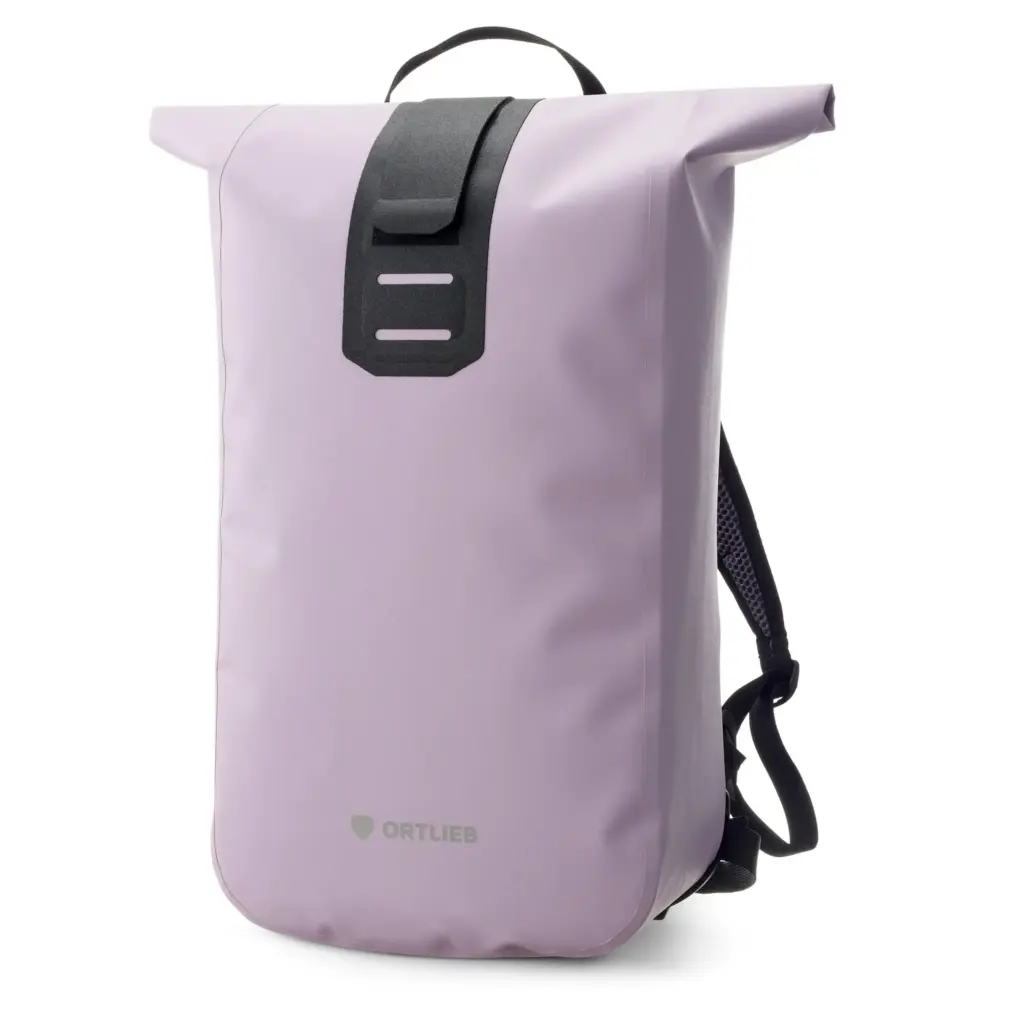
| Back-Roller 20L Zip-Pocket | €110 (Tidura strong, lavender or black) |
| Velocity 23L | €130 (23 L, padded 15-inch compartment) |
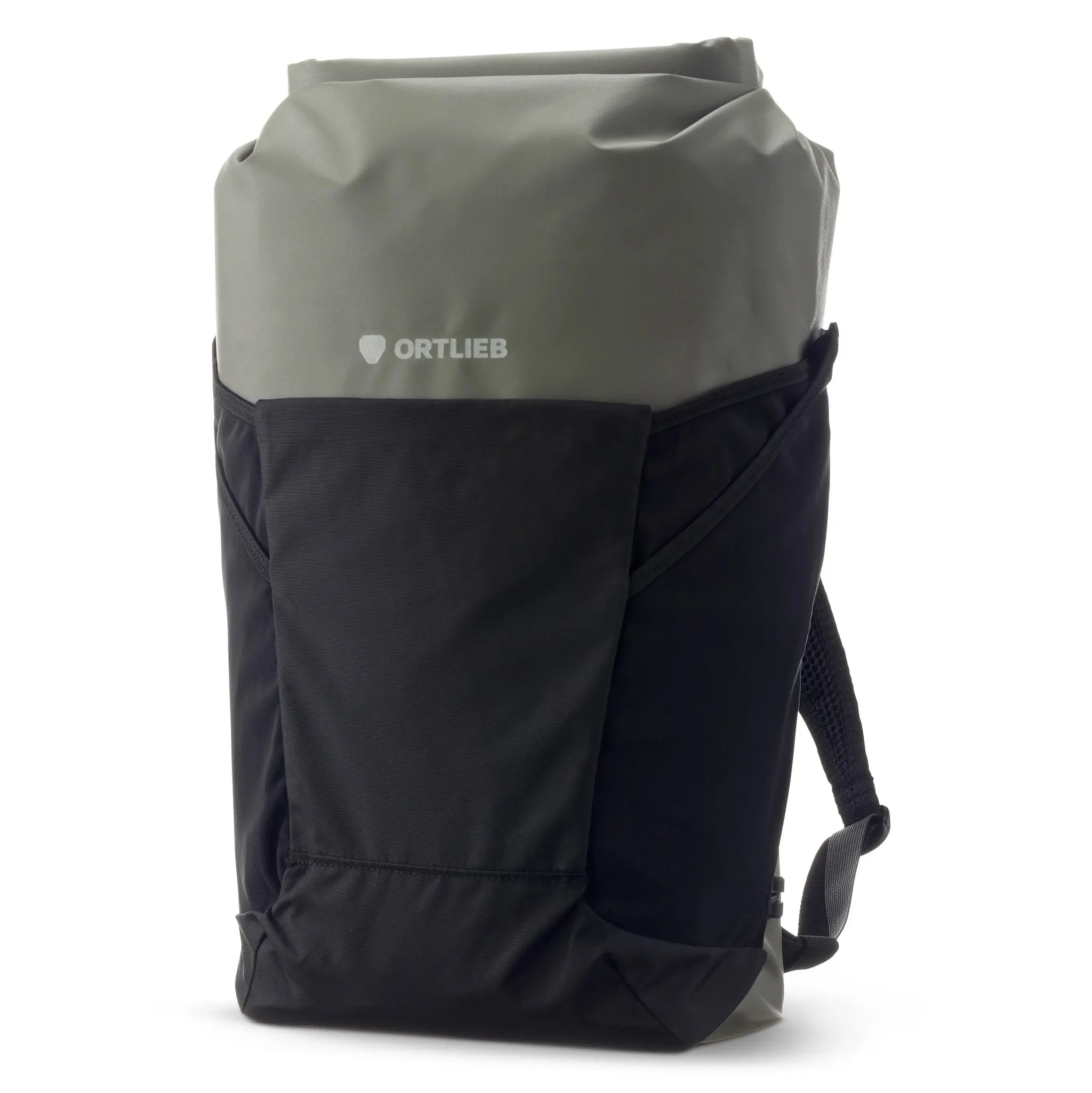
| Daypack 23L | €140 (Tidura core, black or dark sand) |
| Duffle Zip | €210 to €220 depending on volume (40 or 60 L) |
| Warranty | 5 years, spare parts guaranteed for at least 10 years after the model leaves the catalogue |
| Availability | 1st September 2026 |
Ortlieb built its reputation on waterproof panniers. According to the presentation of the new material, the Heilsbronn brand already mastered welding, closure systems and its own quality standards, but bought its fabric from outside suppliers. That is the link it has just brought in-house with Tidura.
Tidura, an in-house fabric in two strengths
Tidura is a thermoplastic polyurethane-coated fabric, “developed and manufactured at the Ortlieb campus in Heilsbronn, Germany”, the launch text states. The text specifies that the cloth is designed to suit the brand’s welding processes, closure systems and quality standards: by drawing it up itself, Ortlieb calibrates it for its own machines.
The material comes in two grades. Tidura strong targets abrasion and tearing, with tensile strength quoted at 2,400 newtons; Tidura core, intended for more everyday use, is rated at 1,500 newtons. According to the presentation of the material, both are credited with a water column of 100,000 mm — a waterproofing figure far above anything rain demands, and one that says a great deal about the margin the manufacturer allows itself.
Production geography, for its part, remains European: according to the brand’s presentation, the fabric is woven in the Benelux countries, then coated in Germany, where the high-frequency welding also takes place. “From the first thread through coating to the finished bag”, as Ortlieb CEO Martin Esslinger broadly sums it up, every stage now comes under the company’s own control.
Four bags to launch Ortlieb’s fabric
The launch on 1st September 2026 draws, according to The Radavist, on three models already in the catalogue, remade in Tidura strong and offered in lavender or black: the Back-Roller 20L Zip-Pocket rear pannier at €110, the Velocity 23L backpack at €130, and the Duffle Zip travel bag, available in 40 and 60 litres, between €210 and €220. The Velocity offers 23 litres and, according to Velomotion, a padded compartment for a 15-inch laptop.
The fourth is new. The Daypack 23L, an urban backpack built in Tidura core, arrives at €140 in black and dark sand. According to the launch range presented by Ortlieb, it is the only model in Tidura core, and the only one the brand describes as entirely new: a way, for Ortlieb, to show what its cloth allows it to draw on a fresh pattern.
Repair rather than replace
For the buyer, the service commitment counts as much as the newtons. Both Tidura versions are covered by Ortlieb’s five-year warranty, together with spare-parts availability stated for at least ten years after the model leaves the catalogue. On an object that wears out through its straps, hooks and buckles long before the cloth gives way, that promise is what decides the bag’s real lifespan.
Bringing production in-house answers other motives: by carrying out the coating at its own site, Ortlieb says it gains full control of its operations, prevents contamination and shortens its supply chains. It remains to be seen, in the field, how Tidura ages against the coated fabric the brand used until now — it is use, not the spec sheet, that will settle it.