IN BRIEF
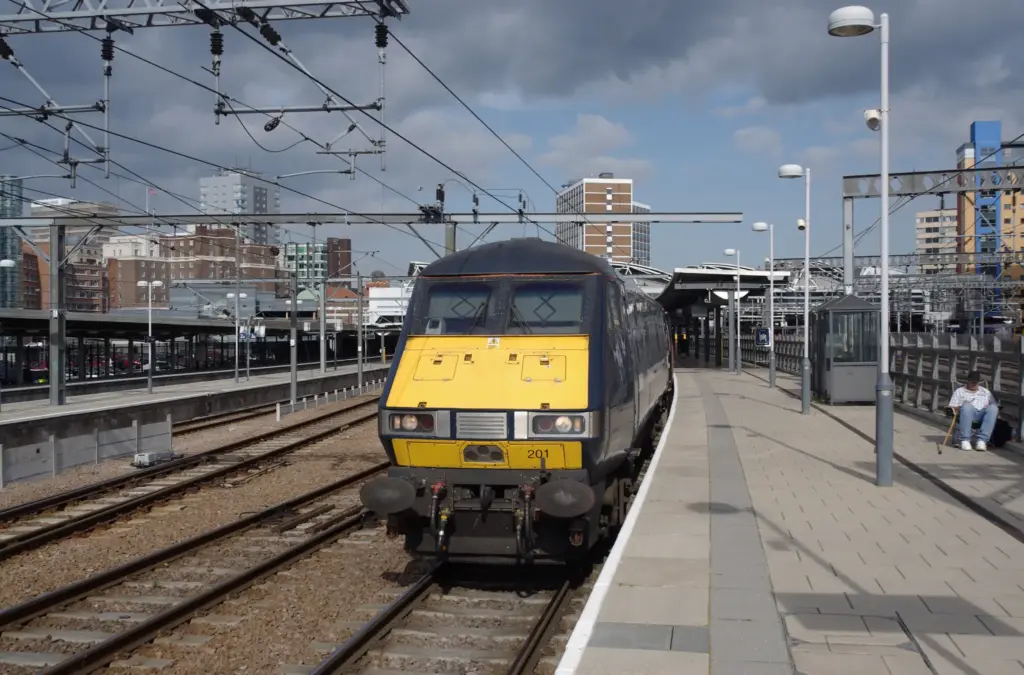
A sign that appeared at Leeds station told passengers that “E-scooters and e-bikes ARE NOT permitted on Network Rail property”. A photo of it circulated online and worried some British cycling campaigners, who read it as the start of a blanket ban across the rail network. Network Rail has removed the signs and set the record straight with road.cc: according to its spokesperson, the message was aimed at a local storage problem inside the station, it did not reflect a nationwide ban, and passengers can continue to pass through Leeds station with their e-bikes. The context explains the nervousness: according to the same outlet, Cycling UK is preparing a protest against Merseyrail, which has announced its intention to ban non-folding e-bikes from its trains, its stations and its bike storage spaces from January.
Sometimes a badly worded sign is all it takes to make people believe national policy has changed. In Britain, where the place of e-bikes on trains has become a burning issue, a Network Rail sign that appeared at Leeds station worried some cycling campaigners.
The Network Rail sign at Leeds station, and its removal
Headed “Security Note for Cyclists”, the sign told passengers that “E-scooters and e-bikes ARE NOT permitted on Network Rail property” and apologised for the inconvenience, road.cc reports. Worded that way, the sentence did not refer to any particular station: it covered “Network Rail property”, meaning the whole of its railway estate, including twenty of the country’s largest stations, which the infrastructure manager runs directly.
The clarification came from Network Rail. A spokesperson told road.cc: “The signage recently installed at Leeds station was intended to address local issues around the storage of e-bikes and e-scooters inside the station. The signs have now been removed and did not reflect a nationwide ban on passengers bringing e-bikes through Network Rail stations.”
The spokesperson adds a detail that matters for passengers: “Customers can continue to pass through Leeds station with e-bikes when boarding or leaving trains, where this is permitted by their train operator.” That final clause counts as much as the rest — because it is the train operator, not the station manager, that decides whether an e-bike comes on board.
The infrastructure manager does attach a rule to its clarification, again according to road.cc: “For fire safety reasons, e-bikes and e-scooters should not be stored or charged inside station buildings and should only be kept in outdoor facilities, at least three metres away from the building.” Passengers passing through are still allowed; storing and charging inside the buildings are not.
Why a single sign was enough to sound the alarm
The reaction comes down to the mood of the moment. “The sign caused worry and confusion among some cycling campaigners as a photo of the sign circulated online, particularly following Cycling UK’s announcement of a planned demonstration against Merseyrail’s ban of e-bikes on trains”, road.cc writes. The photo went round at a time when, according to road.cc, campaign groups were already getting ready to defend e-bike access to trains.
The outlet points out that Cycling UK has announced a group ride to Merseyrail’s offices, “after the railway operator announced its intention to ban all non-folding e-bikes in its trains, stations and bike storage spaces from January”. The organisation is calling on the operator to go back on its decision: “There is still time for Merseyrail to reverse its decision, and we urge them to reconsider in light of the devastating impact it will have on people’s lives.” Again according to road.cc, it has also announced its intention to take legal action against the decision (“plans to mount a legal challenge to the decision”).
An issue that reaches beyond the Channel
Operators justify these restrictions with the fire risk from lithium-ion batteries. Campaigners point to another issue, highlighted by road.cc: accessibility. “Banning e-bikes is also discriminatory against many disabled people who rely on e-bikes for transport”, the outlet writes.
For French cyclists, the affair works as a dress rehearsal. Bike-train intermodality is one of the arguments that make it possible to do without a car over long distances; if train access closes to e-bikes, part of that promise falls away. In Leeds, the episode ends well: the sign is gone and the rule is readable again. In Liverpool, the question is still wide open.