IN BRIEF
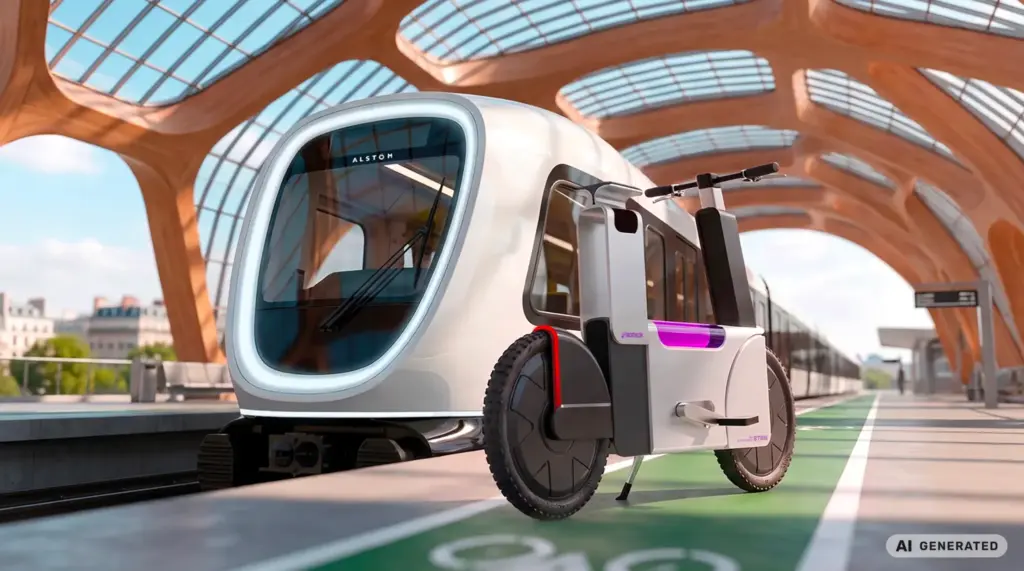
At the InnoTrans 2026 rail trade fair, Alstom and Decathlon are presenting the result of joint design, exploration and R&D work aimed at easing journeys that combine cycling and rail. The concept rests on three building blocks: a compact, connected bike or scooter designed for the train; app-based booking that guides the traveller along the platform to a check-in terminal; and, on board, a dedicated, secure compartment for bikes and scooters. It is an exploratory project, presented with concept visuals.
Alstom and Decathlon, through its B’twin brand, want to simplify journeys that link cycling and rail. According to their press release, the project stems from a field study of the real difficulties travellers face.
Bikes on trains: three building blocks
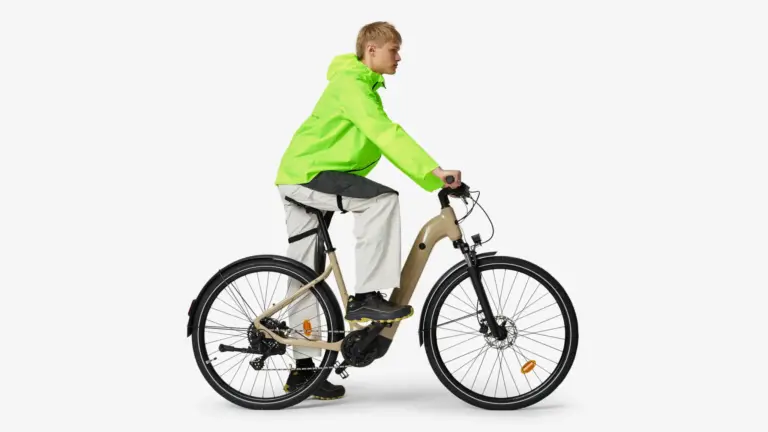
The first building block is the vehicle itself: a connected bike or scooter, presented as suited to the constraints of the train thanks to improved ergonomics and a compact format. The second is the station: the traveller books in advance on a mobile app, then is guided along the platform to an identification terminal that instantly registers their bike or scooter.
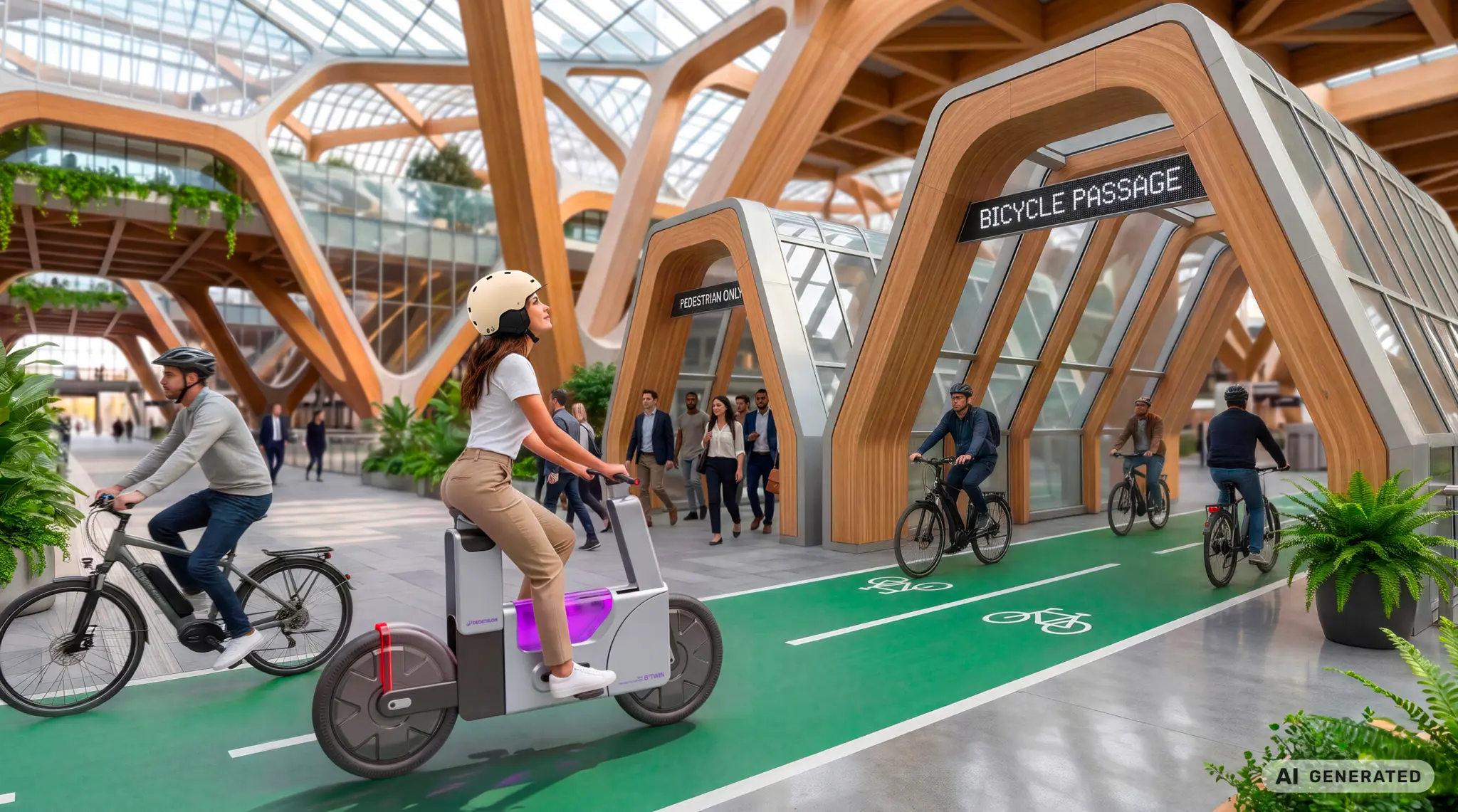
The third building block is the train: on board, a dedicated, secure compartment holds bikes and scooters. According to the press release, there is then no longer any need to keep an eye on your equipment, and the aisles stay clear.
What Alstom and B’twin say
“The role of design is to simplify people’s lives. With Decathlon, we have sought to remove the obstacles that still complicate travelling with a bike or a scooter,” says Alexis Bonnet, Design Director at Alstom. For Cédric Mollet, Head of B’twin at Decathlon, the aim is “to explore how we can bring two modes of transport that complement each other naturally – cycling and rail – even closer together”.