IN BRIEF
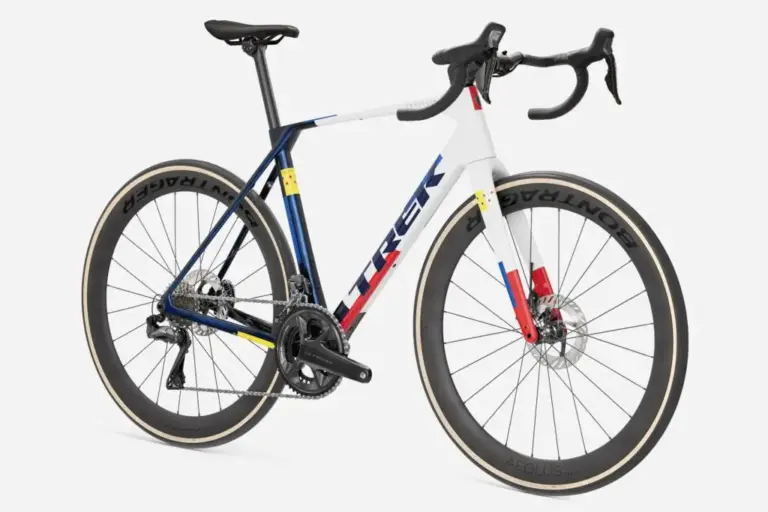
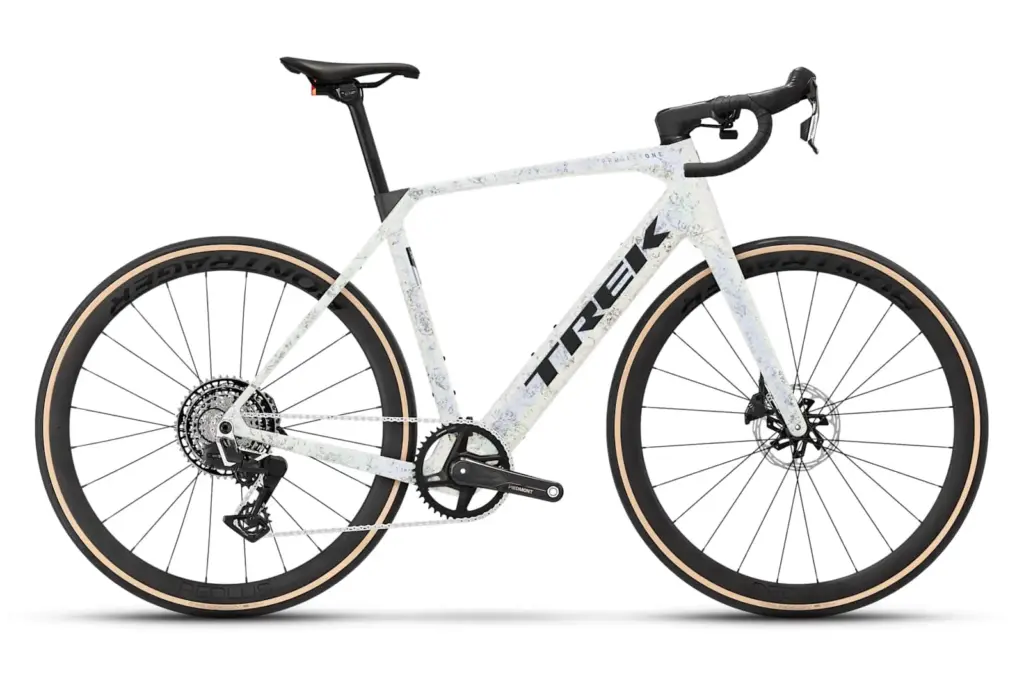
Trek unveiled a new generation of its Domane+ SL electric road bike on 10 September, claimed to start at 11.10 kg. It moves to the TQ HPR40 motor, which the brand describes as lighter and more compact than the previous one, with assistance up to 25 km/h. The battery choice, 360 or 580 Wh, is made when ordering through the Project One configurator, with one exception that Trek flags in a footnote — the entry-level model stays on 360 Wh. Trek claims around 112.5 km of range with the small battery and 185 km with the large one, in Eco mode. Three versions are listed in the French catalogue, from €5,999 to €8,999.
| Price (France) | SL 6 AXS: €5,999 · SL 7 AXS: €7,499 · SL 9 AXS: €8,999 |
| Claimed weight | from 11.10 kg (reference size not specified by Trek) |
| Motor | TQ HPR40 |
| Assistance | up to 25 km/h |
| Battery | 360 or 580 Wh, your choice in Project One (SL 6: 360 Wh) |
| Claimed range | around 112.5 km (360 Wh) or 185 km (580 Wh), in Eco mode |
| Range extender | 160 Wh Range Extender, up to a claimed 150 km |
| Tyre clearance | 40 mm |
| Handlebar | raised, 20 mm rise |
Trek unveiled the fifth generation of its Domane+ SL on 10 September, the electric road bike that sits in the middle of its assisted range. The pitch comes down to a number and a letter: a claimed 11.10 kg, and a TQ motor whose designation changes. The HPR40 replaces the previous drive unit, and it is to this motor, combined with a wider choice of batteries, that the brand attributes the gain in range.
The Trek Domane+ SL moves to the TQ HPR40 motor
On its French page, Trek explains that “the range of the Domane+ SL has increased again thanks to a lighter and more compact TQ HPR40 motor and a wider choice of battery capacities in Project One”. According to road.cc, which covered the announcement, the HPR40 can deliver “40Nm of torque and 200W of power” — two figures that the brand’s French page does not mention.
The text on the French page nonetheless states assistance “up to 32 km/h”. The range module on that same page gives 25 km/h for the Domane+ Carbone, and the brand’s German page writes, for the same bike, “Unterstützung: bis 25 km/h”: this is the figure this article uses.
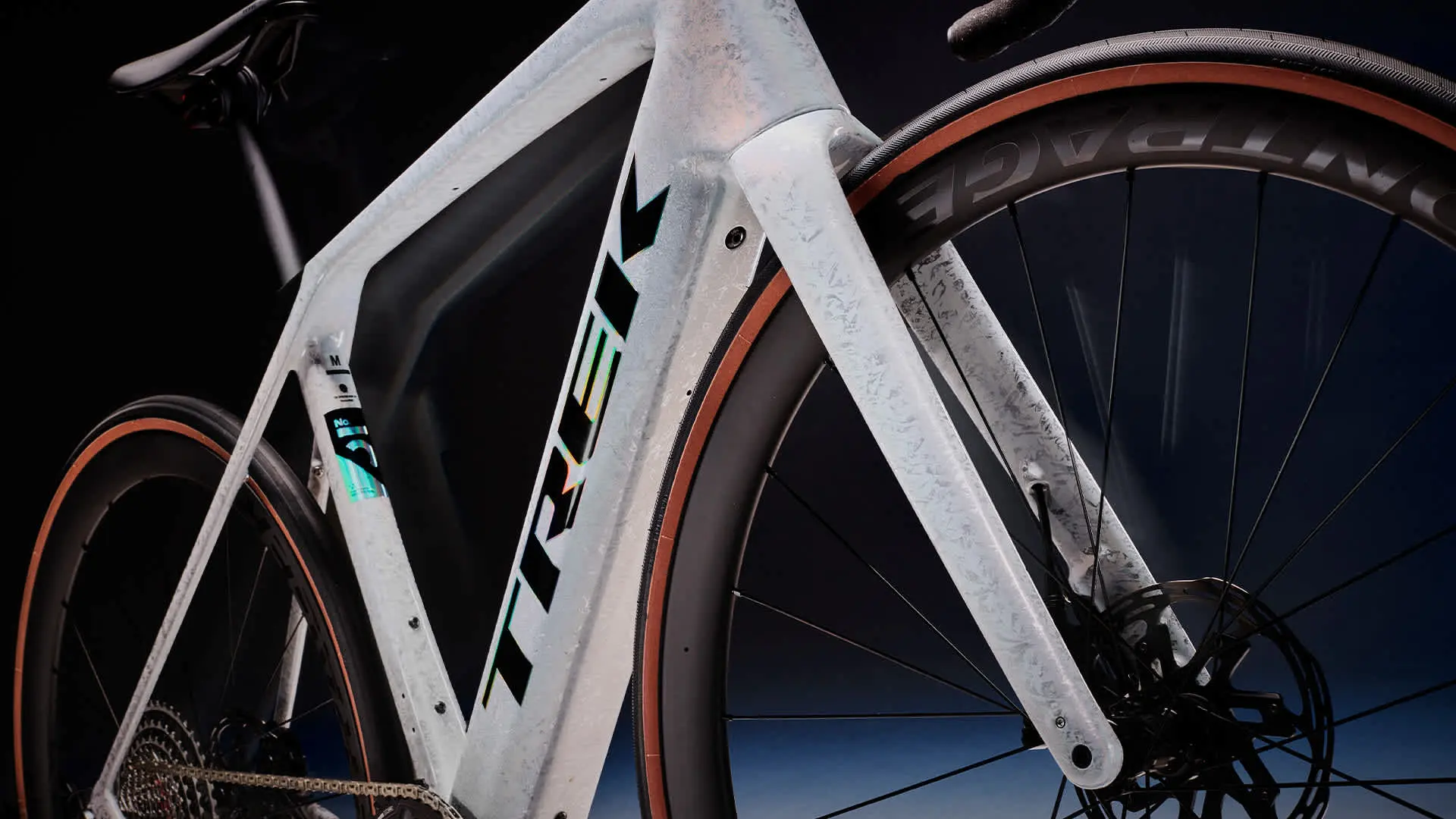
The battery becomes an ordering option
Battery capacity becomes a choice made at the point of order: “Your choice in Project One: 360 or 580 Wh”, the spec sheet states. An asterisk sets out the exception — “All models except the Domane+ SL 6 (360 Wh)”: the cheapest bike in the range keeps the small battery, with no option.
The resulting gap in range is clear. Trek claims “approximately 112.5 km (360 Wh) or 185 km (580 Wh)”, with the usual caveat the brand itself writes in a footnote: those figures apply “in Eco mode” and vary “depending on route, rider and terrain”. A 160 Wh Range Extender fits in a bottle cage and allows, the spec sheet says, “a range of up to 150 km”, still in Eco mode.
A road bike that takes 40 mm tyres
Tyre clearance rises to 40 mm, and the raised handlebar “adds a stylish 20 mm rise” to bring the position more upright. The Project One configurator also lets you choose crank length, 160 or 170 mm, at no extra cost according to the brand. The frame is built from “500 Series OCLV Carbon”, according to Trek’s spec sheet.
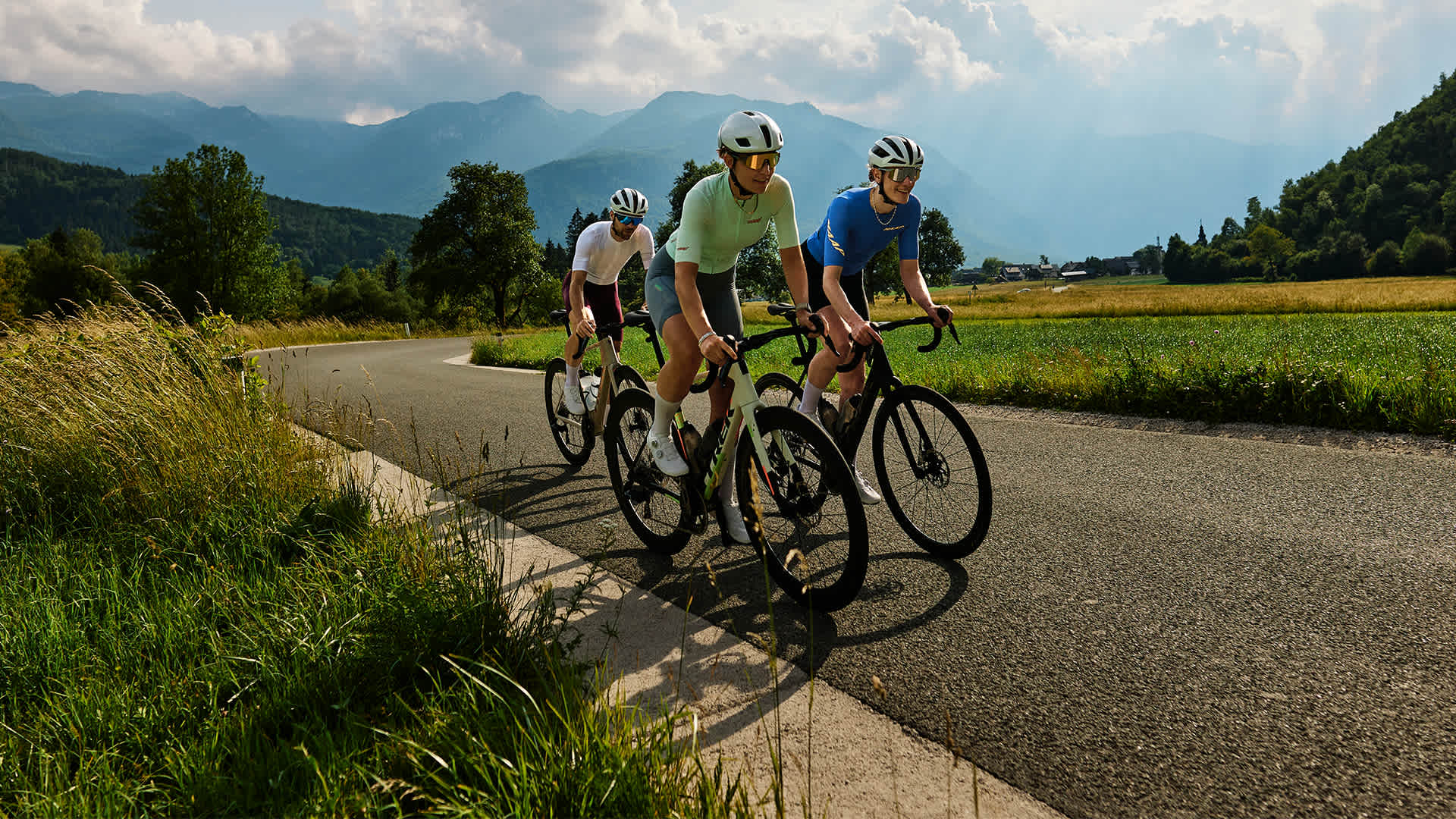
Trek claims a place apart for this model in its catalogue: “The Domane+ SL is the lightest and longest-range electric road bike we have ever produced to date.” The wording is the brand’s own, and it compares the bike only with Trek’s own machines.
That leaves price. The French site lists three versions: the Domane+ SL 6 AXS at €5,999, the SL 7 AXS at €7,499 and the SL 9 AXS at €8,999. As an internal benchmark, the electric Domane+ SLR range starts at €6,999 and climbs to €12,499. On the same day, Trek also unveiled a second electric bike, the Inbound+, an urban model with a hub motor.