IN BRIEF
According to road.cc, British rail operator Merseyrail, which serves the Liverpool area, will ban non-folding e-bikes from 1 January 2027. The same outlet reports that the measure does not stop at the trains: it also covers stations, car parks and bike stores, and targets conversion kits and batteries carried on their own. Cycling UK and Wheels for Wellbeing have condemned a “devastating impact”; Merseyrail has refused to meet Cycling UK and to publish the safety review underpinning its decision. The charity has since launched a formal complaint. Merseyrail, which cites the risk posed by lithium-ion batteries and a detailed safety review, has to date given Cycling UK only a single sentence in reply: “safety considerations have led us to introduce the ban”.
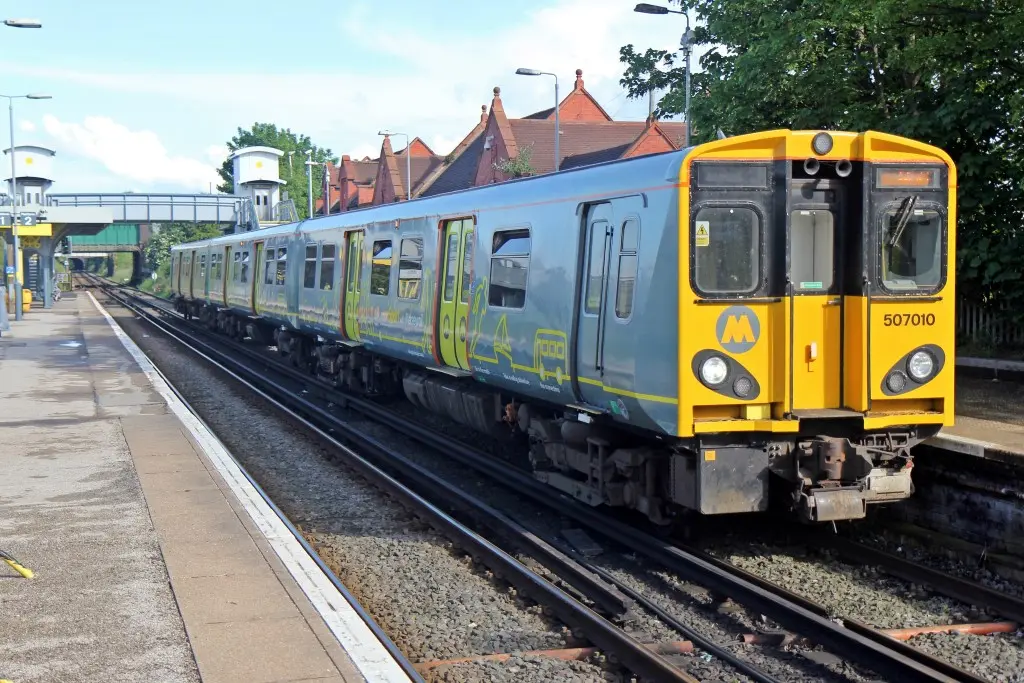
Banning an e-bike from a train is one thing. Banning it from the platform, the car park and the station bike store as well is another: it makes the journey impossible from end to end. Yet that is exactly what Merseyrail, the operator of the Liverpool area rail network, plans to do from 1 January 2027.
Merseyrail: a ban that reaches beyond the trains
“On 14 July, Merseyrail announced its intention to ban non-folding e-bikes from 1 January 2027, citing a safety review”, road.cc reports. The scope is broad: according to the British outlet, “the ban will cover all non-folding e-bikes, including those that have been adapted or modified, conversion kits and separate lithium-ion batteries”.
Crucially, the measure does not stop at the rolling stock. “It will not apply only to Merseyrail carriages: the ban will cover stations, car parks and bike stores”, road.cc notes.
Campaign groups condemn a decision without evidence
Duncan Dollimore, Associate Director at Cycling UK, sees it as a step backwards “that will have a major impact on people’s wellbeing”, and judges that “Merseyrail’s response has been deeply disappointing and has shown that they have failed to properly consider or understand the issue”.
For Dr Kay Inckle, Campaigns and Policy Manager at Wheels for Wellbeing, “this ban runs counter to the ambition of making Merseyside the most accessible city region and undoes the good work Merseyrail has done with level boarding and improving station accessibility”. The argument concerns a specific group: people who use an electrically assisted bike as a mobility aid.
The Merseyside Cycling Campaign, a local group, makes the same point on its own account: “There has been no consultation with MCC or other active travel groups or disability groups. Merseyrail has provided no evidence to support the ban and has refused to publish its impact assessment.”
A single sentence for Cycling UK
“Merseyrail’s only response to date has been to tell Cycling UK that ‘safety considerations have led us to introduce the ban’”, road.cc writes. The official page the operator devotes to the subject on its website is, for its part, protected by an anti-bot filter that prevented it from being read directly while this article was being written.
The operator had nonetheless set out its reasoning on 14 July, through its managing director Neil Grabham: “while these incidents remain rare, the risk they pose in a railway environment, particularly on a network that runs trains underground, means we cannot ignore them. We have taken this decision following a detailed safety review.”
The decision is part of a wider trend. As road.cc points out, “Merseyrail is not the first rail operator to ban all non-folding e-bikes: TfL introduced a ban on most of its services last year”. The Liverpool decision therefore extends to a second British region a restriction that began in London.
Cycling UK, for its part, is no longer confining itself to protest: according to road.cc, the charity is drawing on its Cyclists’ Defence Fund to turn the letter it sent to Merseyrail on 6 August into a formal complaint. Duncan Dollimore believes that “there is still time for Merseyrail to reverse its decision, and we urge them to reconsider given the devastating impact it will have on people’s lives”. At the end of August 2026, the deadline left a little over four months.