Long read · ExplainerNo. 10
Where do stolen bikes end up?
Much closer than you think
Long read
70 bikes tracked. 68 never left town.
In France, a bike is stolen roughly every minute, and few ever make it back to their owners. We picture vans speeding east, shipping containers, criminal networks. The reality, measured by researchers who hid trackers in a hundred bikes, is more mundane and more unsettling: most don’t go far. They change hands, sometimes a few streets away, and are back on the road.
from01.06.
to30.11.
2021
100 bikes,
100 trackers.
- Between 350,000 and 580,000 bikes are stolen every year in France, a study published in April 2023 with the FUB and ADMA cycling organisations estimates. Nobody knows the exact figure: there is no national count of police reports for bike theft.
- About one victim in four reports the theft to the police. Among the victims surveyed for the study, 4.9% of those who had not filed a report got their bike back, and 8.5% of those who had filed one for a marked bike.
- In Amsterdam, researchers from MIT and Delft University of Technology fitted trackers to 100 bikes. 70 were stolen within six months. Only two really left the city.
- Expensive bikes can travel further: in the Netherlands, organised gangs target e-bikes, road bikes and cargo bikes, and often take them to Eastern Europe… or to France.
- Marking is spreading: 6.5 million bikes were on France’s national register at the end of October 2024, and 11.4% of the bikes reported stolen in that register were recovered in 2024, up from 7.5% in 2022.
The Toronto garage
On 16 July 2008, Toronto police set a trap. Bike thefts in the neighbourhood had risen sharply since June. Officers left bait bikes on the street and watched. Igor Kenk, the owner of a used-bike shop called The Bicycle Clinic, walked past the bait without showing any interest. Then, police told The New York Times, he had the man with him cut the locks on two other bikes. They rode off. They were arrested.
What the police found next reads like an inventory. Garages rented from ten different landlords, full of bikes. About 200 more at Kenk’s home. At his shop, the fire department had to remove upstairs windows to lower the bikes out. In all, 2,865 bikes, The New York Times counted.
A month later, 2,396 of them, which police accused Kenk of stealing or arranging to have stolen, stood lined up in a former police garage with a leaky roof, sorted by brand, most of them upside down on their handlebars. About 15,000 cyclists came looking for their own. By 22 August, 469 had gone home with their owners. The public reaction “was staggering,” Ruth White, the superintendent of 14 Division, told the paper. “I’ve never seen anything like it in 30 years.” Igor Kenk, for his part, was awaiting trial.
1 icon = 10 bikes1 icon = 20 bikes
≈ 15,000 cyclists came looking for theirs
The others are still waiting for their owners.
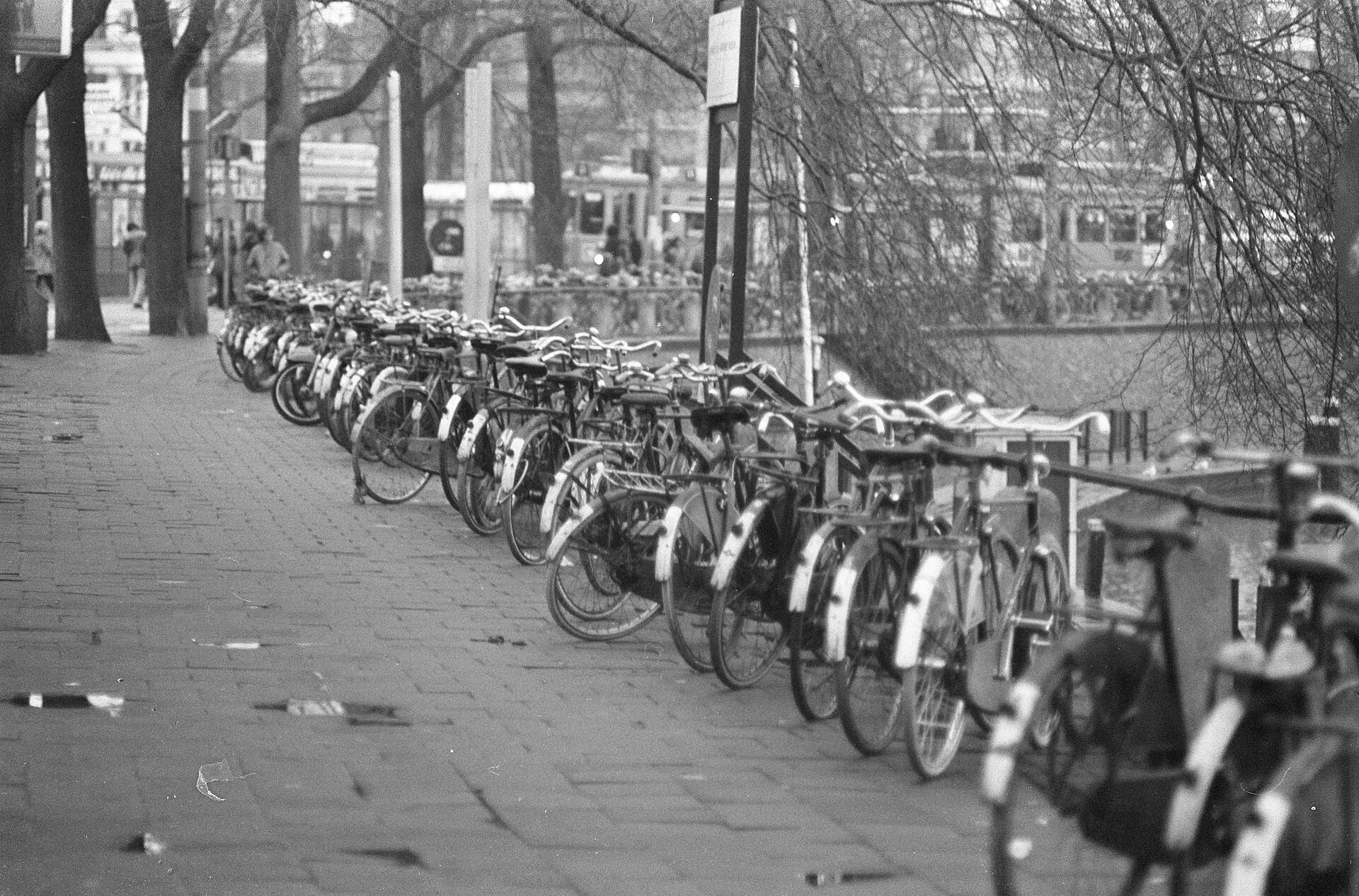
The Kenk case became famous because it was extreme. But it points to something ordinary: a stolen bike does not vanish. It is somewhere. Often, it is very close. The real question is why it is so rarely found.
A theft every minute, or nearly
How many bikes are stolen in France? The figure of 400,000 a year has been doing the rounds for years. A study of bike theft in France, published in April 2023 with the French cyclists’ federation (FUB) and ADMA, set out to check it. It went back to the two major public surveys that measure the problem.
The first, the Interior Ministry’s “Living environment and security” survey, gives an average of 354,000 thefts a year between 2006 and 2018. The second, the Personal Mobility Survey carried out in 2019 for the Transport Ministry and the national statistics office (Insee), counts 580,000 households that suffered at least one bike theft during the year, or 2% of households. The study therefore settles on a range: between 350,000 and 580,000 thefts a year. Spread over the year, that is one bike stolen every 54 to 90 seconds.
Why such a wide range? Because the two surveys do not give the same result, and no official figure can settle it. The study says so plainly: there are no consolidated figures for bike theft reports filed with the police and the gendarmerie.
Thefts also have a season. In the online survey of victims carried out in autumn 2022, September and October account for nearly one theft in three. It is back-to-school time, and the same peak shows up in Berlin and Brussels, the study notes. Nearly one theft in two happens during the day, between 8am and 6pm, often in public spaces. Night-time thefts hit garages and private premises more often.
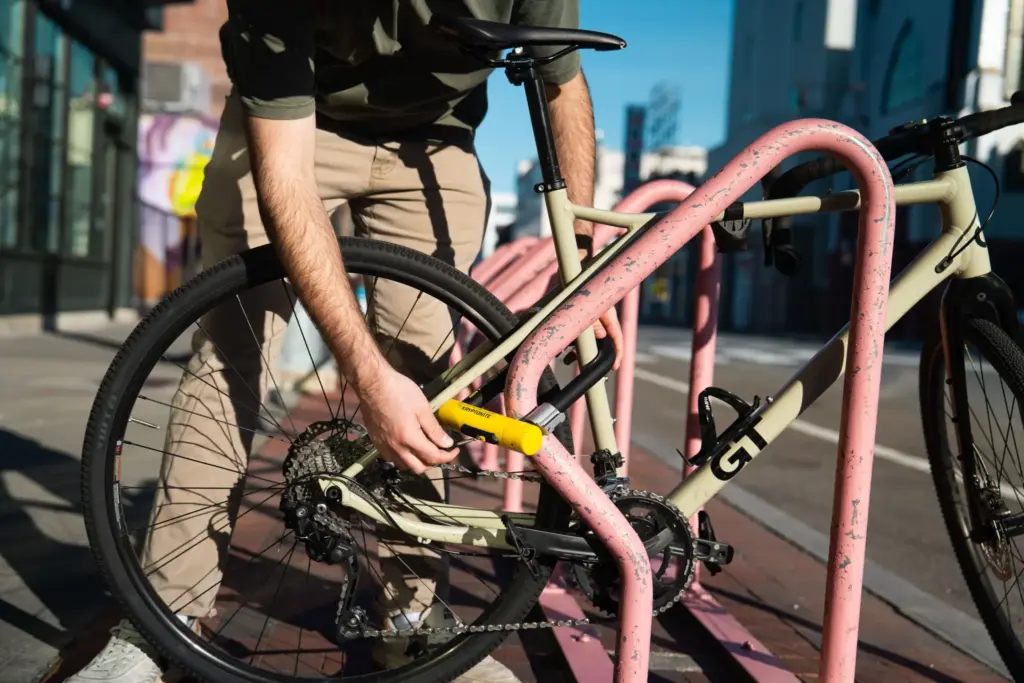
Buying guide
Angle grinder resistant bike locks: eight models compared
Kryptonite, Abus, Decathlon, Litelok, Hiplok, Oxford: prices, weights and angle grinder resistance, compared.
The black hole
Once the bike is gone, what happens? Most of the time, nothing. In France, only about a quarter of victims report the theft to the police, the study notes.
The study asked victims what happened next. Among those who had not filed a report, 4.9% got their bike back. With a report, 6.15%. With a report and a marked bike, 8.5%. Every precaution counts, but none changes the order of magnitude: more than nine bikes in ten never come back. And among the victims who had filed a report and then recovered their bike, nearly four in ten found it by their own means, without the police.
100 stolen bikes
More than nine in ten never come back.
The picture is the same in the Netherlands, the land of the bicycle. In 2020, the Dutch consultancy Bureau Beke calculated, for an anti-theft foundation, that the bikes stolen in 2019 were worth around €600 million. Only 20% of thefts there are reported to the police, and 4% of stolen bikes are recovered, the DutchNews website reported.
The black hole has a simple explanation. A bike found in a cellar, in a van or dumped against a tree usually carries no name. The police have it in their hands and don’t know whom to give it back to. To understand where a stolen bike goes, you had to follow it before it was found. That is what researchers did, in Amsterdam.
A hundred bait bikes in Amsterdam
Amsterdam is the Dutch city where the most bikes are stolen. About 11,000 thefts are reported there every year. The city puts the real number at 28,500, and cycling groups talk of 80,000. In 2021, a team from MIT’s Senseable City Lab, Delft University of Technology and the AMS Institute got the city’s approval for a simple experiment.
The researchers gathered 100 second-hand bikes, of every brand and condition, and hid a small, cheap tracker in each one. They locked them up in the neighbourhoods where most bikes are stolen (Central Station is the city’s top hotspot). Then they waited. Between 1 June and 30 November 2021, 70 bikes out of 100 were stolen.
Most thefts happened on Mondays and Wednesdays, at night, around 3am. After that, the trackers all told the same story. The first trip happened at night, at the time of the theft. By about the fourth trip, most bikes were moving during the day, like any bike on a commute. A stolen bike does not stay stolen for long: it already has a new rider.
100 bikes, 100 trackers
Most often on Mondays and Wednesdays, around 3am.
By the 4th trip, they ride by day, like any other bike.
- 3 to 6: probably resold through a second-hand shop (4 to 9%)
- 12: passed through informal resale spots (≈ 17%)
- 22: trips so similar they seem to form a network (≈ 30%)
“I think the most surprising thing was that it’s happening locally.”— Fábio Duarte, MIT
The main finding fits in one number. Of 70 stolen bikes, only two moved well away from Amsterdam. The other 68 stayed in the city. “I think the most surprising thing was that it’s happening locally,” said Fábio Duarte, a principal research scientist at the Senseable City Lab, in MIT’s presentation of the study.
The researchers then looked at where the bikes stopped. Between 3 and 6 stayed long enough near a second-hand bike shop to have probably been resold there, or 4 to 9% of the stolen bikes. Twelve passed through places known for informal bike resale, about 17%. And 22 followed trips so similar that they seem to belong to the same network: around 30% of thefts bearing the mark of an organised group, or of thieves who know the trade very well. “This research makes it clear that part of bicycle theft is organized,” said Melanie van der Horst, Amsterdam’s deputy mayor for traffic and transport.
The study, published in February 2023 in the scientific journal PLOS ONE, has its limits, and its authors spell them out. These were cheap second-hand bikes. Some trackers went silent at resellers’ premises, perhaps spotted and disconnected. Expensive bikes were not part of the experiment. But for the ordinary bike, the kind that gets stolen most, the answer is clear: it rarely leaves the city.
The market next door
If a stolen bike stays in the city, it is because it finds a buyer there. The Amsterdam study cites interviews with 28 expats living in the city. Many admitted buying bikes of dubious origin at flea markets or through informal channels, because they cost less than in a shop. Some knew their bike was stolen. One person said she had had hers stolen seven times in a year and a half. The loop is complete: the stolen bike is resold, its new owner has it stolen in turn, then buys another second-hand one.
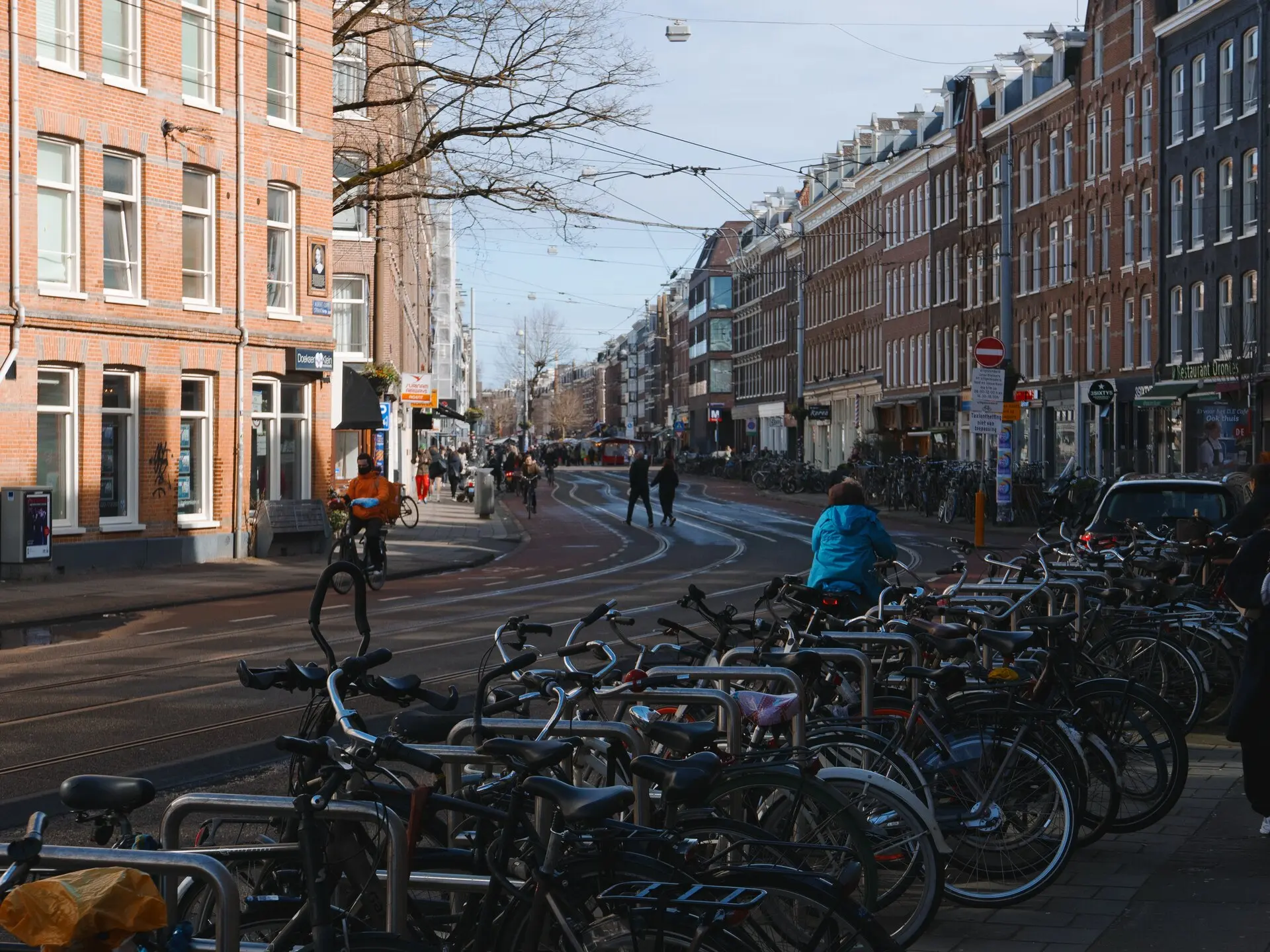
In France, the law tried to break that circle. Since 1 January 2021 for new bikes, and 1 July 2021 for second-hand ones, bikes sold by a retailer must carry an identification number, entered in a national register created “to combat the theft, handling and illegal resale of cycles,” the French Transport Code states. The rule targets retailers. Sales between private individuals are not covered: a bike resold through a classified ad from one person to another escapes it.
The law added another safeguard. A business that refurbishes or scraps bikes and is handed a marked bike that does not belong to it must notify the approved marking operators, so that the owner can be alerted. If the bike is not collected within three months, or if the owner is unknown, the business may sell or destroy it. For an unmarked bike, there is no one to notify.
The ones that travel
Not every stolen bike stays in the neighbourhood, especially the expensive ones. And thefts of expensive bikes are rising. The French study sees it in police reports: in Paris, the sharp rise in bike thefts reported to the police since 2020 is almost entirely down to e-bikes. In its survey of victims, they make up 23% of stolen bikes, and in 80% of cases the battery was still on the bike. In Denmark, where thefts have actually fallen, the average insurance payout after a theft rose by more than 50% between 2011 and 2021, because of e-bikes and cargo bikes, the study also notes.
In the Netherlands, the Bureau Beke study describes thieves increasingly targeting expensive models: e-bikes, road bikes, cargo bikes. Those often disappear towards Eastern Europe, the broadcaster Hart van Nederland reported. Organised gangs come relatively often from Bulgaria, Poland, Romania, Serbia and Albania, and often take their haul there. The researchers also name a destination closer to home: France. Bike shops can be emptied in a few seconds, Jos Kuppens, one of the authors, told the broadcaster RTL.
Europe · diagram
Netherlands → Eastern Europe: e-bikes, road bikes, cargo bikes. Poland · Romania · Bulgaria · Serbia · Albania.
… and a destination closer to home: France
France · gang broken up in 2023
Based in Île-de-France (Paris region). Thefts in: Côtes-d’Armor · Ille-et-Vilaine · Manche · Sarthe · Saône-et-Loire · Jura · Landes · Haute-Vienne · Charente-Maritime · Hérault.
37 bikes seized, most of them returned to the shops.
France has its own networks too. On 12 December 2023, the investigation unit of the Rennes gendarmerie arrested three Moldovan nationals, aged 26, 38 and 41, in the Paris region. The investigation had begun in August 2022, after high-end bikes were stolen from a shop in Plancoët, in Brittany’s Côtes-d’Armor: more than €37,000 in losses in one go. The gendarmerie then linked eleven thefts in ten départements to the group, from the Manche to the Hérault, worth more than €300,000. The thieves sold part of their haul through a website hosted in Russia. In searches, investigators seized 37 bikes worth more than €150,000, most of them stolen in a burglary in the Hérault in early November. Those could be returned to the shops.
What brings a bike back
Recovering a stolen bike is still rare. But the numbers are moving, and they all say the same thing: a bike that can be identified comes back more often.
Marking has changed scale. The FUB launched its Bicycode marking scheme in 2004. With the 2021 requirement, the number of bikes marked each year went from about half a million to 2.5 million, the 2023 study notes. At the end of October 2024, 6.5 million bikes were on the national register, more than a third of the bikes in use, the Transport Ministry said in a reply to an MP in February 2025. Of the 63,800 bikes reported stolen in that register, more than 11% have been recovered, and the share is rising: 11.4% in 2024, up from 10.3% in 2023 and 7.5% in 2022. Police and gendarmes are also checking it more often: more than 1,300 times a month in 2024, against 500 in 2022.
Bikes marked per year
Reported stolen bikes recovered
63,800 theft reports in the register, in total
Police and gendarmerie checks, per month
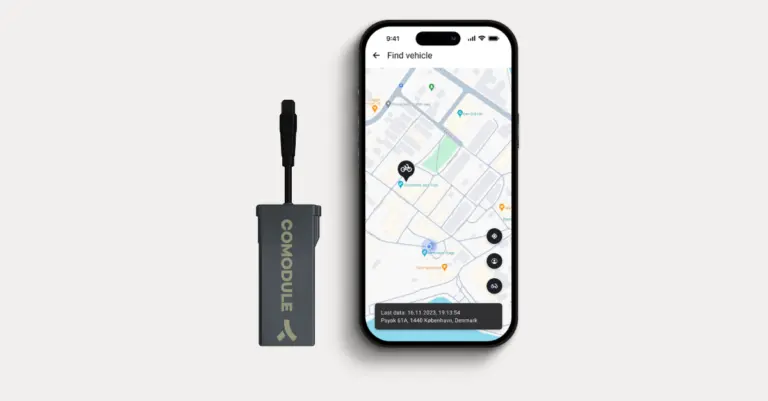
Trackers do even better, even if the numbers are small. In 2020, Strasbourg paid for trackers on 281 residents’ bikes. Six months later, in April 2021, 7 of the 11 bikes reported stolen had been recovered, the study reports. It is a small sample. But the gap with the usual 5 to 9% is huge. And the Amsterdam experiment shows why: if the bike stays in the city, a signal often makes it possible to find it.
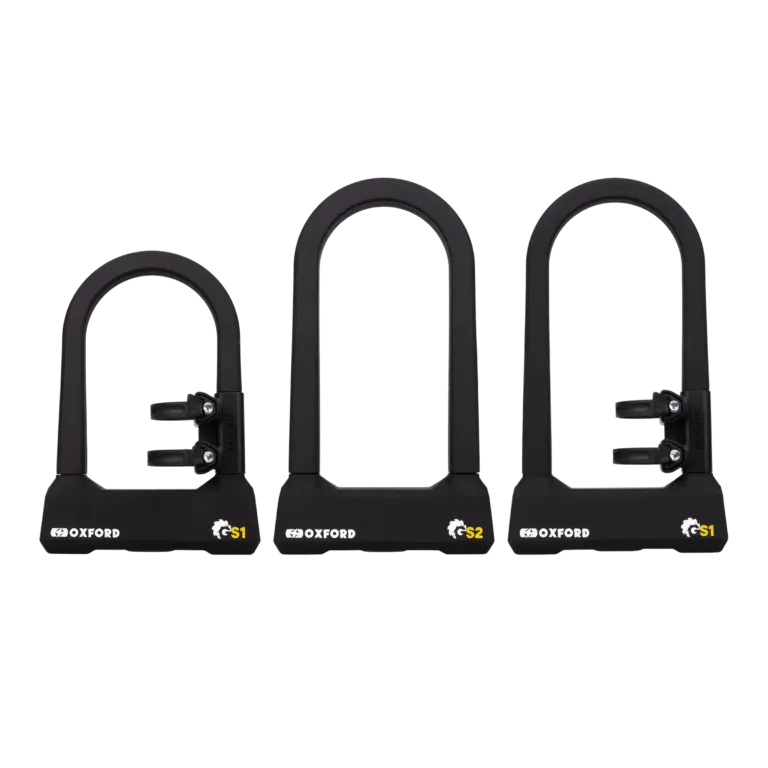
That leaves the first line of defence, the one that saves you from searching at all. In the streets observed by the study, fewer than one bike in two was locked with a U-lock. After a theft, U-lock use rises sharply among victims. They learned too late what these studies show: a stolen bike does not go far, but without a name or a signal, it is lost all the same.
With an identification number: the trail picks up again and goes back to where it started.
With nothing: the trail stays cut.
A stolen bike does not go far. You still have to be able to prove it is yours.