IN BRIEF
A kids’ bike is chosen first by the child’s height: 14 inches at around 3, 16 inches at around 4, 20 inches at around 6, 24 inches at around 8. In Germany, the ADAC, the country’s big motoring club, and Stiftung Warentest, a foundation that tests products for consumers, have these bikes ridden by children and then put them through the lab, one wheel size at a time. Their four latest tests cover 51 bikes: 12 were rated “poor”, mostly for their brakes, a broken part or harmful substances. This selection of eight bikes relies on those tests, from Decathlon’s Btwin 500 Robot (€159.99 in France) to the woom EXPLORE 5 (£585, $819), first in the ADAC’s 24-inch test published in April 2026, the club says.
| woom GO 2 | 14 inches · £385 / $459 · tested by Stiftung Warentest in 2026, not among the five failed bikes · 5 kg · ages 3 to 4½, 95 to 110 cm |
| woom GO 3 | 16 inches · £425 / $499 · previous generation first in the ADAC’s 2024 test (2.0) · 5.4 kg · ages 4 to 6, 105 to 120 cm |
| Puky LS-Pro 16 | 16 inches · €429.99 · second in the ADAC’s 2024 test (2.3) · 5.5 kg · from age 3, 100 to 120 cm |
| Btwin 500 Robot (Decathlon) | 16 inches · €159.99 in France · “satisfactory” for the ADAC in 2024 (2.7) · 8.8 kg measured by the ADAC · ages 4 to 6, 105 to 120 cm |
| Puky Skyride 20-3 | 20 inches · €599.99 · previous generation first in the ADAC and Stiftung Warentest’s 2022 test · 11.3 kg · from age 6, 115 to 138 cm · dynamo lights |
| woom EXPLORE 5 | 24 inches · £585 / $819 · first in the ADAC’s 2026 test (2.0) · 9 kg · ages 7 to 11, 125 to 145 cm · disc brakes |
| Cube Numove 240 FE | 24 inches · £579 · Street version second in the ADAC’s 2026 test (2.2) · 10.2 kg · 118 to 136 cm · lights, rack, mudguards and kickstand |
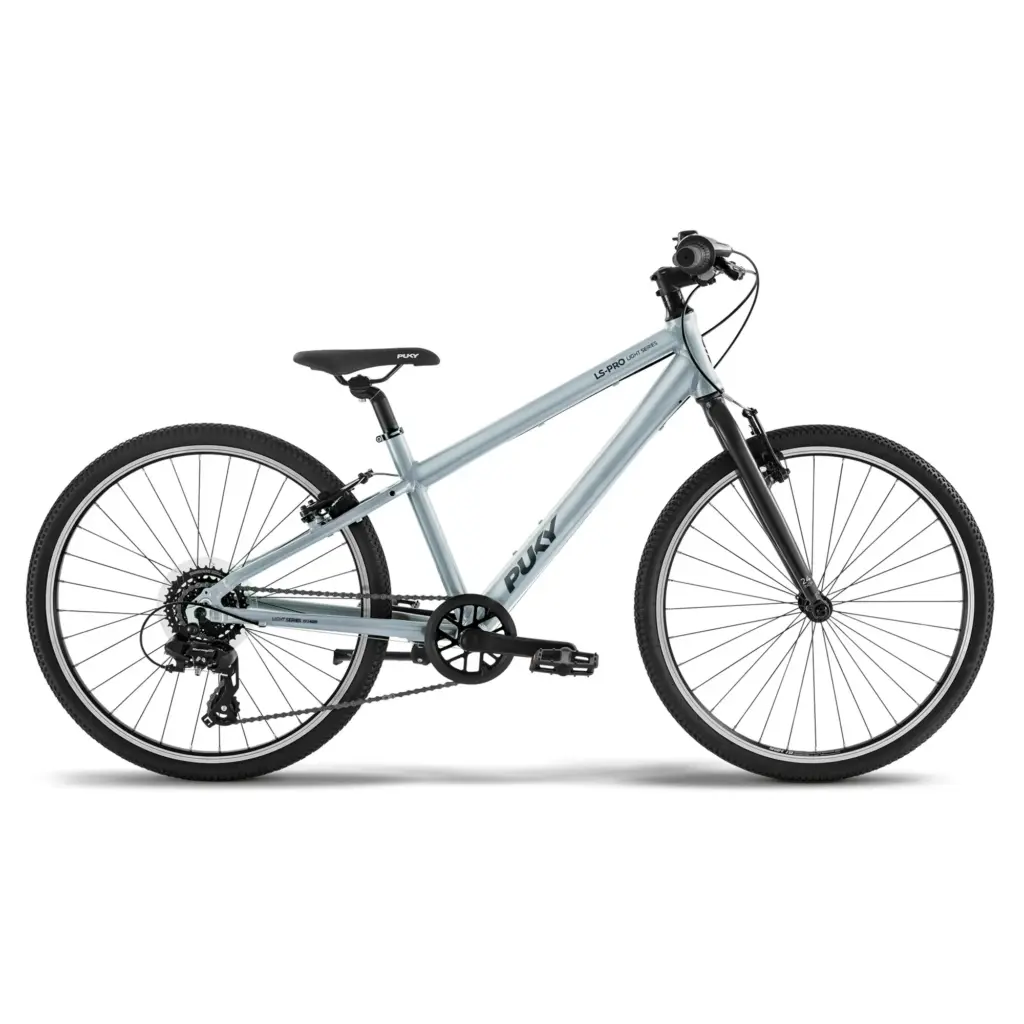
| Puky LS-Pro 24-8 | 24 inches · €569.99 · “satisfactory” for the ADAC in 2026 (2.7) · 8.9 kg · from age 8, 130 to 150 cm |
The prices in this kids’ bike comparison are the brands’ own (their online stores), checked on 12 October 2026, without accessories: in pounds and dollars in their UK and US stores, in euros for Puky, and in euros in France for the Btwin 500 Robot, which Decathlon’s UK store does not list. Below the models, buttons lead to retailers whose price on the day may be lower.
To rank these bikes, this guide relies on four tests: Stiftung Warentest’s test of 14-inch bikes, published on 25 February 2026, and the ADAC’s tests of 16-inch bikes (2024), 20-inch bikes (2022, run with Stiftung Warentest) and 24-inch bikes (published on 16 April 2026). Both organisations say they have every bike ridden by children, then put its brakes on a test rig and look for harmful substances, notably in the grips; Stiftung Warentest says it also lab-tests the strength of the frame, fork, handlebar and saddle.
The ADAC scores from 0.6 (“very good”) to 5.5 (“poor”): a score of 1.6 to 2.5 means “good”, 2.6 to 3.5 “satisfactory”. The club says its score mostly counts riding (45%), then suitability for the child (20%), handling (15%), safety and durability (15%) and harmful substances (5%), and that a bike rated “poor” for substances cannot get a better overall score. Kids’ bikes change generation often: when the model on sale today is no longer the one that was tested, this guide says so.
14 inches, from age 3: the first pedal bike
Stiftung Warentest says it tested eleven 14-inch bikes, priced from €120 to €449 and bought between July and September 2025, and had them ridden by five boys and three girls aged 3 to 5. The foundation says five of them are “poor”: the front brakes on the bikes from Academy, Bachtenkirch, Bikestar and Cube are too strong, beyond what the kids’ bike standard allows, and the Dino Bikes model has a rear brake that is too weak and a fork that broke on the test rig. “In the riding trials, a few children went over the handlebars when braking. Luckily, nobody was hurt,” said Nico Langenbeck, the foundation’s expert for sports and leisure products. The other bikes tested are from Bulls, Decathlon, Early Rider, Prometheus, Puky and woom; Stiftung Warentest says only one bike in the test gets a “good” rating.
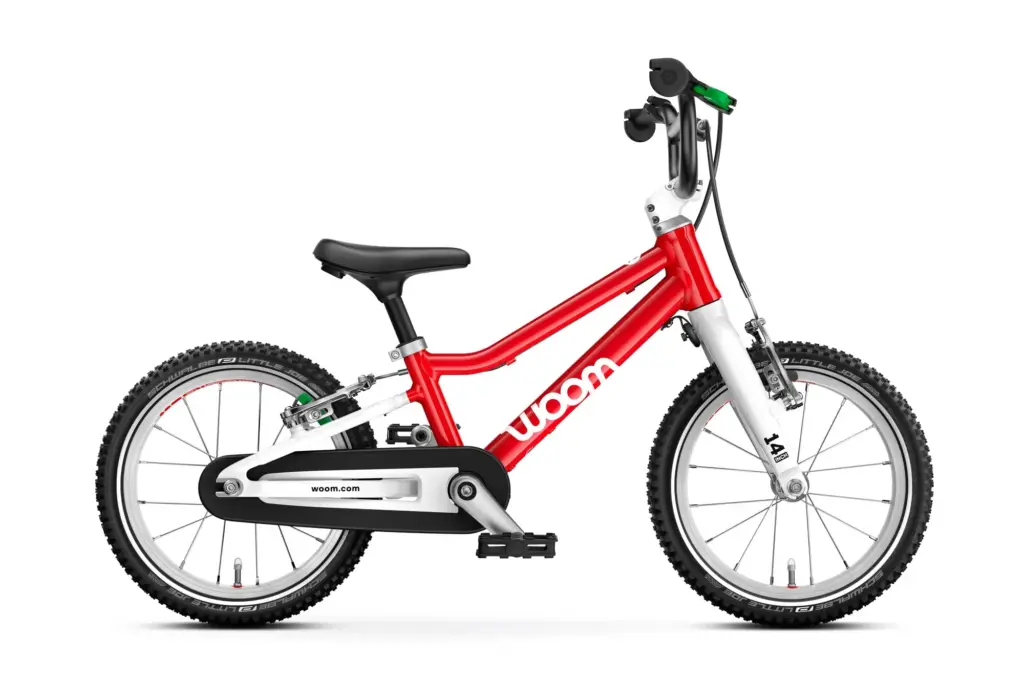
woom GO 2: 5 kg and two hand brakes for small hands
woom, an Austrian kids’ bike brand, recommends the GO 2 for children aged 3 to 4½, 95 to 110 cm tall. Stiftung Warentest tested it in 2026, and it is not among the five bikes the foundation rated “poor”. woom quotes 5 kg without pedals, an aluminium frame, 14 × 1.4-inch Schwalbe Little Joe tyres and a 60 kg weight limit. The brand says it has two independently operated mini V-brakes needing little strength, with a green rear brake, and no coaster brake. woom also lists a steering limiter, which it says prevents crashes caused by overturning the handlebar, and BMX-style bars. woom’s UK store says its bikes come with front and rear reflectors only; the kickstand and mudguards are sold separately. Price at woom: £385 in the UK, $459 in the US.
16 inches, ages 4 to 6: the ADAC test
The ADAC says it tested 14 bikes with 16-inch wheels in 2024: eight were rated “good”, four “satisfactory”, one “adequate” and one “poor”, the Pyro Sixteen, whose pedals touched the ground when cornering. The club says almost every bike fell short of the kids’ bike safety standard on one point or another, and that a 16-inch bike should allow a total weight of at least 30 kg, bike included.
woom GO 3: the new generation of the test winner
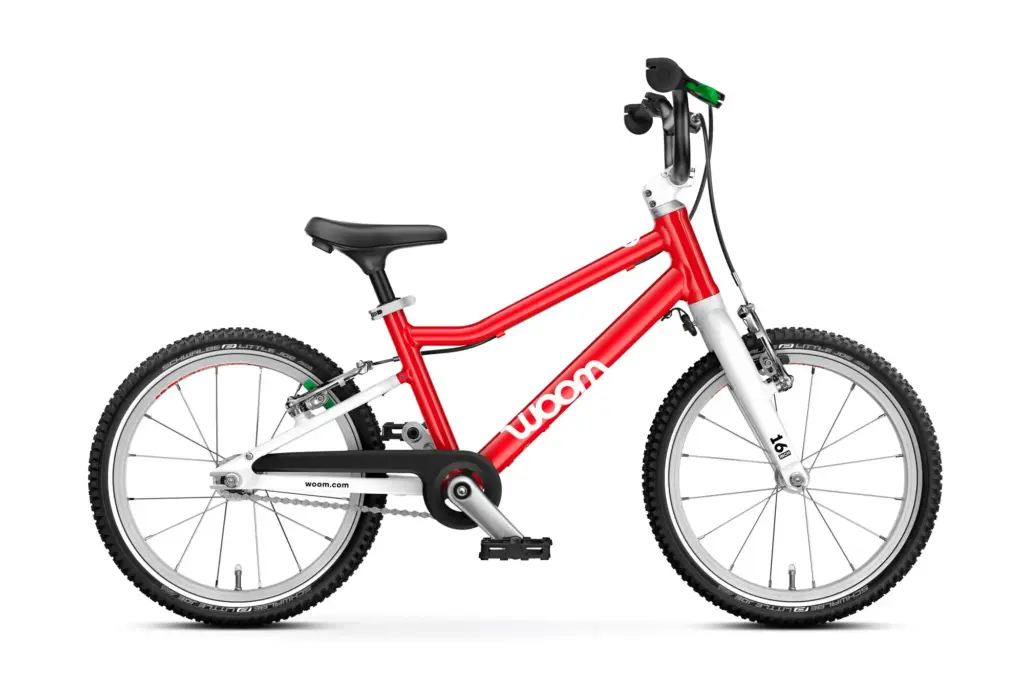
The ADAC says the woom ORIGINAL 3 came first in its 2024 test, with a score of 2.0, and was the lightest: 5.9 kg as measured by the club. The ADAC found brakes so effective they had to be used with some care, and praised its brake levers and saddle, adjustable without tools, its full chain guard and its 60 kg weight limit; the club found harmful substances in the saddle, with no effect on the score as there is no direct skin contact, and a kickstand sold separately. woom says its GO bikes, on sale since April 2025, are the next generation of the ORIGINAL. The brand recommends the GO 3 for children aged 4 to 6, 105 to 120 cm tall, and quotes 5.4 kg without pedals, two mini V-brakes, a quick-release seat clamp, a steering limiter, 16 × 1.4-inch Schwalbe Little Joe tyres and a 60 kg weight limit. Price at woom: £425 in the UK, $499 in the US.
Puky LS-Pro 16: the runner-up, with a kickstand
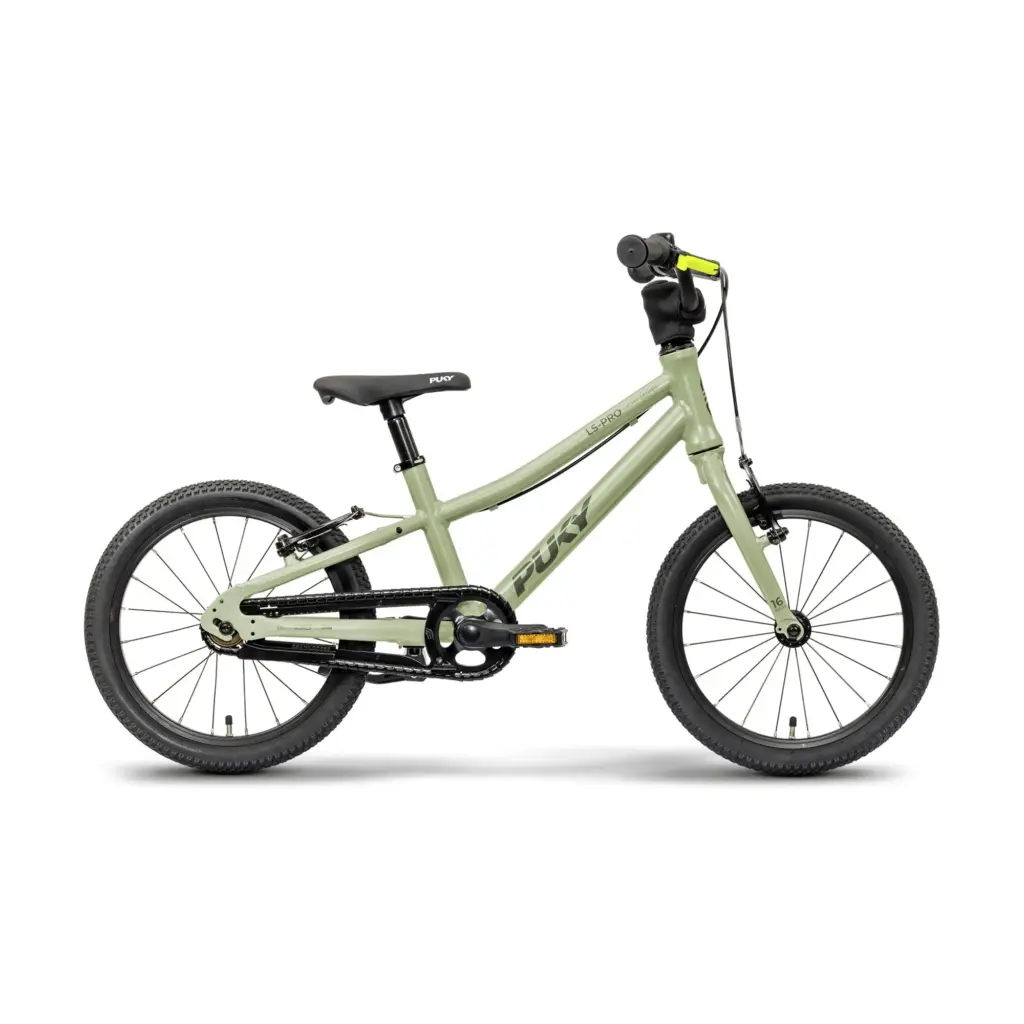
Puky, a German maker of balance bikes and kids’ bikes, saw its LS-Pro 16 come second in the ADAC’s 2024 test, with a score of 2.3. The club measured 6.3 kg and praised its 60 kg weight limit and an ergonomics the children liked; it criticised a front chainring that was not fully covered, as the standard requires, the lack of a quick release to set the saddle height, and harmful substances in the saddle, with no effect on the score. Puky recommends the LS-Pro 16 for children aged 3 and up, 100 to 120 cm tall, with an inside leg of 40 to 55 cm. The brand quotes 5.5 kg without pedals or kickstand, which is included, an aluminium frame, front and rear V-brakes with adjustable levers, and a slim handlebar for small hands. Price at Puky: €429.99, in its online store.
Btwin 500 Robot: the cheapest, rated 1.0 for substances
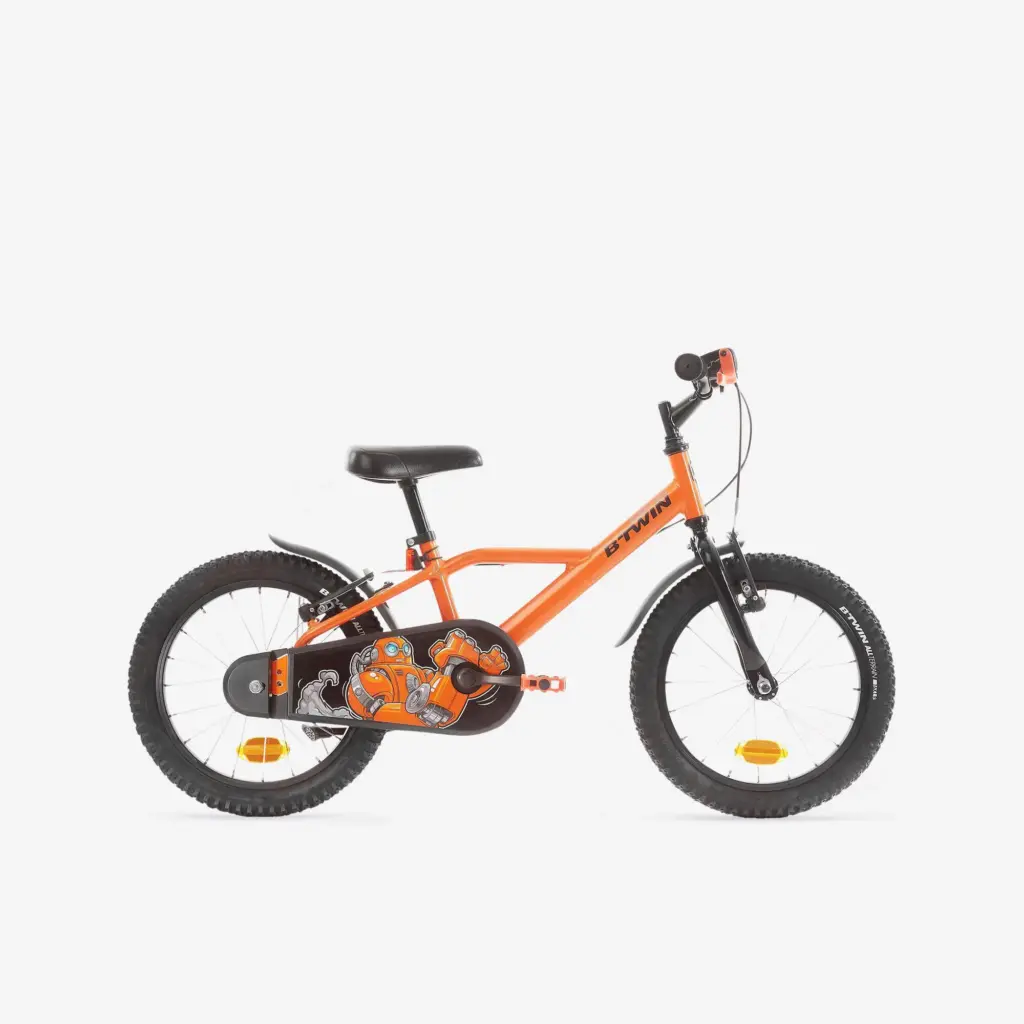
The 500 Robot costs €159.99 at Decathlon in France, while the other bikes in this selection cost over €400 or £380. The ADAC gave it a score of 2.7 (“satisfactory”) in 2024, when it cost €165, with its best score, 1.0, for harmful substances. Yet the club says it was the bike the children liked least: a tiring riding position, due to a stem that reaches far forward and cannot be adjusted, brake levers that cannot be adjusted, small slippery pedals, no front or rear reflector; it weighed 8.8 kg, and its total weight limit, bike included, is 30 kg, the minimum the club recommends. Decathlon recommends it for children aged 4 to 6, 105 to 120 cm tall, and lists a chain guard, mudguards, a kickstand and a low frame for easy mounting; the brand says it takes its 16-inch stabilisers. Price at Decathlon: €159.99, in its French online store.
20 inches, from age 6: the 2022 test
The ADAC and Stiftung Warentest say they jointly tested twelve 20-inch bikes in 2022, priced from €270 to €575. The ADAC says five were rated “poor” for safety reasons: the front brakes on the Bulls, Raymon and S’cool bikes did not brake hard enough on the test rig, the Winora had cracks at the seat clamp and brakes that were too weak, and the woom 20-inch bike of the time had repeated cracks in its crank, although this very light bike suited children well. Only three bikes were rated “good”: the Puky Skyride, the Decathlon, which had the best lights, and the Cube Kid 200 Street. This test dates from 2022: the models on sale today have changed.
Puky Skyride 20-3: three gears and dynamo lights
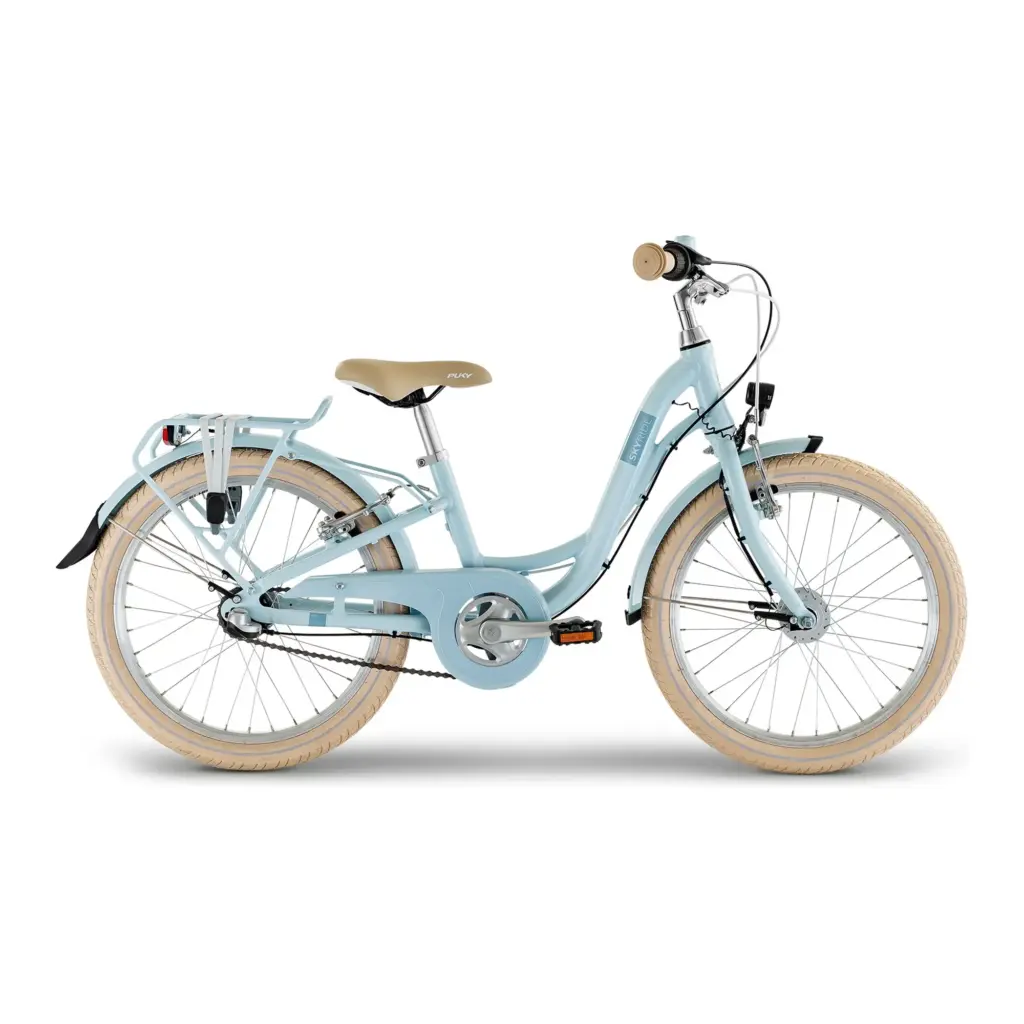
The ADAC says the Puky Skyride 20-3 Alu Light came first in the 2022 test, that it weighed just under 12 kg and that it passed every strength test; the club praised its low frame, which makes getting on easier, and its three hub gears, which can be changed even when stopped, but criticised slippery pedals and the lack of a quick release for the saddle. Puky says it has completely redesigned its Skyride bikes, with a new weight-optimised aluminium frame and an aluminium fork. Today’s Skyride 20-3, which Puky recommends for children aged 6 and up, 115 to 138 cm tall, with an inside leg of 53 to 65 cm, weighs 11.3 kg without pedals or kickstand, the brand says. Puky also lists front and rear V-brakes, 20 × 1.75 tyres with reflective strips, a Shimano hub dynamo powering an LED headlight that switches on automatically, a kickstand and a bell. Price at Puky: €599.99, in its online store.
24 inches, from age 8: the ADAC’s April 2026 test
The ADAC says it tested 14 bikes with 24-inch wheels, priced from €268 to €808, having them ridden by eight children: eleven were rated “good”, two “satisfactory” and one “poor”, the Bikestar Jugend Fahrrad leicht, whose grips contained polycyclic aromatic hydrocarbons (PAHs) considered carcinogenic. The club says the cheapest, Decathlon’s Riverside 500 (€268), brakes poorly in the wet, and that many bikes are sold without a kickstand, reflectors, lights or mudguards, which then have to be bought separately.
woom EXPLORE 5: the winner, and the only one with disc brakes
The ADAC says the woom EXPLORE 5 came first in its test, with a score of 2.0, well ahead of the runner-up. The club says it is the only bike in the test with disc brakes, which brake hard even in the wet, and the only one completely free of harmful substances; it praised its easily adjusted saddle and stem, but regretted that its eight gears have no gear indicator and that it is sold in Germany without a kickstand or lights. woom recommends it for children aged 7 to 11, 125 to 145 cm tall, and quotes 9 kg without pedals, an aluminium frame, 24 × 2-inch Schwalbe Billy Bonkers all-terrain tyres, hydraulic Promax disc brakes and an 80 kg weight limit. The ADAC tested it with a kickstand, mudguards, a bell, a rack and lights, which woom sells separately. Price at woom: £585 in the UK, $819 in the US.
Cube Numove 240 FE: fully equipped, better for smaller riders
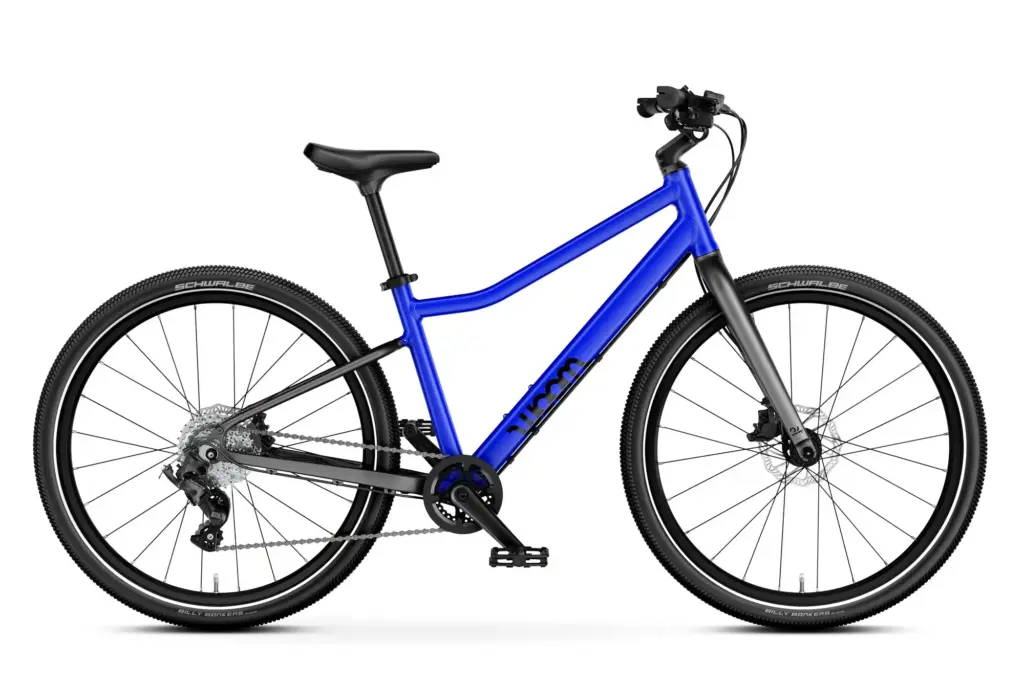
Cube, a German brand, saw its Numove 240 Street come second in the ADAC’s test, with a score of 2.2, at €599. The club praised its front and rear lights powered by a dynamo, its adjustable stem, its quick-release seatpost and its adjustable kickstand; it regretted a small rack with nothing to strap a load down, a bell that is hard to reach and a kickstand that hits the pedal when the bike is pushed backwards, and says the children found it better suited to smaller riders. Cube told the ADAC that its 2025-2026 model has a new colour and a different headlight. Cube now sells a Numove 240 FE, which is not the version the ADAC tested: it comes with mudguards, a rack, lights and a kickstand, eight gears and Schwalbe tyres; Cube quotes 10.2 kg and recommends it for children 118 to 136 cm tall. Price at Cube: £579 in the UK.
Puky LS-Pro 24-8: light and sturdy, but careful in corners
Puky’s LS-Pro 24-8 scored 2.7 (“satisfactory”) in the ADAC’s test. The club praised its low weight, noticeable when riding, its ergonomics and its 100 kg weight limit; yet it says its large pedals and long cranks touch the ground when the child pedals through a corner, and noted a big jump between first and second gear, no quick release for the saddle and a kickstand that hits the pedal when the bike is pushed backwards. Puky recommends it for children aged 8 and up, 130 to 150 cm tall, with an inside leg of 61 to 76 cm, and quotes 8.9 kg without pedals or kickstand, which is included, an aluminium frame, eight gears with a twist shifter that shows the gear, and V-brakes. Price at Puky: €569.99, in its online store.
How to choose a kids’ bike
- Height before age. Stiftung Warentest says the saddle height must match the length of the child’s legs, and that some bikes leave only a few centimetres to grow while others leave much more room. Brands give a child’s height for their bikes, and Puky also an inside leg length.
- Weight. Stiftung Warentest and the ADAC say children cope better with a light bike, easier to carry, pick up and ride. In 16 inches, the ADAC measured 5.9 kg for the woom ORIGINAL 3 and 8.8 kg for the Btwin 500 Robot.
- Brakes. Stiftung Warentest says the children in its 2026 test struggled to dose a coaster brake, which can lock the rear wheel, and braked better with two hand brakes, provided the levers are within reach of their small hands.
- Accessories. Stiftung Warentest and the ADAC say many bikes are sold without lights, mudguards or a kickstand, sometimes without a bell; the foundation says original accessories cost up to €100 more. woom sells its kickstand and mudguards separately; the Puky Skyride and the Cube Numove 240 FE come with lights.
- Budget. At the brands’ prices, from €159.99 for the Btwin 500 Robot in France to £585 or $819 for the woom EXPLORE 5.
Frequently asked questions
What size bike for what age?
For the bikes in this selection, the brands give: 14 inches for ages 3 to 4½ (95 to 110 cm), 16 inches from age 3 or 4 (100 to 120 cm), 20 inches from age 6 (115 to 138 cm) and 24 inches from age 7 or 8 (118 to 150 cm). Puky advises measuring the inside leg: the child stands with their back to a wall, wearing shoes, with a book held between their legs, and you measure from the top of the book to the floor.
Are stabilisers a good idea?
No. Stiftung Warentest advises against stabilisers, which tend to hinder learning to ride. The foundation says children are ready to learn at around 3, earlier or later depending on their skills, once they can walk, run and keep their balance.
Hand brakes or a coaster brake?
Stiftung Warentest says the children in its 14-inch test struggled with a coaster brake: they have to position the pedals before setting off, the force is hard to dose with the feet and the rear wheel can lock. The foundation says that with two hand brakes, children brake more smoothly, as long as the levers are not too far from the grips. It also says brakes that are too strong can send a child over the handlebars: that is what earned four bikes in its test a “poor” rating.
Does my child have to wear a helmet?
In Great Britain, the Highway Code (rule 59) says: “You should wear a cycle helmet that conforms to current regulations, is the correct size and securely fastened.” That is advisory wording: the Code marks its legal requirements with “MUST”. Stiftung Warentest says a helmet is part of a safe ride.
Is a well-known brand always well rated?
No. In 2026, Stiftung Warentest says the failed bikes include expensive models from popular brands, and names Cube among the five 14-inch bikes with brakes judged dangerous. In 2022, the ADAC rated the woom 20-inch bike of the time “poor” because of cracked cranks. In 2024, the ADAC lowered the score of the Orbea MX 16 because of a plasticiser, DPHP, found in its grips.
Buying guide
Balance bikes: eight models compared
Eight balance bikes, two of them rated “good” by a lab: age, size, weight, brakes and price.