IN BRIEF
A balance bike, a bike without pedals, lets a child learn to balance before moving on to a pedal bike. This selection relies on Stiftung Warentest, a German foundation that tests products for consumers. It says it had 28 balance bikes ridden by children aged around three to four and put them through its lab, in 2018 and 2021: 21 were rated “poor”, most often because of harmful substances. Stiftung Warentest says it rated only two balance bikes “good” in 2021, both still on sale: the Puky LR Light (€189.99) and the Early Rider Bonsai (£149, $159). The six other balance bikes in this selection, not part of those tests, range from Decathlon’s Btwin Learn 100 (£29.99) to the woom GO 1 Plus (£285, $299), and woom recommends its WOW from 9 months.
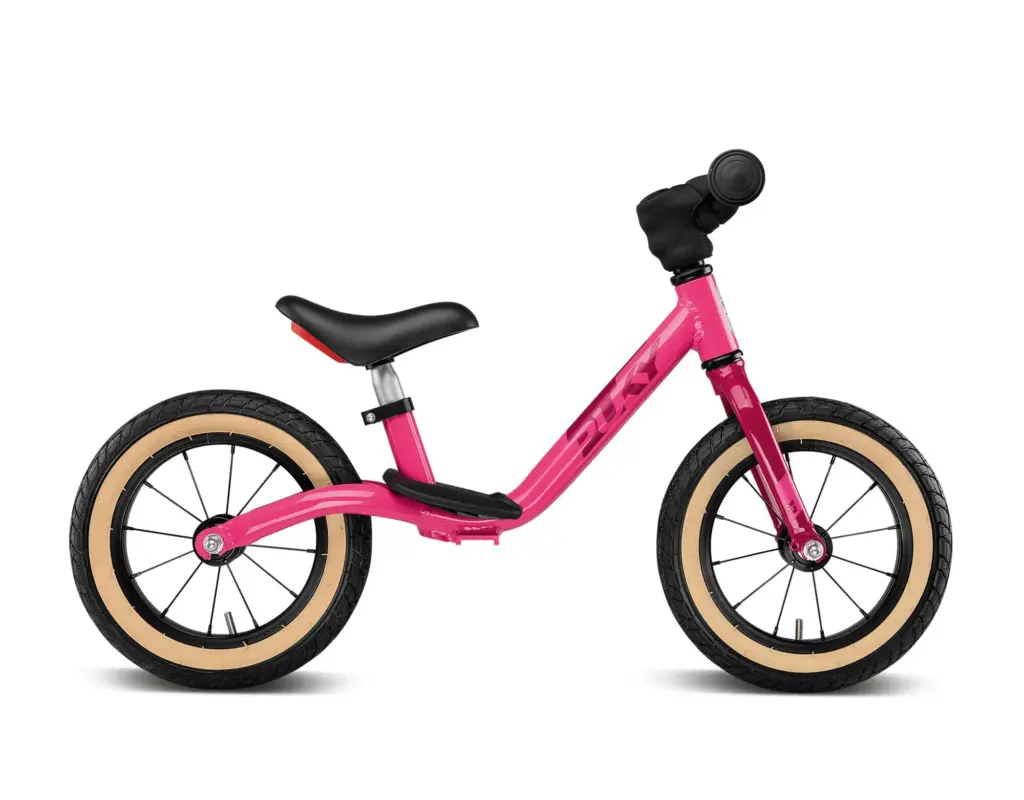
| Puky LR Light | €189.99 · rated “good” in 2021 · 3.3 kg · from 2½, 90 to 120 cm · pneumatic tyres |
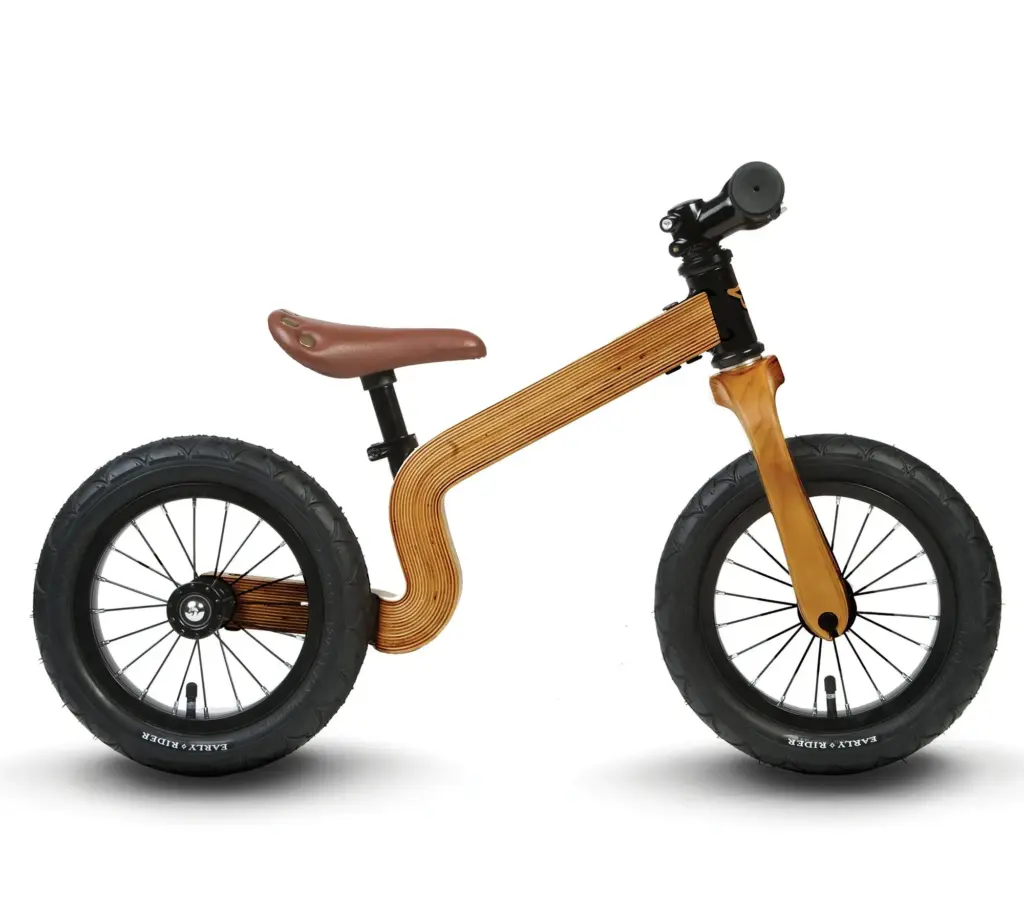
| Early Rider Bonsai | £149 (on sale at £111.75) / $159 · rated “good” in 2021 · 3.75 kg · 2 to 4 for Early Rider, 3 to 5 for Stiftung Warentest · birch frame |
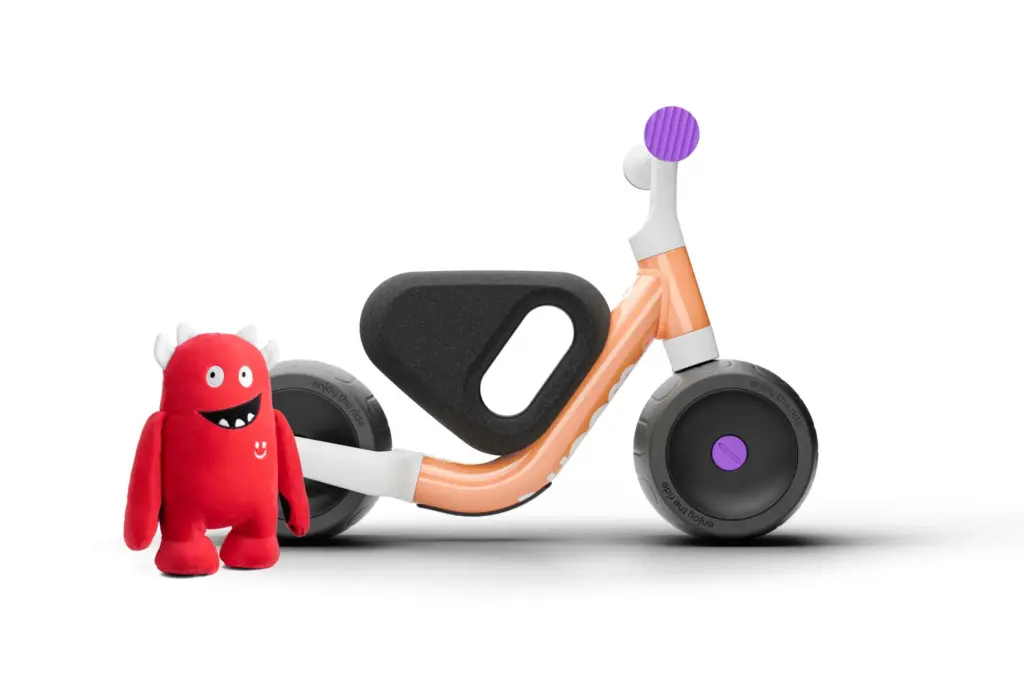
| woom WOW | £160 / $199 · not tested by Stiftung Warentest · 2.7 kg · 9 to 36 months, 70 to 100 cm |
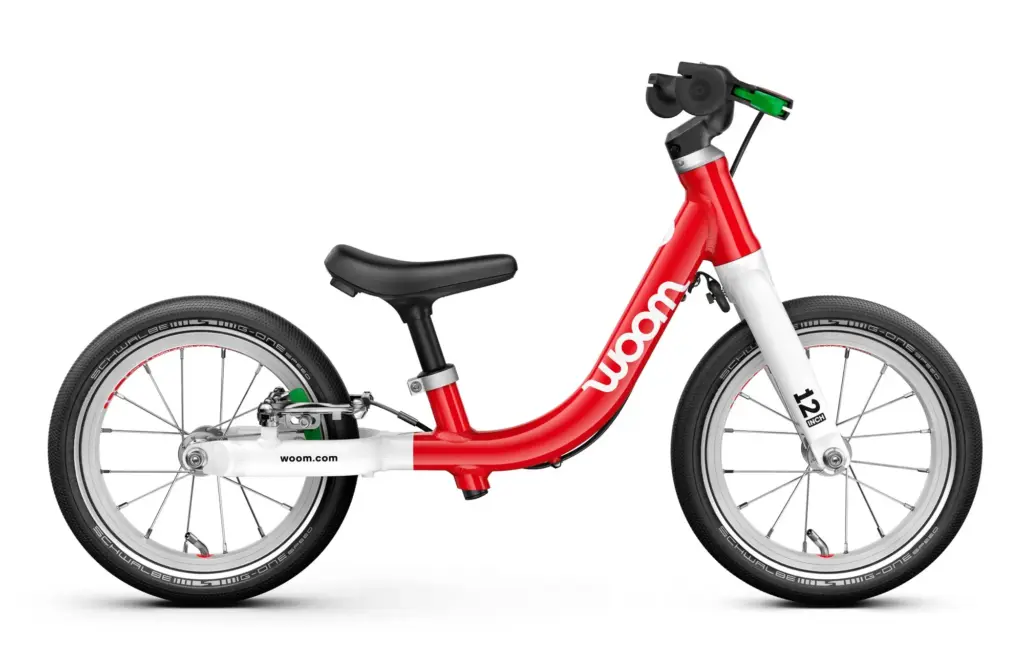
| woom GO 1 | £235 / $249 · not tested by Stiftung Warentest · 3 kg · 18 months to 3½, 82 to 100 cm · rear brake |
| Btwin Learn 100 (Decathlon) | £29.99 · not tested by Stiftung Warentest · 3.2 kg · from 18 months (80 to 105 cm) in its description, 2 to 5 in its specifications · no brake |
| Banwood First Go | £149 / $199 · not tested by Stiftung Warentest · 4.5 kg · 3 to 5 · steel frame, wicker basket |
| BERG Biky Cross (hand brake) | £149 · not tested by Stiftung Warentest · 4.2 kg · about 2½ to 5, 90 to 120 cm · magnesium frame |
| woom GO 1 Plus | £285 / $299 · not tested by Stiftung Warentest · 4.45 kg · 3 to 4½, 95 to 110 cm · 14 inches, two brakes |
The prices in this balance bike comparison are the brands’ own (their online stores), checked on 8 October 2026: in pounds and dollars in their UK and US stores, in euros for Puky. Below the models, buttons lead to retailers whose price on the day may be lower.
To rank these balance bikes, this guide relies on the test Stiftung Warentest published in November 2021. The foundation says it bought 13 balance bikes without brakes, priced from €49 to €199, and had them tried by 20 children aged around three, on a slalom course and on all kinds of surfaces, watched by three experts. In the lab, it says it ran them on a treadmill at 8 km/h over 72,000 bumps, with 10 kg on the handlebar and 25 kg on the saddle, then analysed their grips, saddles and tyres.
Stiftung Warentest says its overall rating mostly counts riding (55%), then safety and durability (25%), handling (15%) and harmful substances (5%). The foundation says a balance bike rated “poor” for substances cannot get a better overall rating: that happened to 10 of the 13 balance bikes in 2021. It says it judges balance bikes as strictly as toys for children under three, because almost all of them can be used from 2½. The foundation says substances are mostly a problem in the grips and the saddle, which a child touches for a long time, but also in the tyres, which they touch while playing; in 2021, it says it often found them in the tyres. These ratings date from 2021: a model may have changed since.
The two balance bikes rated “good” by Stiftung Warentest in 2021
In 2018, the foundation had rated three other balance bikes “good”: the Puky LR 1, Decathlon’s Btwin Runride 100, “good” by a narrow margin, and the Kettler Speedy 10-inch. In 2021, the foundation says those results are not fully comparable with the new ones, since its 2018 test had no endurance trial, and that Decathlon was then phasing out the Runride 100.
Puky LR Light: 3.3 kg and pneumatic tyres
Puky, a German maker of balance bikes and children’s bikes, saw its LR Light rated “good” by Stiftung Warentest in 2021, when it cost €170. Puky quotes 3.3 kg, thanks to an aluminium frame, fork and hubs, and 12½-inch pneumatic tyres, which the brand says are still superior to any other technology for grip. Puky recommends it for children aged 2½ and up, 90 to 120 cm tall, with an inside leg of 35 to 48 cm, and quotes a maximum load of 25 kg; Stiftung Warentest considers it suitable for children aged 2½ to 4½. The brand says its saddle has a carrying handle and that a side stand is included. The LR Light tested has no brake, as Stiftung Warentest says of all its balance bikes; Puky also sells an LR Light BR, with a rear brake, at €199.99. Price at Puky: €189.99, on its website, which lists its prices in euros.
Early Rider Bonsai: a birch frame and aluminium wheels
Early Rider, a British brand, makes the Bonsai’s frame and fork from birch. Stiftung Warentest rated its 12-inch Bonsai “good” in 2021, when it cost €169. Early Rider quotes 3.75 kg and recommends it for children aged 2 to 4, with a standover height of 33 cm; Stiftung Warentest, which goes by the lowest saddle height, considers it better suited to children aged 3 to 5. The brand says its 12-inch wheels have aluminium rims, sealed cartridge bearings and 1.75-inch tyres, and that its stem and handlebar were designed with Ritchey. Early Rider also says it no longer supplies valve dust caps as standard on bikes labelled for children under 3, because safety regulations have changed. Price at Early Rider: £149 in its UK store, which has it on sale at £111.75 at the moment, and $159 in its US store.
Under 2½: three balance bikes for the youngest
Stiftung Warentest says most balance bikes in its tests suit children from 2½. The six balance bikes that follow are not among the 28 the foundation says it tested: their specifications are those their brands quote.
woom WOW: from 9 months, a self-balancing bike
woom, an Austrian children’s bike brand, presents the WOW as “the only self-balancing bike”, for children aged 9 to 36 months, and says its self-centering steering helps them learn balance. woom quotes 2.7 kg, an aluminium frame, extra-wide EVA tyres designed to glide silently, and a weight limit of 20 kg. The brand recommends it for children 70 to 100 cm tall, with a saddle 266 mm off the ground. woom says the handlebar turns parallel to the frame to fold the bike for carrying, and that a soft toy, Buddy, comes with it. Price at woom: £160 / $199.
woom GO 1: from 18 months, with a brake for small hands
The GO 1 is woom’s 12-inch balance bike. The brand quotes 3 kg, an aluminium frame and Schwalbe tyres, and recommends it for children aged 18 months to 3½, 82 to 100 cm tall, with a weight limit of 50 kg. Unlike the balance bikes tested by Stiftung Warentest, it has a brake: a small rear brake, whose lever woom says it designed for small hands with short fingers and little strength. woom also lists a steering limiter, which it says helps prevent overturns, and protective handlebar grips. Price at woom: £235 / $249.
Btwin Learn 100: Decathlon’s balance bike at £29.99
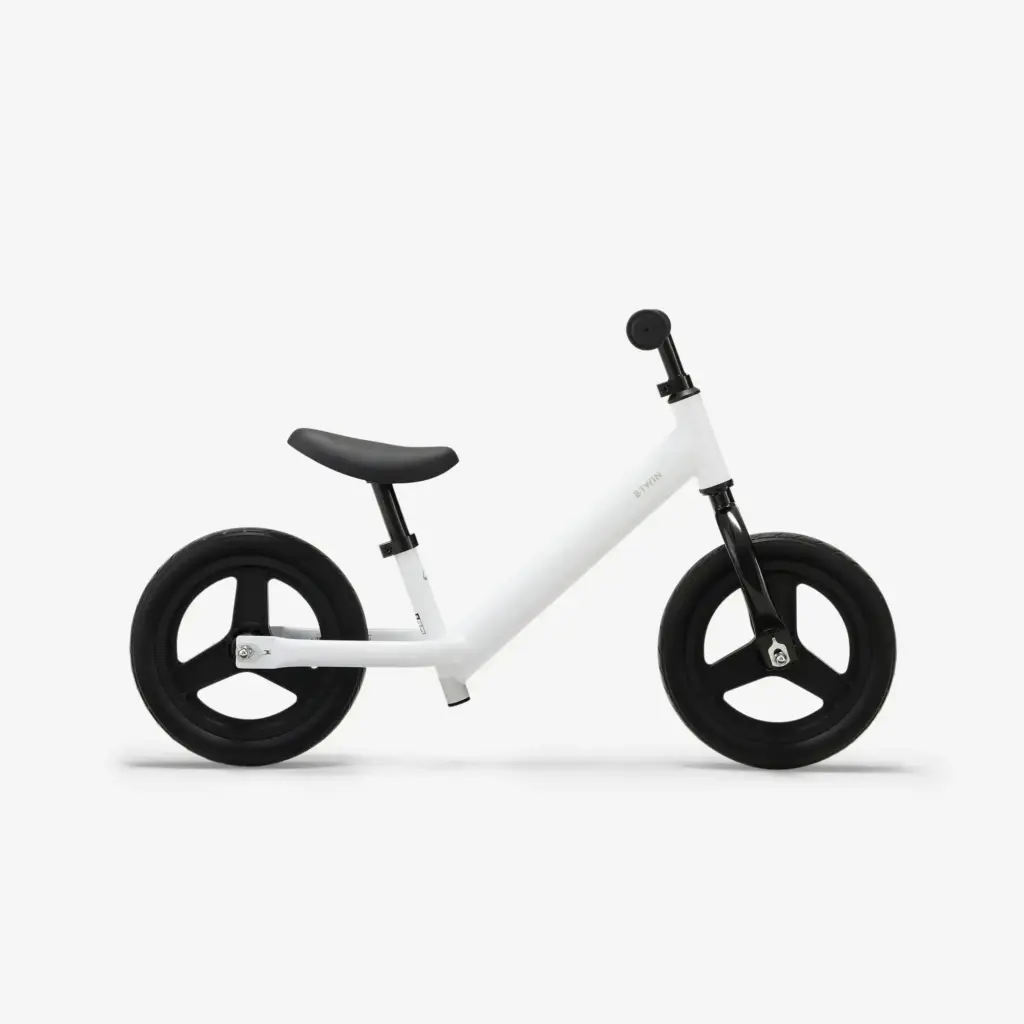
Decathlon sells the Learn 100, a balance bike with 10-inch wheels, under its Btwin brand. Decathlon quotes 3.2 kg and presents it as “suitable for children from 18 months (80 to 105 cm)”, while its specifications give ages of 2 to 5. Its specifications also say it has no brake. The Learn 100 is not among the balance bikes Stiftung Warentest says it tested; in 2018, the foundation rated another 10-inch Btwin, the Runride 100, “good” by a narrow margin. Price at Decathlon: £29.99, on its UK website.
From 2½: style, a brake or rough paths
Banwood First Go: the retro look
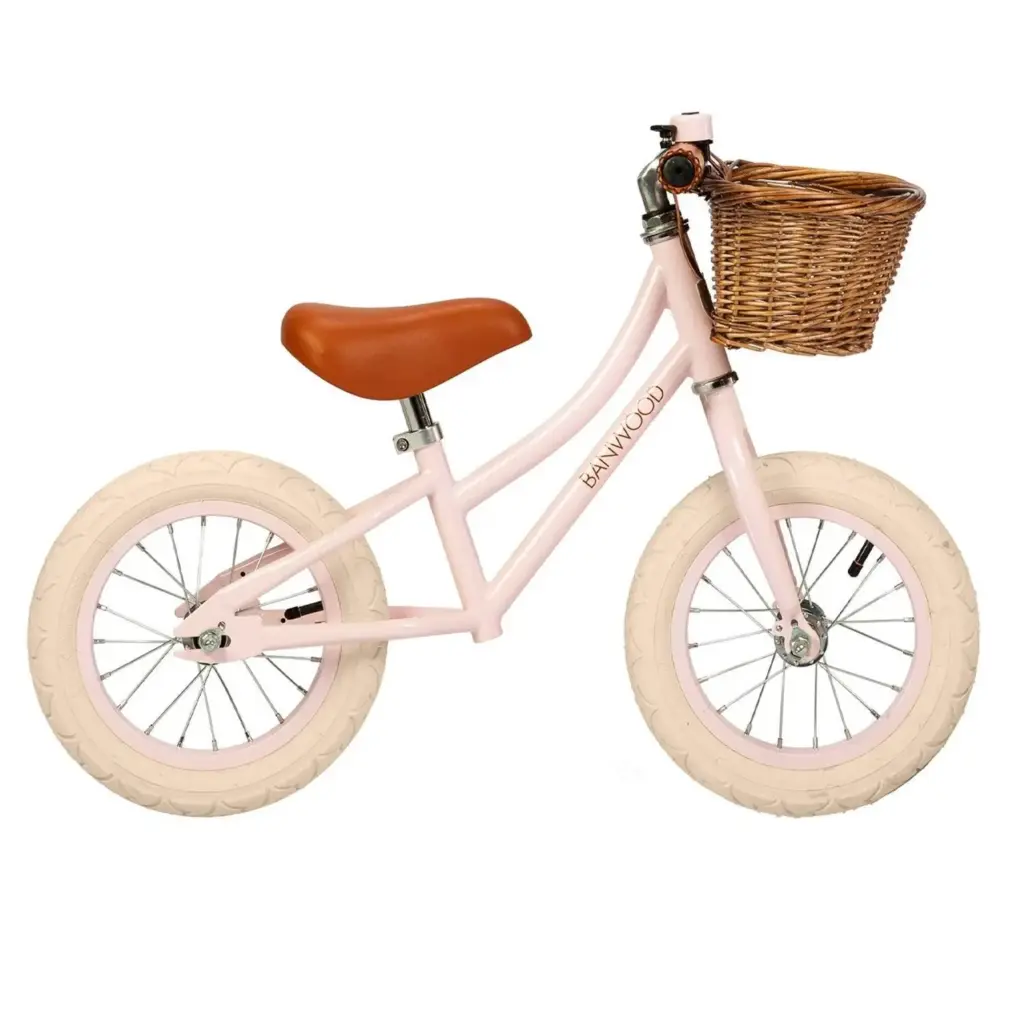
Banwood gives its First Go a retro look, with vegan leather grips and a detachable wicker basket. In its technical details, the brand quotes a steel frame, 12-inch wheels, a saddle adjustable from 37 to 44 cm, a handlebar adjustable from 50 to 59 cm and 4.5 kg, and suggests it for children aged 3 to 5. Its list of components also includes tyres with inner tubes and a bell. Price at Banwood: £149 / $199.
BERG Biky Cross: a hand brake and a magnesium frame
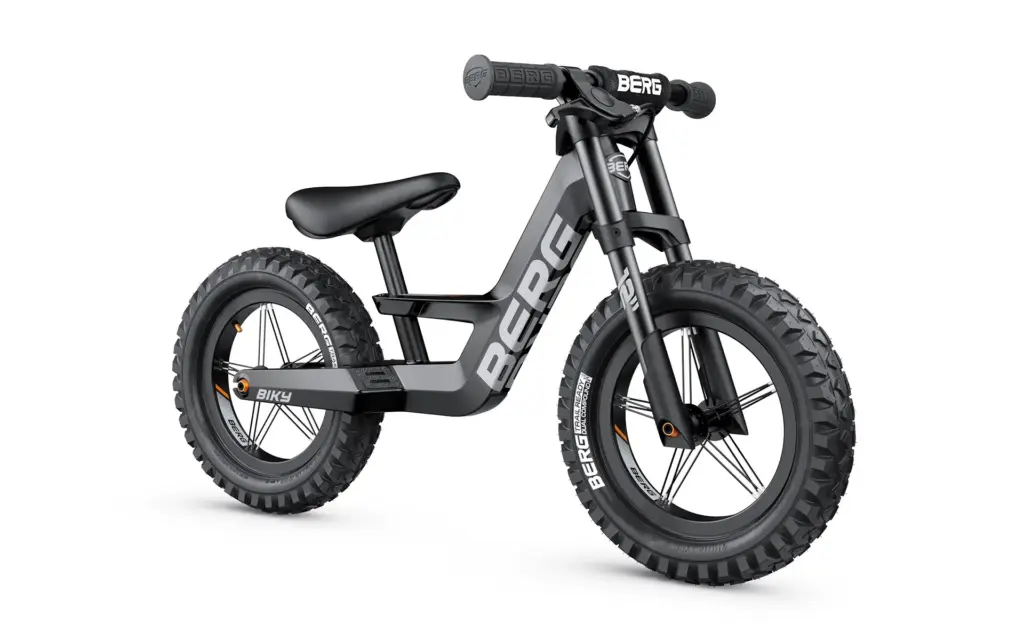
BERG, a Dutch maker of outdoor toys, builds the Biky’s frame from magnesium. The Cross version chosen here has a hand brake, which BERG says offers extra safety for fast toddlers and preschoolers. The brand quotes 4.2 kg, 12-inch wheels, rubber tyres and a maximum user weight of 30 kg, and recommends the Biky for children aged about 2½ to 5, 90 to 120 cm tall. BERG adds a steering limiter, which can be set to a beginner or an advanced position, to prevent the handlebar from flipping over, and a 4-year warranty if you register the product. Price at BERG: £149, in its UK store.
woom GO 1 Plus: 14 inches, for ages 3 to 4½
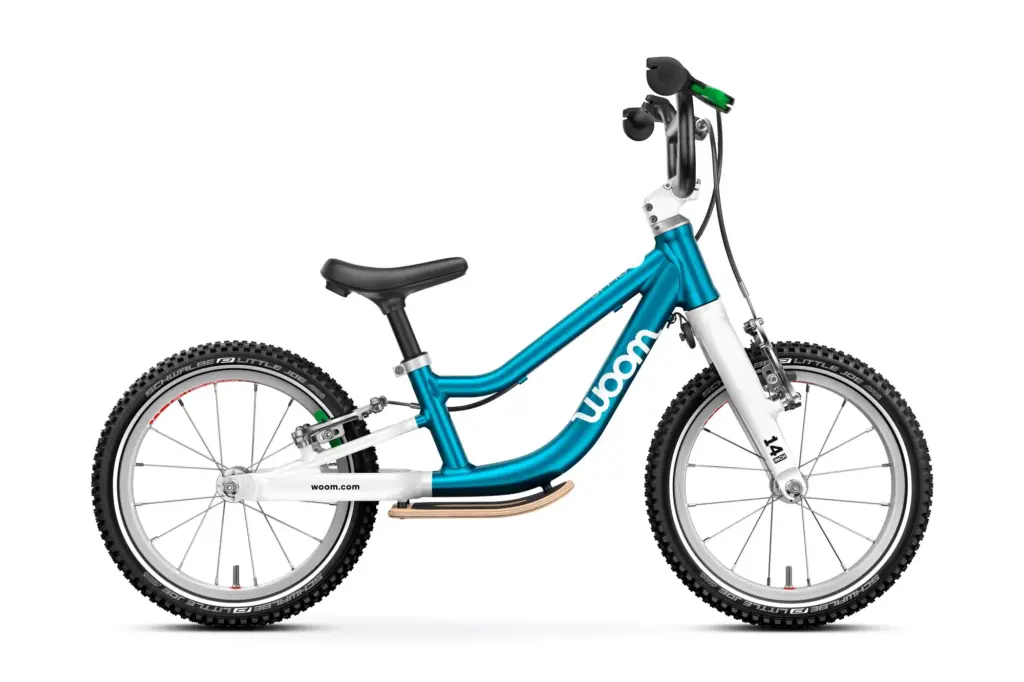
The GO 1 Plus is the 14-inch version of the GO 1. woom quotes 4.45 kg, Schwalbe tyres, two independently operated brakes, a footrest and BMX-style handlebars, and recommends it for children aged 3 to 4½, 95 to 110 cm tall, with a weight limit of 60 kg. Price at woom: £285 / $299.
How to choose a balance bike
- The size. Stiftung Warentest says a child can use a balance bike when, sitting on the saddle at its lowest, they can put both feet flat on the ground. To measure the inside leg, the foundation suggests holding a book horizontally, high between the child’s legs, then measuring from the top edge of the book to the floor. Most brands in this selection give the child height or inside leg their balance bike suits.
- The age. Stiftung Warentest says most balance bikes in its tests suit children from 2½, and that a child who cannot yet walk well or keep their balance should not ride one. Earlier, woom recommends the WOW from 9 months and the GO 1 from 18 months, as Decathlon does for the Btwin Learn 100.
- The weight. Stiftung Warentest recommends a light balance bike for a child starting at around 2½, and says the frame material makes no difference to that. At the weights quoted, the balance bikes in this selection weigh from 2.7 kg (woom WOW) to 4.5 kg (Banwood First Go).
- Adjustments and accessories. Stiftung Warentest says a height-adjustable handlebar and saddle let the balance bike grow with the child, and that a footboard helps them rest their legs. The foundation finds a steering limiter useful at first, as long as it can be switched off later; it says a kickstand can pinch fingers and advises against a bell, which can cause injuries in a fall.
- The brake. Stiftung Warentest says a brake adds little safety on a balance bike, and only tests balance bikes without one. In this selection, the woom GO 1 has one, the woom GO 1 Plus two and the BERG Biky Cross chosen here one; Decathlon says the Learn 100 has none.
- The budget. At the brands’ prices, from £29.99 for the Btwin Learn 100 to £285 ($299) for the woom GO 1 Plus.
Frequently asked questions
Why were so many balance bikes rated poorly?
Mostly because of harmful substances. Stiftung Warentest says it found in 2021, in saddles, grips or tyres, polycyclic aromatic hydrocarbons (PAHs), some of which can cause cancer, phthalates (plasticisers), flame retardants and chlorinated paraffins. The foundation says the amounts found are not acutely toxic but can harm the body in the long term. It also says the fork or the handlebar of two balance bikes broke during the endurance test.
Is a well-known balance bike always well rated?
No. In 2021, Stiftung Warentest says it rated the Kokua Like a Bike Jumper, the Kinderkraft Uniq, the Janod Little Bikloon and the Puky LR M “poor” because of their substances, like six other balance bikes. The foundation says Puky then stopped shipping the LR M with the saddles concerned and offered a free new saddle, that Kokua replied it could not reproduce these results in its own checks, and that Janod and Kinderkraft did not respond.
Does a balance bike need a brake?
Stiftung Warentest says a brake offers little safety to a young child, who often cannot yet judge danger or use a brake properly, and that in an emergency putting the feet down is more intuitive and works better. On the page of its LR Light BR, Puky presents a rear V-brake as a good alternative for older and heavier children, and BERG presents the Biky’s hand brake as extra safety for fast toddlers; woom fits its GO bikes with brakes whose levers it designed for small hands.
Pneumatic or foam tyres?
Stiftung Warentest says large pneumatic rubber tyres cope better with bumpy paths and absorb shocks better, but that they were often loaded with PAHs in its tests; in 2021, Puky and Early Rider showed they could stay below the limits. The foundation says foam tyres (EVA) did better on substances, but that they are hard, absorb little and often slip more, and that on asphalt the difference is small. In 2018, its three balance bikes rated “good” had plastic tyres, which Nico Langenbeck, who led the test, regretted: “pneumatic tyres have more grip, absorb shocks and often ride better on unpaved paths”. In this selection, Puky, Early Rider, woom for its GO bikes and Banwood quote pneumatic tyres or tyres with inner tubes, and BERG rubber tyres; the woom WOW has foam tyres.
Is a wooden balance bike safer?
Not necessarily. Stiftung Warentest says the frame material is mostly a matter of taste, with no systematic safety problem linked to wood, steel, aluminium or magnesium. In 2021, the foundation says children could pinch their fingers in the handlebar joint of the wooden balance bikes from Janod and Pinolino, both rated “poor”, and that the fork or the handlebar of the Janod broke early in the endurance test. The Early Rider Bonsai, with its birch frame, is one of the two balance bikes it says it rated “good”.
Does a child need a helmet on a balance bike?
Yes. Stiftung Warentest says sturdy shoes and a robust children’s bike helmet are a must for safety. Puky says its LR Light is to be used with protective equipment and not in road traffic.
Should you remove the valve caps?
Yes, if they come off. Stiftung Warentest says a small child could swallow the valve caps of pneumatic tyres, and that parents should remove such small parts; the foundation says many balance bikes are delivered without them for that reason. Early Rider says it no longer supplies dust caps as standard on bikes labelled for children under 3.
How can you limit contact with these substances?
The Hong Kong Consumer Council says it found PAHs in all 15 balance bikes it tested in 2022, and advises parents to teach their children to wash their hands right after using their balance bike.