Long read · Explainer
Raleigh, Lapierre, Batavus: one of Europe’s biggest bicycle makers did not survive its own boom
Explainer
State of play as of 29 September 2026
On 11 August 2026, the Amsterdam court declared Accell Group bankrupt. Behind a name nobody knows: Raleigh, Lapierre, Batavus, Koga, Haibike, Ghost, Sparta, Babboe. Two thousand employees in fifteen countries. Four years earlier, an American fund had paid €1.56 billion for these brands. In between, the bicycle industry went through the most violent boom in its history — and its hangover.
§ 1
An Amsterdam court switches off eleven brands in a day
There was not one ruling but seven, handed down on the same day. On 11 August 2026, the Amsterdam court declared Accell’s seven Dutch companies bankrupt, from the holding company Accell Group Holding to Accell Nederland, registered under case numbers F.13/26/244 to 253, according to the trustees’ first public report. The provisional suspension of payments granted on 5 August did not last a week. The appointed trustees are Thijs Hekman and Erik Schuurs.
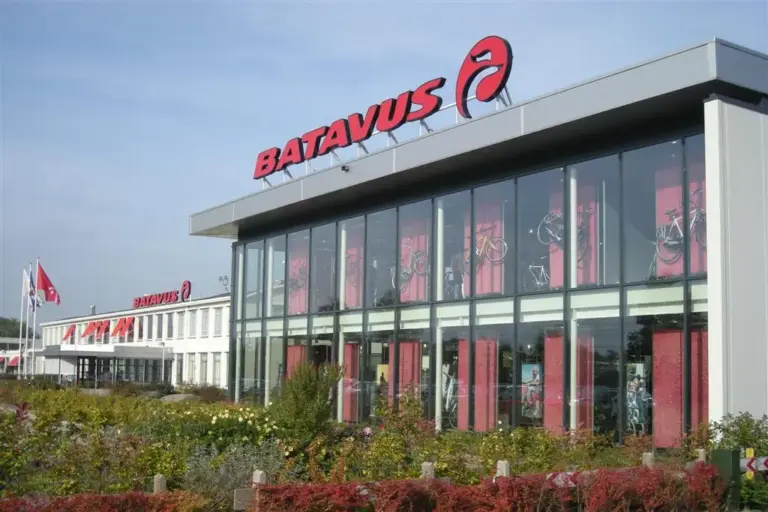
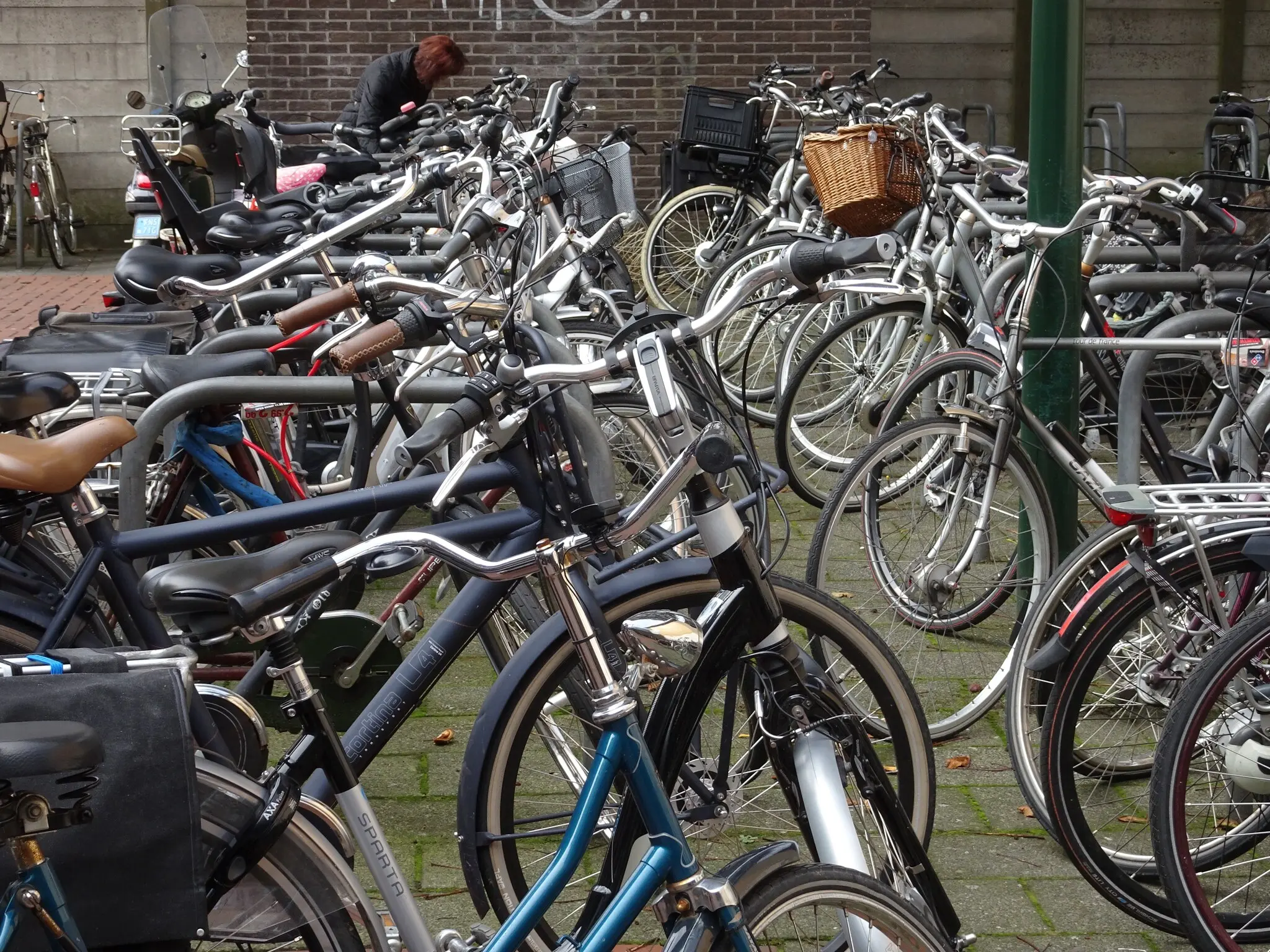
What those rulings took down fits into a list of brands that half of Europe has owned at some point: Raleigh in Nottingham, Batavus and Sparta in the Netherlands, Koga among touring cyclists, Lapierre in Dijon, Haibike, Winora and Ghost in Germany, Babboe and Carqon in cargo bikes, XLC in parts. According to SGB Media, around 2,000 employees in fifteen countries still worked there, compared with nearly 3,700 before the successive restructurings.
The trustees found that the companies could no longer meet their running costs and that the Hungarian factory, where the group had only just concentrated its production, had stopped, reports newmobility.news.
Retailer orders and deliveries stopped dead; consumers, meanwhile, kept buying Batavus bikes in shops, notes NL Times. A brand always survives a little longer than the company that makes it.
§ 2
€1.56 billion, paid at the very peak of the bubble
On 24 January 2022, a consortium led by the American investment fund KKR announced an agreement to buy Accell Group for €1.56 billion, according to the joint press release published by both parties. Accell shares were delisted from the Amsterdam stock exchange on 22 August 2022, according to KKR’s press release.
The date matters more than the amount. January 2022 was the peak. Two years of lockdowns had emptied bike shops all over the world; delivery times were counted in hundreds of days; retailers ordered blind to be sure of getting served, and manufacturers read those orders as real demand. Logistics textbooks call this the bullwhip effect: the further you get from the end customer, the more the signal is amplified. The bicycle industry offered a textbook case.
Diagram — The bullwhip effect
2023. Orders collapse below demand. The coloured gap is what is left in the warehouse.
2020–2021. Lockdowns empty the shops: real demand rises.2021–2022. Retailers order blind. The further from the customer, the more the signal is amplified.2023. Orders collapse below demand. The coloured gap is what is left in the warehouse.Illustrative diagram: it shows a mechanism, not measured data.
Buying a bicycle maker at that moment, with debt, amounted to betting that the curve would not come down. It came down.
What follows is the familiar mechanics of every leveraged buyout: debt does not adjust to revenue. So it had to be adjusted by force, twice.
On 3 October 2024, Accell announced in a press release a recapitalisation agreement reducing its debt from around €1.4 billion to around €800 million, a reduction of some 600 million, together with 235 million in fresh money. The press release stated at the time that the existing shareholders retained a controlling majority stake — in other words, KKR was still in charge.
Sixteen months later, it no longer was. On 26 February 2026, KKR handed the group over to its lenders, writing off around €1.1 billion of its equity investment, reports Transacted, which puts the claims waived by the lenders in this second operation at some 850 million. The fund was out; the debt, however, stayed.
What was left of it had an expiry date. According to internal documents seen by BikeBiz, in spring 2026 Accell was carrying €419 million of long-term debt under a payment-in-kind arrangement — interest that is not paid out in cash but added to the principal — falling due in September 2026. The group was looking for 95 million in fresh money, including 30 million in emergency liquidity.
The takeover by the Singapore group DuTech Holdings, led by Johnny Liu, was supposed to resolve everything. The German competition authority, the Bundeskartellamt, had given its approval on 8 July 2026, according to its press release. The deal had not closed by early August. A few days later, Accell asked for the court’s protection.
“This is a deeply sad and frustrating situation given all the hard work and everything we have achieved.”
Timeline
The chain of dates, 2022–2026
§ 3
The bikes arrived when nobody wanted them any more
Accell’s figures tell the story better than a press release.
The group lost €390 million in the 2023 financial year, including 344 million in impairments covering obsolete stock, the integration of Raleigh UK, Ghost and Velosophy, and the worldwide recall of Babboe cargo bikes, reports Bicycle Retailer. Excluding impairments, earnings fell to €12 million, compared with 140 million in 2022 — same outlet, same accounts.
Inventory is the clearest snapshot of the bullwhip effect: Accell went from 340,000 finished bikes in November 2023 to 169,000 a year later, according to Bicycle Retailer, which adds that the group then considered itself back at its pre-Covid level. Twelve months to shift 171,000 surplus bikes.
Accell’s stock of finished bikes — November 2023 → November 2024
171,000 bikes shifted in twelve months — and not at full price.
1 square = 1,000 bikes1 square = 4,000 bikes · Source: Bicycle Retailer
You do not shift 171,000 surplus bikes by selling them at full price. In 2024, Accell’s revenue fell to €1.003 billion, compared with €1.294 billion in 2023, a 22% decline that Bike Europe puts down to heavy discounting.
This is the point that gets missed when this crisis is read as a crisis of demand. Destocking did not just cost margins: it retaught customers what a bike is worth. Years of discounted bikes have planted the idea that a new bike is never paid for at full price — and that idea does not leave a market at the same time as the stock.
§ 4
Babboe: the recall that cost more than the bikes
In Accell’s fall, there is one episode that has nothing to do with the economic cycle.
In February 2024, the Netherlands Food and Consumer Product Safety Authority, the NVWA, ordered sales of eight Babboe cargo bike models to stop after receiving hundreds of reports of broken frames, reports road.cc. On 4 April 2024, Babboe announced a replacement programme covering around 22,000 bikes worldwide, according to the same outlet: full replacement for bikes under five years old, a refund of the residual value beyond that.
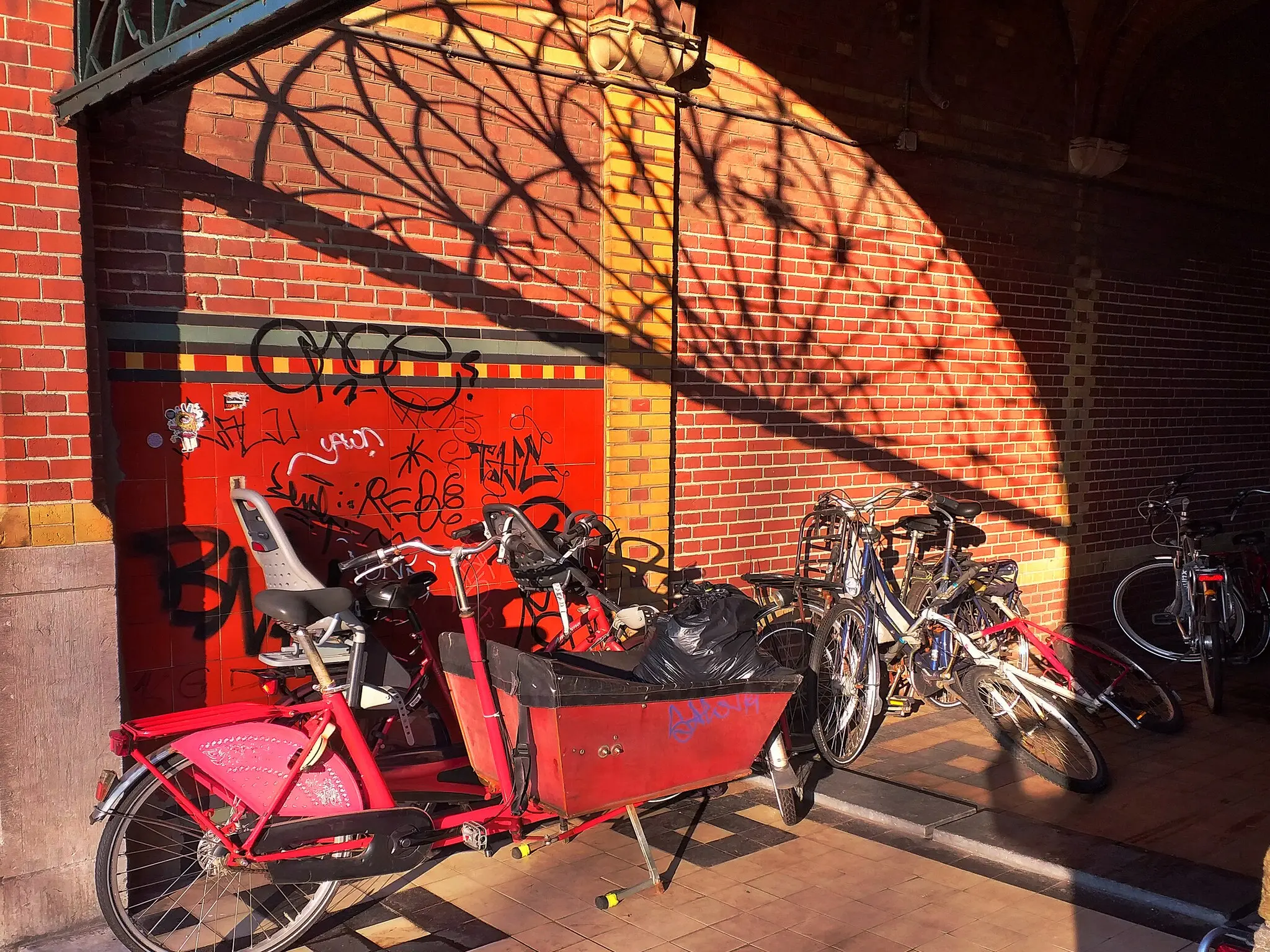
The recall got bogged down. On 11 June 2024, three months after it began, DutchNews noted that only 500 bikes had been replaced out of the 22,000 concerned, with 6,000 collected: four weeks’ wait for a pick-up, more than a month for a replacement. One owner summed up to the daily AD, quoted in the same article, what the procedure was worth from the handlebars: “The frame number of our cargo bike wasn’t recognised and calling them got me nowhere.” The same article put the cost of the recall to Accell at several tens of millions of euros — a 2024 estimate, never confirmed since by a published figure.
The criminal investigation, for its part, came to nothing. Opened by the NVWA in March 2024, it was dropped by the Dutch public prosecutor, which announced the case’s dismissal in September 2024, on the grounds that prosecution would be no more effective than the administrative action already taken by the safety authority, reports Bike Europe. What remains is civil: in October 2024, the Dutch law firm Birkway was preparing to sue Babboe and its parent company Accell on behalf of around 14,000 owners, having judged the exchange offer inadequate, reported ebiketips. Since Accell’s bankruptcy, the claims foundation Veilige Bakfiets has continued to ask the trustees for compensation for owners, its lawyer told the Dutch website Mobiliteit.
A cargo bike carries children. A company under a leveraged buyout carries debt: it has little room to absorb the cost of a worldwide recall and none to absorb the damage to its reputation. Both happened at the same time, in the segment the group presented as its future.
(On what cargo bikes have changed in European cities, and on the collapse of the public subsidies that carried them, see our long read “Cargo bikes: the state cut the funding, the city has already changed”.)
§ 5
Heerenveen, 1906-2026: the land of the bicycle no longer makes bicycles
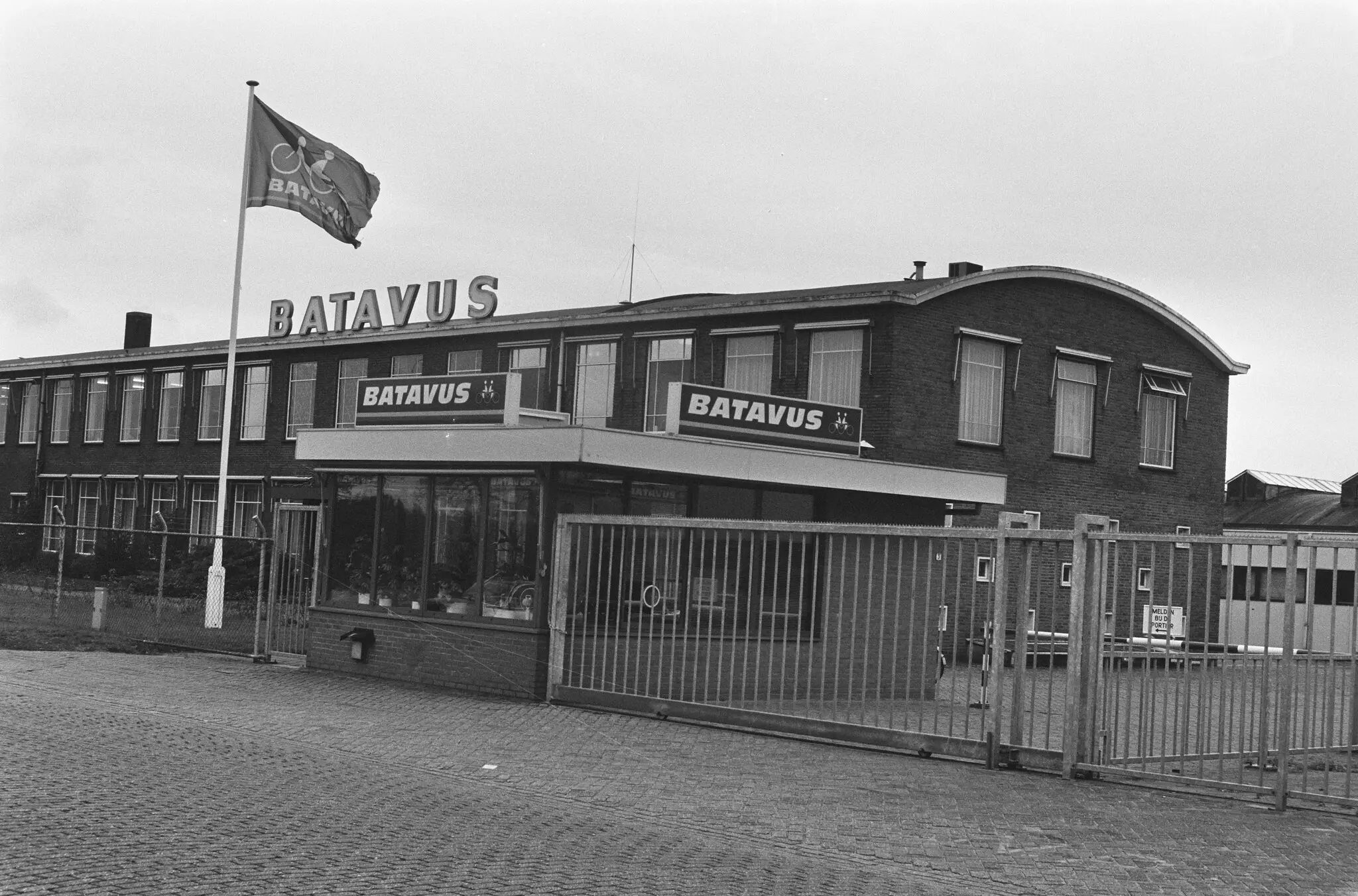
On 27 August 2025, Accell announced the closure of its Heerenveen factory, in Friesland, with around 160 job cuts, reports NL Times. The site produced roughly 20% of the group’s bikes and was to be converted into a design and engineering centre, with manufacturing moving to Hungary, adds DutchNews.
Batavus had been making bicycles in Heerenveen since 1906. One hundred and nineteen years.
The calculation that settled the decision comes down to two numbers. According to internal documents from the “Project Horizon” restructuring plan, dated April 2026 and seen by BikeBiz, assembling a bike in the Netherlands cost €516 per unit, compared with €141 in Hungary — a €375 difference per bike. The same plan provided for a 40% cut in administrative staff and for reducing the number of distribution centres from nine to five by 2028.
The detail that makes the scene absurd is in the same DutchNews article: the Netherlands has around 23 million bicycles for 18 million inhabitants, and ranked ninth among producing countries in the European Union in 2022. The country that turned the bicycle into national infrastructure has stopped making them on a large scale — specialist manufacturers remain, in road bikes and mountain bikes.
This shift is not unique to Accell. According to the Bicycle Industry & Market Profile, published on 29 July 2026 by European Cycling Industries, the European Union produced 10.82 million bicycles and e-bikes in 2025, a stable volume, against 15.618 million units sold, down 2.6%. The gap between the two figures — nearly five million bikes — is the share that Europe does not make.
The same report puts the European market at €18.252 billion, down 0.84%, with 67,076 jobs in industry, slightly up. The stabilisation is real — but at a lower level, and in a different geography.
§ 6
Not an isolated accident, but the state of the industry
If Accell’s fall were down to its own mistakes alone, the rest of the sector would be doing fine. It is not — and Accell is not the first: the Amsterdam court had already declared VanMoof, the showcase of the urban e-bike, bankrupt on 17 July 2023, according to the firm handling the liquidation.
The clearest signal comes from the supplier that equips everyone. In the first quarter of 2026, Shimano’s bicycle division posted sales of 87.361 billion yen, down 0.7%, and operating profit of 7.792 billion, down 46,3 %, according to the results published on 23 April 2026 and reported by Bicycle Retailer.
Stable revenue and profit cut in half: that is the definition of a pricing problem, not a demand problem.
In France, the Observatoire du Cycle (the French cycle market observatory) put the 2025 market at €3.11 billion, down 4.8%, with 1,836,000 bikes sold, down 6%, a 16% drop in e-bikes and a 10.5% rise in repairs. That last figure is the most telling: what is growing is not the new bike, but whatever extends the life of the bike already there — and the second-hand market, which we have covered elsewhere, is absorbing part of the demand the industry was counting on.
In the United States, a tariff shock comes on top of the squeeze on margins. Since 24 July 2026, new duties imposed under Section 301 have replaced the expiring 10% surcharge: 10 % for Canada, Ecuador, the European Union, Indonesia, Mexico and Pakistan, 12,5 % for fifty-four countries including Taiwan, China, Cambodia, Vietnam and Malaysia, reports Bicycle Retailer, which specifies that cycling products are not exempt. In other words, as things stand, almost every bike sold in the United States is taxed at the border.
§ 7 · State of play as of 29 September 2026
What is at stake now
As these lines are written, the case is not closed, and the brands are not dead.
The trustees have launched what NL Times describes as a fast international sale process, exploring two routes: a sale of the whole, or a brand-by-brand sale. Their first public report, dated 22 September, takes stock: more than 300 potential buyers approached, 103 admitted to the group’s data room, and 60 non-binding offers submitted by the 31 August deadline, ranging from a single brand to groups of brands with their stock. At that date, the trustees were still negotiating with several candidates on different combinations of assets, the report states, and the lenders holding a pledge over the brands reserve the right to bid themselves by offsetting their claims.
DuTech Holdings, whose deal had fallen through in August, remains the best-placed candidate: the Dutch trade website NieuwsFiets described it on 17 September as the most advanced, and Bike Europe described it a week later as being in serious talks with the trustees. According to NieuwsFiets, the trustees have also concluded a fallback agreement — a “backstop” — with a majority of the secured creditors and a candidate whose name has not been made public, so that the business can at least continue if the sale produces nothing better.
In Hungary, the Tószeg factory, where the group had just concentrated its production, had been idle since August: more than 400 employees there had been laid off as of 7 September, a hundred of whom were offered the chance to stay, and a new, unnamed investor was negotiating to take it over, the business daily Világgazdaság reported on 9 September. The mayor of the town, quoted by the paper, warned that nobody could yet say when, or at what volume, production would restart.
The most romantic candidate is Irish. Quanta Capital, a Dublin fund headed by former professional rider Mel Sutcliffe, has said it is interested in taking over the whole group, reports RetailDetail — which notes that how serious this interest is remains to be established. Sutcliffe had sold his own company, Eurotrek Raleigh Ireland, to Accell a few years earlier.
In France, the Dijon commercial court opened receivership proceedings (redressement judiciaire) for Cycles Lapierre on 25 August 2026, with a six-month observation period, reports franceinfo; according to La Gazette France, the company employs 106 people and had revenue of €99.1 million in 2025. Its managing director, William Perrier, had summed up his approach before the hearing: “We are not filing this application to give up. We are filing it to give ourselves the means to fight.” Gilles Lapierre, grandson of the founder and former managing director of the company, has since said he is ready, “as far as [his] means allow”, to support the plan best able to preserve the business and the jobs, reports SPORTéco.
The date that governed everything else, and weighed on the negotiations, has passed: continued payment of Dutch salaries ended on 23 September 2026, after which employees were to move on to unemployment insurance, according to NieuwsFiets. Their contracts — 344 in the Dutch companies — had been terminated as early as 13 August, the trustees’ report states; the trustees offered 65 of them a two-month contract to sell off the stock.
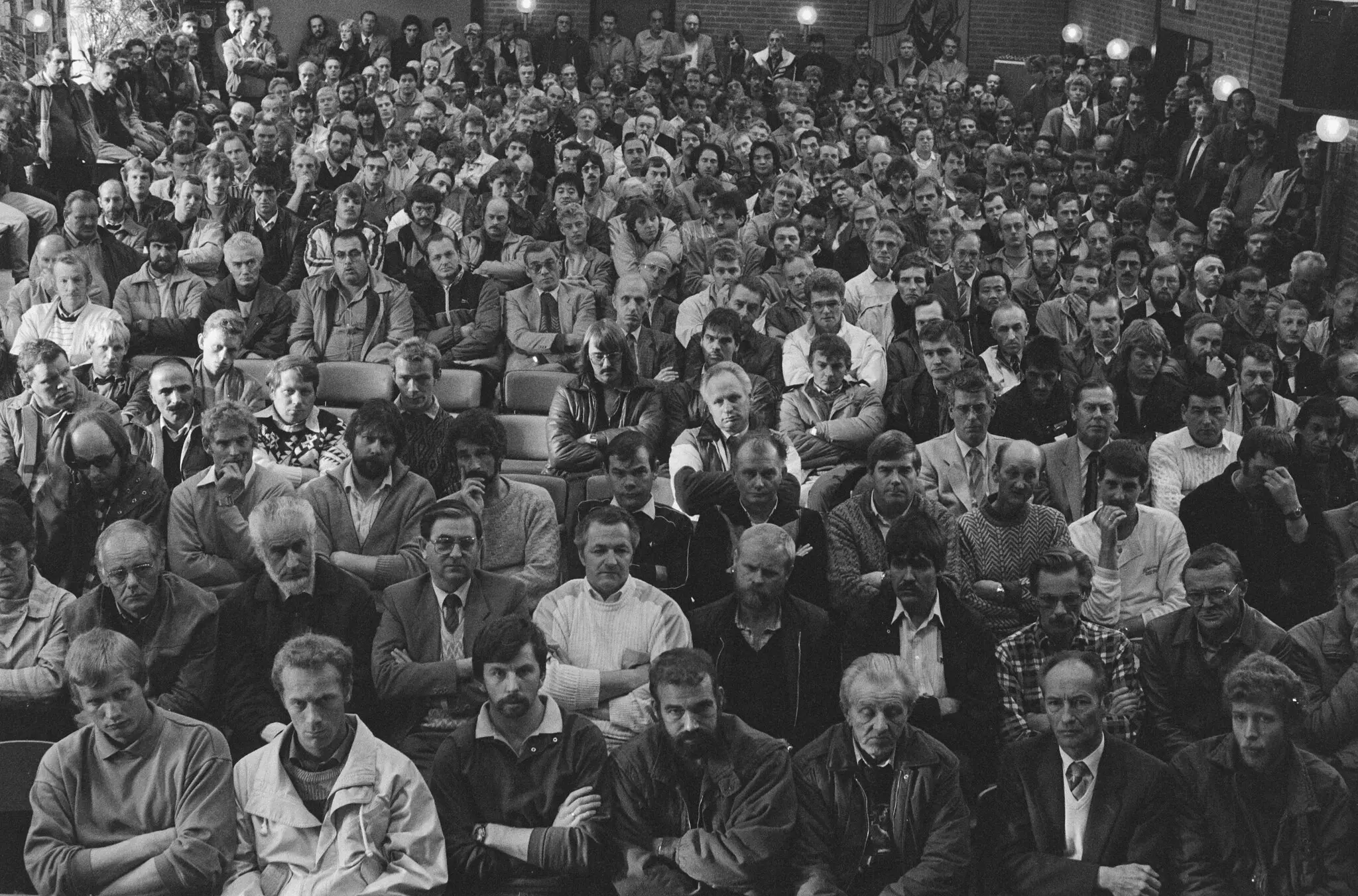
A bicycle brand is a name, a logo, a catalogue and a list of dealers. It can be bought, moved, relaunched. A factory in Friesland that had been running since 1906, a design office in Dijon, a network of mechanics trained on a range: those cannot be bought back at the same price. That is where the true cost of the cycling bubble will be measured — not in what disappears from shop windows, but in what does not get rebuilt.
(Quotes from William Perrier and Gilles Lapierre translated from the French; the other quotes are given in their original English.)