IN BRIEF
The global market for electric cargo bikes reached $4.1 billion in 2025 and is expected to pass $8.9 billion by 2032. Driven by the zero-emission zones spreading across Europe and by the massive commitment of the delivery giants, the electric cargo bike is establishing itself as an essential logistics tool — and no longer as a niche alternative.
A market that doubles while the rest hesitates
The MarketsandMarkets figures published in June 2025 set the scene: a $4.1 billion global market for electric cargo bikes, with annual growth of 11.8% through to 2032. Europe takes 40% of that, driven by Germany and the Netherlands.
The contrast with the rest of the bike sector is striking. While overall electric bike sales have been plateauing in Europe since 2024, the cargo segment keeps climbing. Cycling Industries Europe already counted 115,000 cargo bikes sold across its members over the 2022-2023 financial year, in an overall cycling market in decline. Cargo is holding up where the rest is wavering.
Amazon, DHL, PostNL: logistics has made its choice
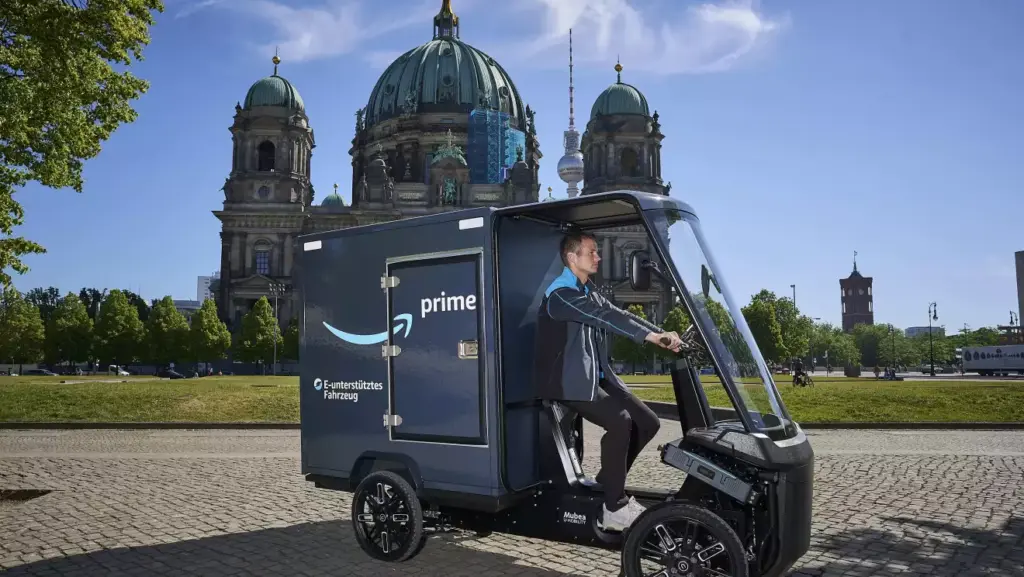
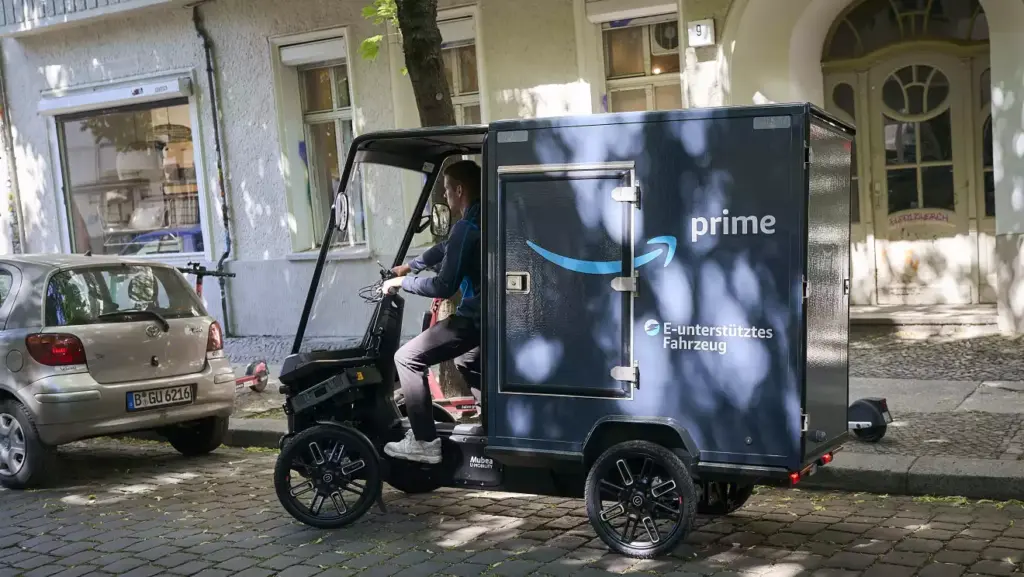
The clearest evidence comes from the operators with the most to lose by getting it wrong. In June 2025, Amazon passed 100 million deliveries made in Europe by electric bikes and other micromobility modes. The company now runs more than 70 hubs in 50 European cities — including 12 German cities where cargo bikes handle the final kilometres. Another 25 hubs are planned by the end of 2026.
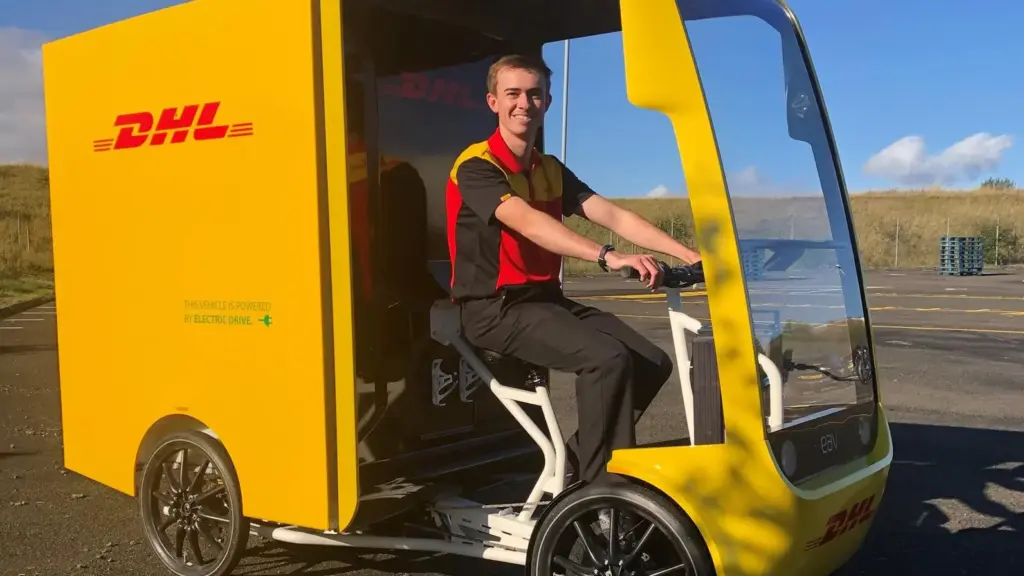
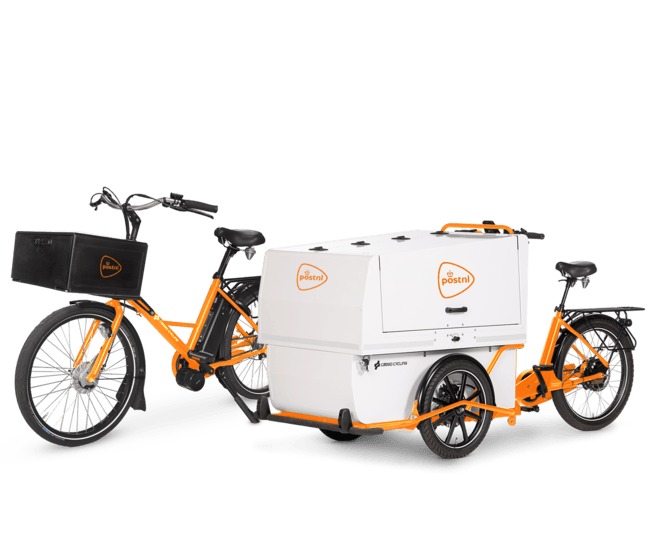
DHL has built its Rotterdam hub around a fully carbon-neutral delivery model. PostNL, the Dutch postal service, delivers with zero emissions in 27 city centres — almost double the 14 cities where regulation requires it. This over-compliance is not idealism: it is an economic calculation.
An electric cargo bike costs between €4,000 and €8,000 to buy, against more than €35,000 for an electric van. Annual running costs come to between €1,600 and €2,800 depending on the European market — against €15,000 to €23,000 for a van. No special licence, no congestion charges, access to pedestrian zones. Logistics does not do sentiment.
Zero-emission zones, a brutal accelerator
Since 1 January 2025, 18 Dutch cities — Amsterdam, Rotterdam, Utrecht, Eindhoven, Groningen and thirteen others — have put zero-emission zones in place for freight. The impact was immediate.
78% of new vans registered in the Netherlands in the first half of 2025 were electric. Across Europe, the average is 9%.
Clean Cities Campaign, October 2025
The mechanism is simple: these zones are not trying to persuade — they make combustion engines illegal on pain of losing access to your delivery territory. The electric cargo bike then becomes the cheapest route to compliance. A further 15 Dutch municipalities are preparing similar zones. The C40 network is extending the model worldwide: 35 cities have committed, most of them in Europe.
Paris is moving down the same road with its ZFE-m low-emission zone, which targets a complete end to combustion engines in 2030. London has extended its ULEZ to all of its boroughs. Milan, Barcelona and Stockholm are converging on similar restrictions.
In France, a policy pulling both ways
The French picture is harder to read. In February 2025, the government ended the individual bike purchase grant at national level. The Île-de-France region is keeping support of up to €1,200 for adapted bikes, and subsidies for professional fleets remain available through regional and European schemes.
On infrastructure, the capital is making progress: €250 million committed to its Plan Vélo 2021-2026 cycling scheme. Bike trips in Paris have more than tripled since 2019. Neighbouring Belgium offers a concrete benchmark: 5.2 million parcels delivered by cargo bike in 2024, a rise of 70% in a single year according to the Belgian Cycle Logistics Federation’s barometer. The sector now employs 6,200 people in the country.
The electric cargo bike is no longer looking for its place in the city. It is taking it.