IN BRIEF
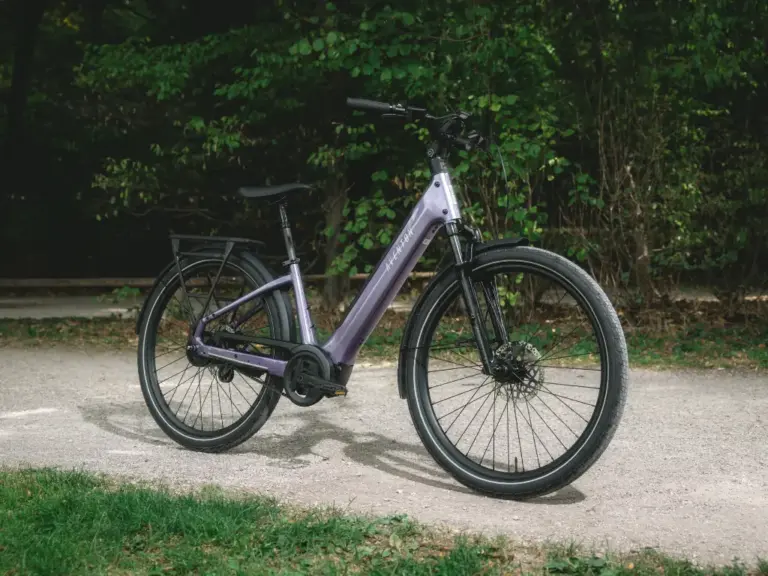
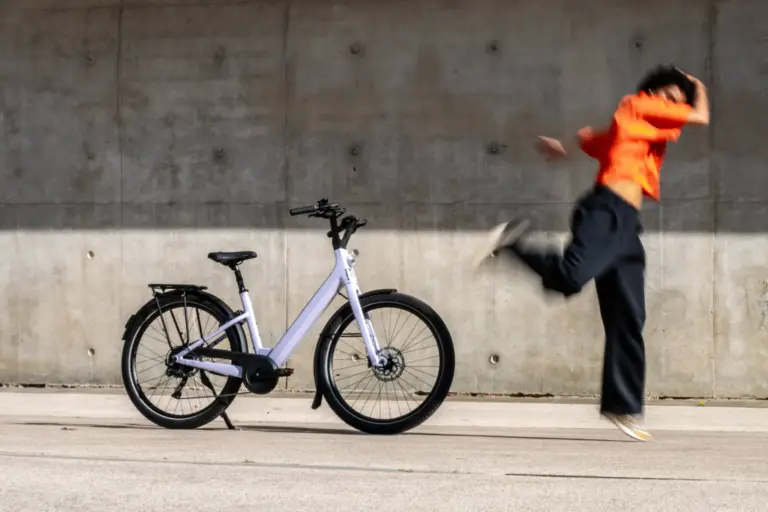
World Bicycle Relief is renewing the utility bicycle it has been deploying for twenty years and now splits it into two versions, the Buffalo One and the Buffalo Pro, which replace the Utility S2. Both share a TIG-welded carbon steel frame, a reinforced steel fork and, according to the organisation, two frame sizes for the first time — Standard and Large — in order to better match the bicycle to its rider. According to the product page, the redesigned rear carrier still carries up to 100 kg and adopts a rebuildable two-piece construction that frees up a larger usable platform. The Buffalo One stays simple: single-speed, rear coaster brake and a 140 mm front disc. The Buffalo Pro adds the organisation’s patented two-speed drivetrain — two gears, shifting by back-pedalling, with no cable and no shifter — and front and rear disc brakes with 160 mm rotors.
| Models | Buffalo One and Buffalo Pro, replacing the Utility S2 |
| Frame and fork | TIG-welded carbon steel, reinforced steel fork |
| Frame sizes | two, Standard and Large |
| Carrier | up to 100 kg, rebuildable two-piece construction |
| Buffalo One drivetrain | single-speed |
| Buffalo One brakes | 140 mm front disc, rear coaster brake |
| Buffalo Pro drivetrain | patented two-speed, shifting by back-pedalling, no cable and no shifter |
| Buffalo Pro brakes | front and rear discs, 160 mm rotors |
| Wheels | steel rims, 13-gauge spokes |
| Mudguards | polycarbonate |
| Warranty | five years, limited, on the frame, the fork and the carrier |
| Cost of mobilising a rider (donation) | 185 $ |
There is a category of bicycle that is not judged against a stopwatch. On its official page, World Bicycle Relief sums up the question the Buffalo was born from in these terms: what kind of bicycle could reliably travel long distances, carry heavy loads and withstand years of daily use? More than twenty years on, it is changing generation.
Buffalo One and Buffalo Pro: what changes
World Bicycle Relief presents these two machines as the culmination of more than twenty years of learning. They rest on a common base: a TIG-welded carbon steel frame, a reinforced steel fork, and two frame sizes that the organisation says it is offering for the first time, in order to better match the bicycle to the person riding it.
The universal rear carrier has been redesigned. According to the product page, it still carries up to 100 kg, but gains a sturdier construction and a geometry that frees up a larger usable platform; the Buffalo Bicycle summary page describes a rebuildable two-piece construction, with the same rating. The stand has also been reworked: locking with a kick, a patented latch, and hands-free stowing.
The rest of the specification points the same way. Long-lasting puncture-resistant tyres, polycarbonate mudguards that the organisation describes as never rusting, denting or rattling loose, steel rims and 13-gauge spokes on the Buffalo One. And a five-year limited warranty on the frame, the fork and the carrier.
Two speeds with no cable and no shifter on the Pro
This is the real dividing line between the two models. The Buffalo One embraces simplicity: a single-speed drivetrain, a coaster brake at the rear and a 140 mm disc at the front.
The Buffalo Pro takes the same reinforced platform and adds World Bicycle Relief’s patented multi-speed drivetrain: two gears, shifting by back-pedalling, with no cable, no shifter and no exposed component liable to be damaged on a broken road. The organisation pairs it with disc brakes front and rear, with larger 160 mm rotors, which it presents as a guarantee of consistent braking in demanding conditions and under load.
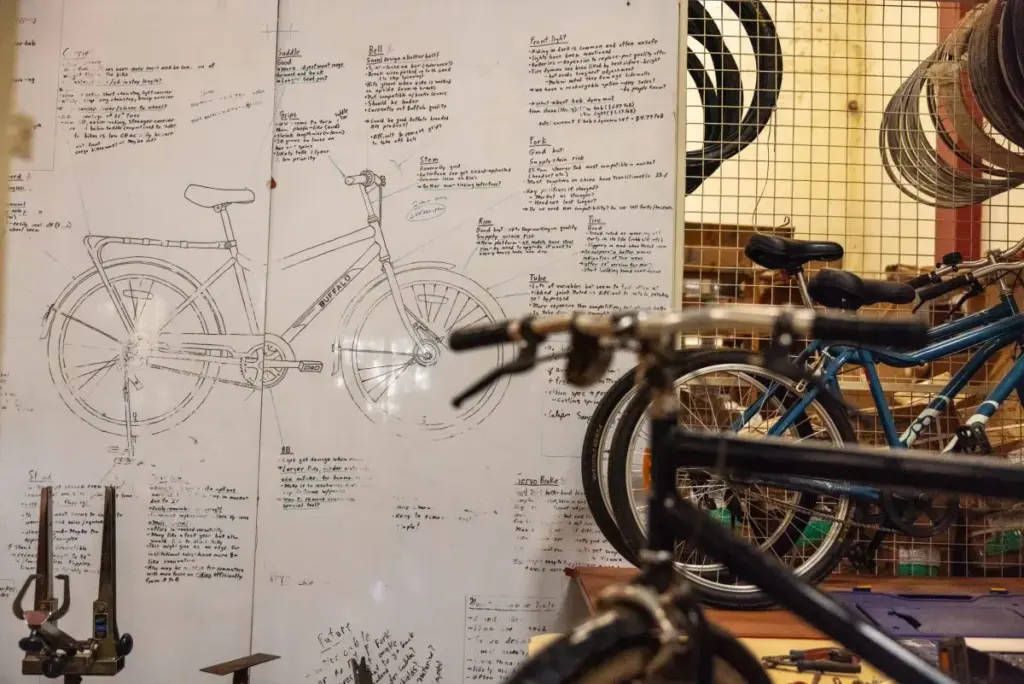
One point deserves to be highlighted, because everything else depends on it: apart from the rear hub and the parts tied to frame size, World Bicycle Relief states that every version of the Buffalo takes the same parts. According to that same page, the brakes, drivetrains, wheels and accessories distributed by the shops operated by Buffalo Bicycles Ltd. fit the different models — a priority the organisation says it has given its product development team at every update of the bicycle, and the condition for a bicycle to remain repairable years after it is delivered. Chris Raymo, the organisation’s Technical Engineering Director, points for his part to the saddle as an example of another requirement: according to the official page, after seeing how the sun, heavy loads and grease broke down common saddle materials, his team developed one that lasts longer and is also more comfortable.
One million bicycles, and a donation that is going up
The context gives the measure of the programme. World Bicycle Relief has passed the mark of one million Buffalo Bicycles distributed. The organisation also claims more than 4,400 mechanics trained to date, at a ratio it puts at one mechanic for every 50 to 100 bicycles distributed, trained through a five-day programme. It is this network that, according to the organisation, keeps the Buffalos on the road.
Across its global remit, which goes beyond the bicycle alone, the organisation states that it has helped accelerate the path out of poverty for more than 5 million people in 28 countries. The Buffalo Bicycle has also been recognised, according to WBR, with the Fast Company Innovation by Design Award, a Gold Eurobike Award and a German Design Award.
This move upmarket comes at a price, and the organisation does not hide it: the representative cost of mobilising a rider with a Buffalo Bicycle is rising to $185. World Bicycle Relief states that amount in dollars on its product page, consulted from France on 22 September 2026, and specifies that such a donation cannot be designated for a particular model or individual bicycle. It explains the rise both by the improvements made to the bicycle and by the changes in the costs of producing and delivering its mobility solutions.