IN BRIEF
Decathlon is becoming a Brompton shareholder: its investment arm Decathlon PULSE is acquiring 10% of the British folding bike manufacturer, while Chinese fund BA Capital takes 5%. The deal, estimated at around £18 million (close to €21 million), remains a minority one: Brompton keeps its independence, its London factory and its identity. In practical terms, “Brompton corners” will open in a selection of Decathlon stores. The alliance comes as the bike market slowly emerges from the crisis that followed the pandemic.
| Decathlon PULSE stake | 10% of the share capital |
| BA Capital stake | 5% of the share capital |
| Estimated value of the deal | around £18m (close to €21m) |
| Brompton founded | 1975, by Andrew Ritchie |
| Cumulative production | more than 1.2 million bikes |
| Presence | 47 countries |
| Sales (year ended March 2025) | 78,530 bikes (−7.5%) |
Decathlon is not buying Brompton, it is becoming one of its shareholders. Through its investment arm Decathlon PULSE, the French retailer has just taken 10% of the share capital of the London folding bike manufacturer. Shanghai-based Chinese fund BA Capital completes the deal with 5%. A minority stake, presented as long-term backing rather than a grip on the brand.
A stake, not a takeover
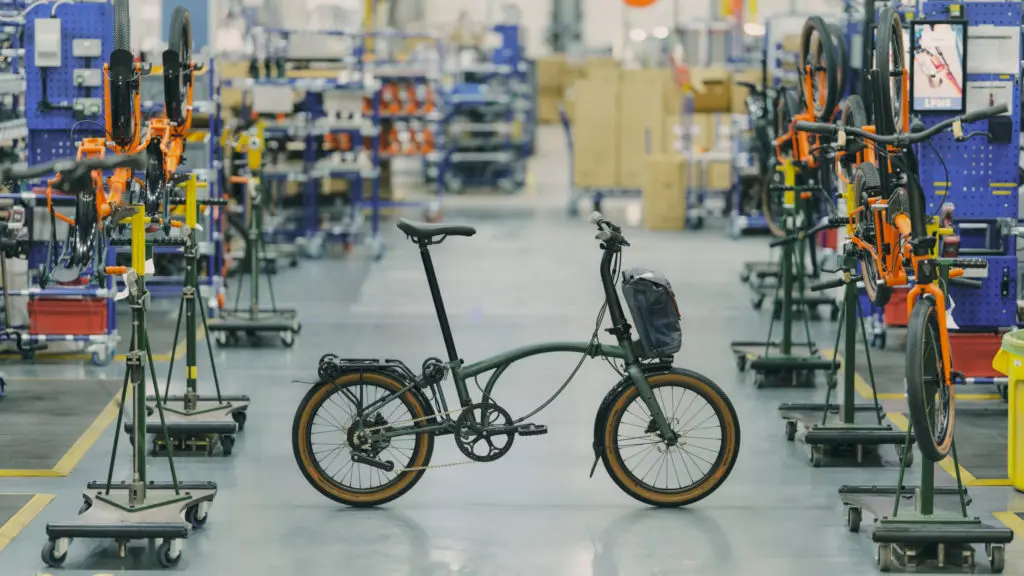
The deal, carried out through the purchase of existing shares, is estimated at around £18 million, or close to €21 million. Brompton, founded in 1975 by Andrew Ritchie, still builds its bikes at its London factory. The brand has produced more than 1.2 million units and sells its models in 47 countries, carried by its three-part folding system, which has become emblematic of compact urban mobility.
Decathlon insists: this is not a takeover. The group says it wants to support Brompton over the long term while preserving its independence, its identity and its operating model. The arrival of Decathlon PULSE mainly allows several long-standing shareholders, chief executive Will Butler-Adams and some employees to sell part of their shares. Andrew Ritchie, for his part, remains the main shareholder.
Will Butler-Adams points out that some investors have been backing Brompton for almost fifty years. Many are now elderly or have passed their shares on to their children; this opening of the share capital gives them a chance to realise part of their investment after decades of loyalty.
“Brompton corners” on Decathlon’s shop floors
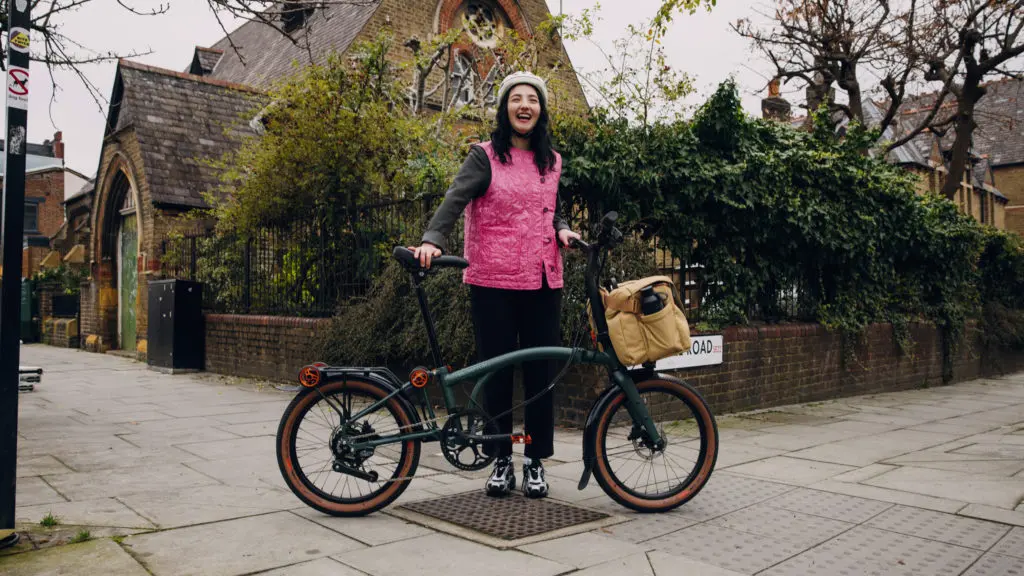
The collaboration will quickly take shape with the installation of “Brompton corners”, dedicated spaces in a selection of Decathlon stores. For the first time, the retailer will offer Brompton bikes, and the British brand will gain visibility with a far wider audience. Decathlon is broadening its range towards the premium folding segment; Brompton, for its part, gains from the group’s international commercial firepower.
Both partners put forward the same reading of the market. The spread of cycle lanes, denser cities and the search for more frugal transport are, in their view, creating a favourable context for cycling. The press release cites a micro-mobility market that could grow from around €175 billion today to €360 billion by 2030. Decathlon PULSE wants to support Brompton’s acceleration in strategic markets such as Germany and China, which has become the brand’s biggest market.
For Brompton, the point is also to learn. “We are in this partnership to learn,” Will Butler-Adams told the Guardian, citing Decathlon’s know-how in supply chain, distribution and technology, and BA Capital’s expertise in the Chinese market. That fund made its name by investing early in Pop Mart, the maker of Labubu figurines, but also in electric bike brand Tenways.
What convinced us goes beyond the product: we share the same values, a strong culture of quality and a long-term vision of sustainable urban mobility.
Franck Vigo, chief executive of Decathlon PULSE
For Irwin Wouts, general manager for Cycling Sports, Mobility and Urban Board Sports at Decathlon, Brompton “naturally complements Decathlon’s offer” by meeting the expectations of the most demanding urban cyclists.
Brompton invests despite a market still convalescing
The deal comes just as the global bike market is slowly emerging from its crisis. After sales soared during the lockdowns, the sector took a sharp slowdown: the return to the office, falling purchasing power and bloated stocks at retailers. “The worst is now behind us,” says Will Butler-Adams, who reckons that “cycling is on the rise again”.
The brand continues to invest in its own technologies. It has rolled out its in-house e-Motiq motor across the whole Brompton Electric range, a major growth area in Europe and North America. It has also launched the G Line, available in an electric version: a completely redesigned frame and 20-inch wheels that open the brand up to gravel and off-road use.
Those choices weigh on immediate profitability. In the year ended March 2025, Brompton sold 78,530 bikes, down 7.5%. Revenue slipped slightly, by 1%, to £121.5 million. Pre-tax profit, meanwhile, climbed back to £130,476, against less than £5,000 a year earlier, thanks to cost-cutting measures. The company also cut its headcount by around fifty people, to about 790 employees, partly because of higher employer contributions and tax changes in the United Kingdom.
According to Will Butler-Adams, sales edged back up in the year ended March 2026, even if profits remain held down by the investment devoted to opening stores and developing new models. The chief executive also takes the opportunity to call on the British government to give better support to entrepreneurs and to crack down on illegal electric bikes, often derestricted and sometimes the cause of battery fires, which he says are harming the market for quality models.